Home-Style Hunter's Stew
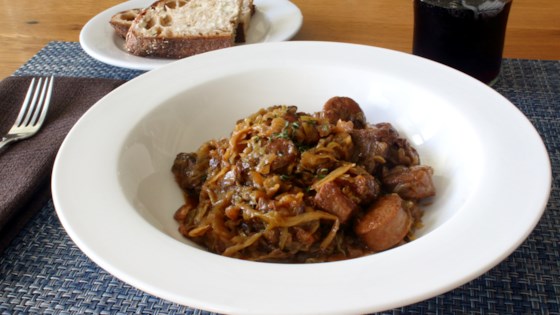
- Preparing Time: 11 hours
- Total Time: -
- Served Person: 6
- salt to taste
- 1/2 teaspoon caraway seeds
- 1 teaspoon paprika
- freshly ground black pepper
- 2 tablespoons unsalted butter
- 1/2 cup warm water
- 1/4 teaspoon allspice
- 1 cup dry red wine
- 1 large bay leaf
- 1 teaspoon dried thyme leaves
- 1 large onion, peeled and chopped
- 1/4 cup dried porcini mushrooms
- 2 cups packed, drained sauerkraut (not rinsed)
- 1 small head green cabbage, quartered and sliced
- 4 strips bacon, cut into 1-inch pieces
- 1 pound pork shoulder, cut into 1 1/2-inch pieces
- 1 pound boneless beef chuck, cut into 1-inch pieces
- 1 pound polish sausage links, sliced (or any other sausage)
- 3 pitted prunes, diced
- Carbohydrate 19
- Cholesterol 135
- Fat 44.9
- Protein 32.2
- Sodium 1174
- Calories 640 calories;
A Home Cook's Take on Hunter's Stew
The aroma alone is enough to transport you to a cozy cabin nestled deep within a snowy forest. That's the magic of Hunter's Stew, a dish that evokes warmth, comfort, and the satisfying feeling of a hearty meal shared with loved ones. While the name suggests a wild game origin – think venison or boar – I’ve adapted this recipe to be more accessible, using readily available cuts of beef and pork. The result? A rich, deeply flavorful stew that’s just as satisfying, if not more so, than its wild counterpart.
This isn’t your typical, quick weeknight dinner. This is a slow-simmered masterpiece that rewards patience and attention. The slow cooking process allows the flavors to meld and deepen, creating a symphony of tastes in your mouth. It’s a dish I reserve for special occasions, or those chilly evenings when the thought of a warm, comforting meal is exactly what the soul craves. The preparation is a journey in itself; from browning the meat to the meticulous layering of spices, each step contributes to the final product’s rich complexity. And the best part? It’s even better the next day! The flavors have a chance to truly settle and intertwine, resulting in an even more delicious experience.
The beauty of this recipe lies in its adaptability. Feel free to experiment with different types of sausage, add other vegetables like carrots or potatoes, or even adjust the spice blend to your liking. The possibilities are endless, and that’s what makes this recipe so special. It’s a blank canvas upon which you can create your own culinary masterpiece. It’s more than just a meal; it’s a story unfolding in your kitchen, a testament to the power of simple ingredients transformed by time and care. So gather your ingredients, roll up your sleeves, and prepare to be amazed by the depth of flavor this classic stew has to offer. It's a hearty, soul-warming experience that's perfect for sharing with those you love.
I often find myself making a double batch, enough for several meals. Freezing portions is easy, and having a ready-made, delicious meal waiting in the freezer for a busy weeknight is a lifesaver. Whether it's a cozy night in, a family gathering, or a casual get-together with friends, Hunter's Stew is the perfect centerpiece. It’s a testament to the fact that sometimes, the simplest recipes deliver the most satisfying results. The rich, savory broth, tender meat, and subtle sweetness from the prunes create a balance that’s both comforting and exciting. It’s a dish I’ll continue to make time and again, and I hope it finds a place in your kitchen, too.
Beyond the Recipe: The experience of preparing Hunter's Stew is as much a part of the joy as the eating of it. The slow, deliberate process of browning the meat, the careful layering of vegetables and spices, and the anticipation of the simmering stew are all part of the ritual. It's a connection to simpler times, when food was prepared with love and intention. It’s a reminder that the best things in life are often the most simple, and sometimes, the most rewarding experiences are those that take time and patience.
So, whether you're a seasoned cook or a culinary novice, I encourage you to give Hunter's Stew a try. It's a recipe that's as much about the journey as the destination. And trust me, the destination is well worth the effort. It's a taste of tradition, a warm embrace on a cold night, and a reminder that sometimes, the most satisfying meals are the ones that take the most time to create. Enjoy the process, enjoy the meal, and enjoy the company of those you share it with.
Step-by-step
- Place mushrooms in warm water to soak and soften (10-15 minutes). Drain and chop.
- Heat butter in a heavy pot or Dutch oven; add sauerkraut and sliced cabbage. Cook over medium-low, stirring occasionally.
- Brown the meat and add it to the pot while the sauerkraut is cooking (see directions below).
- Heat skillet over medium-high heat; add bacon and cook until browned but not crisp. Transfer bacon to the pot with cabbage, leaving bacon grease in the skillet.
- Brown pork shoulder pieces in bacon grease over medium-high heat. Sprinkle with salt. Cook and stir until browned on all sides (4-5 minutes). Transfer pork to the pot.
- Add beef chunks to the skillet; sprinkle with salt. Cook and stir until browned (about 4-5 minutes). Add sausage slices to the skillet and cook and stir until browned. Transfer slices to the pot.
- Reduce heat under the skillet to medium. Add chopped onion and a sprinkle of salt; cook and stir until the onion turns translucent and starts to take on some color. Stir in chopped mushrooms and diced prunes. Cook and stir about 2 minutes.
- Pour in dry red wine; raise heat to medium-high. Simmer until the wine is reduced to where very little liquid remains. Transfer onion mixture to the pot with cabbage and meat.
- Add paprika, caraway seeds, thyme, allspice, bay leaf, pepper, and salt. Stir to evenly distribute all ingredients.
- Cover tightly; simmer over medium-low heat until meat is tender (1-1 1/2 hours), stirring occasionally.
- Remove from heat. Allow stew to cool slightly; refrigerate overnight to let flavors blend.
- Place pot over low to medium-low heat and add a splash of water. Bring stew to a low simmer, stirring occasionally, and cook until hot (10-15 minutes).



