Giant Beans Baked with Roasted Red Peppers and Pastourma
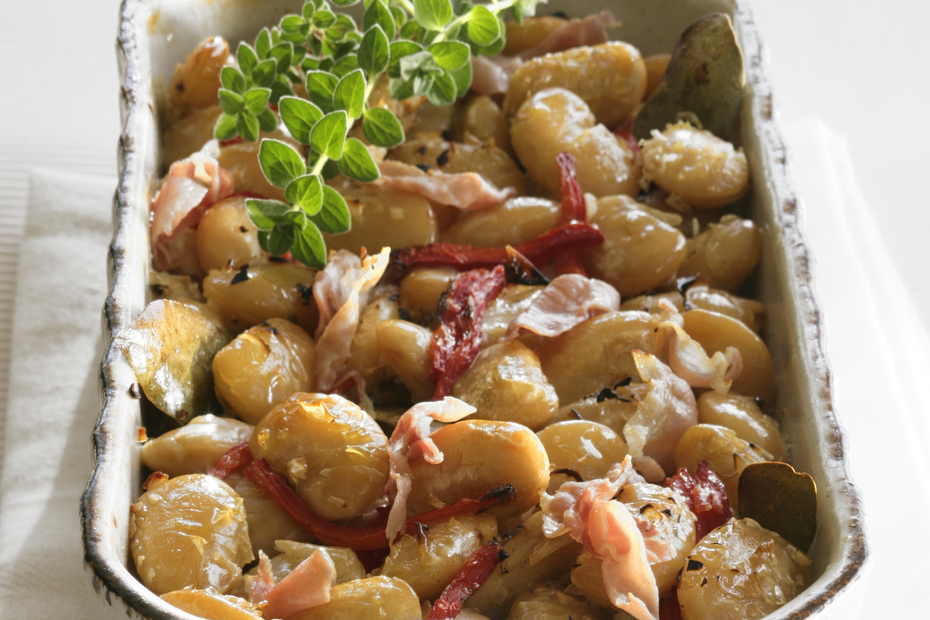
- Preparing Time: -
- Total Time: -
- Served Person: Makes 4 to 6 servings
- 1/2 cup water
- salt and freshly ground black pepper to taste
- 2 bay leaves
- 1 large garlic clove, finely chopped
- 1/2 bag (1/4 pound) greek giant beans or butter beans
- 3 tablespoons plus 1/2 cup extra virgin greek olive oil
- 1 large red onion, finely chopped
- 4 large roasted red bell peppers, preserved in olive oil
- 4 to 6 slices pastourma to taste
- 2 to 3 tablespoons balsamic vinegar to taste
- Carbohydrate 12 g(4%)
- Fat 25 g(39%)
- Fiber 2 g(9%)
- Protein 2 g(5%)
- Saturated Fat 3 g(17%)
- Sodium 366 mg(15%)
- Calories 276
Giant Beans Baked with Roasted Red Peppers and Pastourma: A Taste of the Mediterranean
As a busy professional, finding time to cook delicious and healthy meals can be a challenge. But sometimes, the simplest recipes are the most rewarding. This recipe for Giant Beans Baked with Roasted Red Peppers and Pastourma is a perfect example. It's a dish that transports you to the sun-drenched shores of the Mediterranean, offering a burst of flavour and satisfying texture that’s surprisingly easy to achieve.
The beauty of this recipe lies in its simplicity and the quality of its ingredients. Forget the insipid canned beans; this dish calls for dried giant beans, soaked and simmered to perfection. The result? Beans that are soft, almost buttery, with a delightful heartiness that anchors the dish. The addition of roasted red peppers, brimming with sweetness and smokiness, adds a layer of complexity that elevates the entire culinary experience. I prefer using high-quality peppers preserved in extra virgin olive oil – the infused oil itself adds an incredible depth of flavour to the baked beans. If you're short on time, you can easily find these peppers pre-roasted in specialty stores or online.
The pastourma, a spiced cured beef, provides a salty, savory counterpoint to the sweetness of the peppers and the earthy beans. Its slightly chewy texture adds another textural dimension to the dish. While the pastourma is a key component in this traditional recipe, a vegetarian version is easily achievable. Simply omit the pastourma and add a pinch of cumin for warmth and depth of flavor. The subtle earthiness of cumin perfectly complements the sweetness of the peppers and the heartiness of the beans.
This recipe isn't just about the taste; it's about the experience. The aroma of the simmering beans, the vibrant colors of the peppers, the satisfying crunch of the pastourma—each element contributes to a holistic sensory journey. It’s a dish that invites you to slow down, to savor each bite, and to appreciate the simple pleasures of good food and good company.
I often make a double batch of these beans, storing half for later in the week. The flavors actually deepen overnight, making for an even more satisfying meal the next day. The leftovers also make a wonderful addition to salads or sandwiches, transforming a simple lunch into a Mediterranean feast. This versatile dish truly embodies the spirit of effortless elegance—a testament to the power of simple, well-executed recipes to enhance even the busiest of lifestyles.
Beyond its ease and deliciousness, this recipe reminds me of home, of family gatherings, and of sharing meals around a table filled with laughter and conversation. It’s a dish that connects me to my heritage and provides a comforting sense of belonging, wherever I am in the world. So, whether you’re a seasoned cook or a kitchen novice, I encourage you to try this recipe and discover the magic of simple, flavourful Mediterranean cuisine. You won't be disappointed. It's more than just a meal; it's an experience.
Tips for Success:
- Use high-quality extra virgin olive oil.
- Don't be afraid to experiment with different spices.
- Serve with crusty bread for dipping.
- Enjoy the leftovers!
Step-by-step
- Soak the beans according to package directions or in ample water for 6 to 8 hours. Remove from soaking liquid, and place in a pot with ample fresh water (enough to come about 3 inches above the beans). Bring to a boil over high heat, then reduce the flame to low and simmer the beans for approximately 1 hour, or until al dente. About 15 minutes before removing the beans from the heat, season with salt. Drain and reserve the boiling liquid.
- As the beans simmer, heat the 3 tablespoons olive oil in a large skillet over medium heat, and sauté the onion and garlic until translucent, about 5 minutes. Remove the peppers from their oil and finely chop. Add them to the onions and garlic, and stir over medium heat for about 3 minutes to meld the flavors a little. Remove.
- Preheat the oven to 350°F. Place the beans and onion-pepper mixture in an ovenproof glass or ceramic baking dish. Add about 2/3 cup of the reserved bean cooking liquid, as well as 2 tablespoons olive oil and a little of the oil that the peppers were preserved in. There should be a fair amount of liquid in the dish. Season with salt, pepper, and bay leaves. Cover the dish and bake for about 1 hour, or until the beans are very tender and their centers creamy.
- In the meanwhile, prepare the pastourma: Cut away the tsimeni, or sticky spice rub, and cut the pastourma across the width of each slice into thin 1/3-inch-wide strips. Twenty minutes before the beans are done, toss in the pastourma. Five minutes before the beans come out of the oven, pour in the vinegar. Season to taste with additional salt. Remove from the oven, pour in the remaining olive oil, and serve. You can let the beans cool to room temperature as well. They also taste great the following day.



