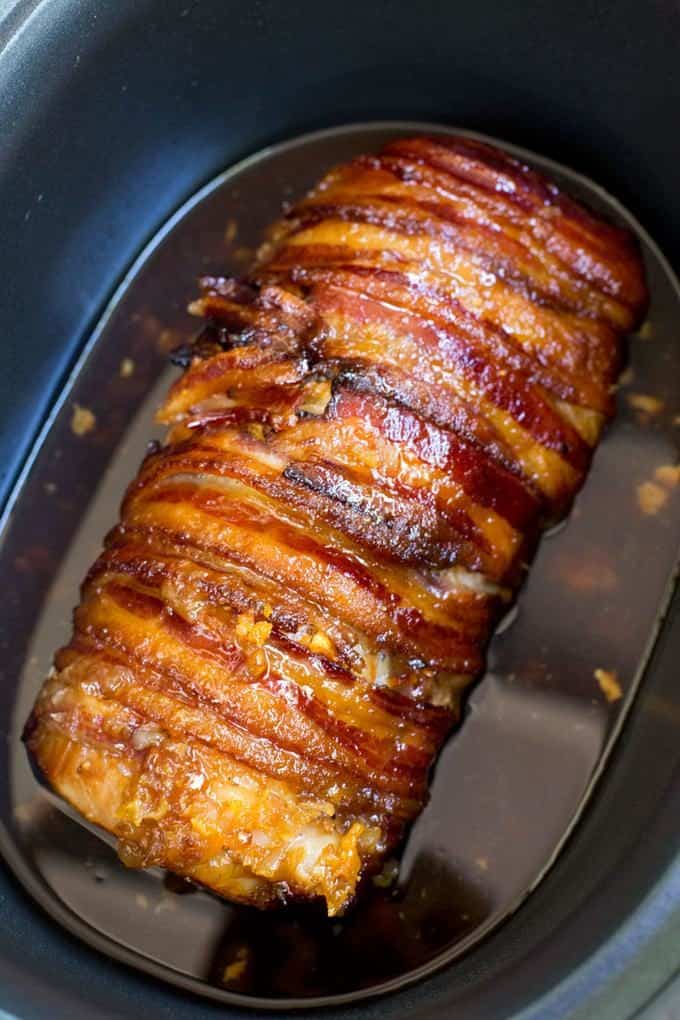
Pork Loin Roast in wine. Absolutely delicious. Don't overcook!
- Carbohydrate 45.0276910569002 g
- Cholesterol 114.30531 mg
- Fat 22.8301746 g
- Fiber 0.0240000007009506 g
- Protein 35.9240688001217 g
- Saturated Fat 7.9106532 g
- Serving Size 1 1 Serving (243g)
- Sodium 112.444577310088 mg
- Sugar 45.0036910561992 g
- Trans Fat 2.3096499 g
- Calories 543 calories
Step-by-step
- Clean silver skin and fat from roast.
- Poke roast full of holes with fork.
- Rub roast with balsamic vinegar.
- Rub roast with mixture of sugar, salt, and pepper.
- Place in slow cooker and pour wine up to two inches or so on the side of the roast.
- Cook for 3-4 hours on low. Check with thermometer. Want it to fall apart, but not overcook.
- Strain juices from cooker and then heat in saucepan until reduced. Add two tablespoons of gluten free flower mixed with water to juices. Thicken and serve.
Pork loin requires precise thermal management because its low fat content causes the muscle fibers to tighten aggressively past 145 degrees Fahrenheit. Slow cookers apply steady, low-intensity heat that dissolves collagen without boiling the surrounding liquid. Dry white wine provides essential acidity to balance the heavy sugar rub, while balsamic vinegar reacts with the exterior proteins to form a deep crust during the braise. Trimming the silver skin before cooking prevents the exterior from curling as the meat contracts.
Equipment and Liquid Control
Standard oval slow cookers hold between six and eight quarts, which often leaves too much floor space around a three-pound roast. Wide vessels cause the braising liquid to spread thin and evaporate prematurely. Pouring the wine until it reaches two inches up the side ensures the base stays submerged while the top half roasts via steam circulation. Aluminum foil can be balled up to push against the roast if the vessel is too wide, keeping the meat centered against the heat source. Strain the remaining juices into a heavy-bottomed saucepan after cooking to concentrate the sugars rapidly over medium-high heat.
- Thicken the reduced juices by whisking the gluten-free flour with cold water first to prevent clumping before adding it to the simmering liquid.
- Insert an instant-read thermometer into the thickest part of the meat to verify internal doneness before removing the roast from the appliance.
- Store leftover sliced pork in an airtight container submerged in its own cooking liquid for up to three days to retain moisture.



