Chick Pea Stew
This recipe is from Mediterranean Harvest, by Martha Rose Shulma. I found it in one of Food & Wine's Best of the Best series.
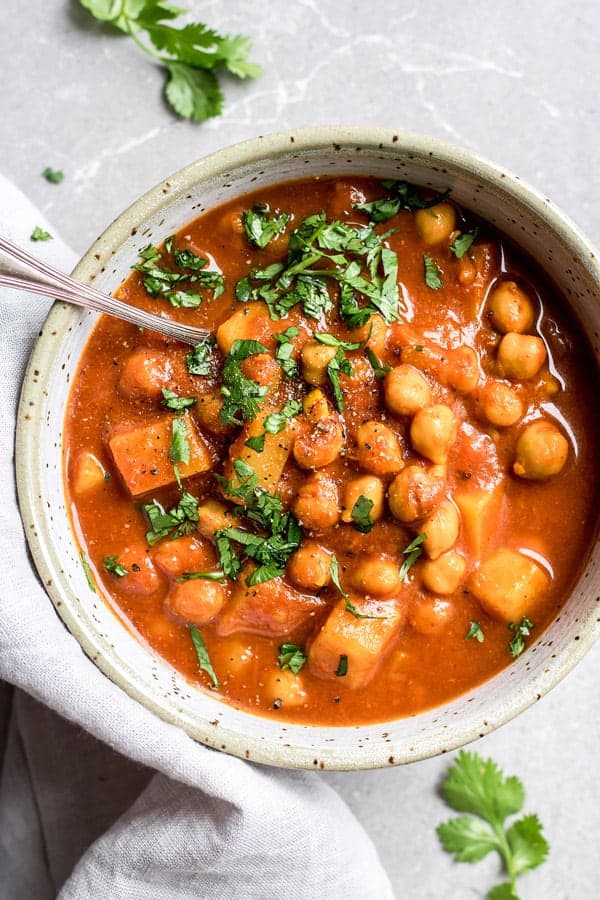
This recipe is from Mediterranean Harvest, by Martha Rose Shulma. I found it in one of Food & Wine's Best of the Best series.
- 1 salt
- 4 cloves garlic chopped
- 2 tbsp extra virgine olive oil
- 2 onions sliced
- 1 tsp cumin seeds crushed
- 1 tsp fennel seeds crushed
- 1 tsp brown sugar or 2 tsp. pomegranate molasses
- 1 white wine vinegar sherry venegar, or lemon juice
- 4 12-oz can tomatoes draned and chopped
- 0.5 tsp aleppo pepper*
- 4 leaves spinach
- 0.5 pound dried chick peas cooked and drained, or 1 can (15 oz can) rinsed and drained
- 0.25 c fresh herbs, preferable a mix of flat-leaf chopped
- 1 lemon wedges
- 1 yogurt drained
- 1 *if you can't find alepo pepper substitute 4 parts sweet paprika to 1 part cayenne
- Carbohydrate 60.0983933333333 g
- Cholesterol 0 mg
- Fat 11.2834675 g
- Fiber 17.3121249194145 g
- Protein 15.6730025 g
- Saturated Fat 1.45913875 g
- Serving Size 1 1 Serving (499g)
- Sodium 44.7636666666667 mg
- Sugar 42.7862684139188 g
- Trans Fat 1.255074 g
- Calories 374 calories
Step-by-step
- Heat the oil in a large nonstick skillet over medium heat and add the onions.
- cook, stirring, until tender, about 5 minutes, add the garlic, cumin, and fennel seeds.
- Cook until the onion has colored slightly, 5 to 8 minutes.
- Add the sugar and stir together for a minute, then stir in the vinegar, tomatoes, and Aleppo pepper.
- Cook, stirring, until the tomatoes have cooked down a bit, about 10 minutes.
- Stir in the spinach, chick peas, and salt (about 1 tsp).
- Add enough water so that the dish can simmer.
- Simmer uncovered over medium heat, stirring often, for 20 to 25 minutes.
- The stew should be saucy but not watery.
- Add salt to tast and stir in the herbs.
- Serve with lemon wedges and yogurt.
- I also served with brown rice.
Home cooks frequently add whole cumin and fennel seeds directly to liquids without prior heat treatment, leaving their volatile essential oils trapped inside hard seed coats. Crushing these seeds and toasting them in two tablespoons of olive oil alongside sliced onions for five to eight minutes breaks down cellular walls and releases fat-soluble flavor compounds into the pan.
Acidity requires careful management when tomatoes and legumes combine in a single skillet. Tomatoes supply natural glutamates, but raw canned varieties need ten minutes of reduction time to concentrate sugars before white wine vinegar or lemon juice enters the mixture. Brown sugar or pomegranate molasses provides the necessary counter-balance to tame harsh acetic acid.
Using dried chickpeas cooked from scratch yields firmer structural integrity than canned alternatives, though canned beans offer a reliable shortcut when soaked time is absent. Aleppo pepper delivers moderate heat coupled with fruitiness; substituting four parts sweet paprika to one part cayenne achieves a functional chemical equivalent if Aleppo is unavailable.


