International Cabbage Rolls
I call these "international" because of how many cultures are involved in bringing this dish together. I used a basic Mediterranean dish and added Greek seasoning, Italian sauce, American sausage, and a Cajun-based rice. So enjoy the variable tastes of the world.
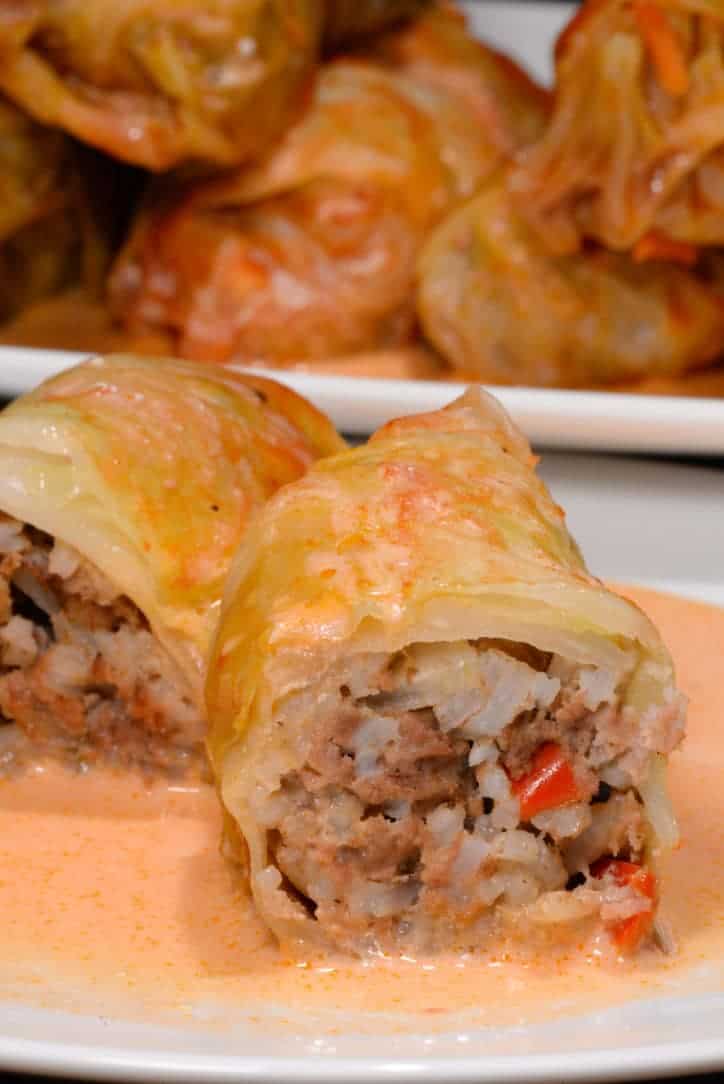
I call these "international" because of how many cultures are involved in bringing this dish together. I used a basic Mediterranean dish and added Greek seasoning, Italian sauce, American sausage, and a Cajun-based rice. So enjoy the variable tastes of the world.
- 1 head cabbage
- 1 lb jimmy dean sage sausage
- 1/3 red onion chopped
- 3 oz portabella mushrooms diced
- 1 8-oz box zatarain’s jambalaya mix rice 8oz box
- 1 24-oz jar bertolli italian sausage garlic & r
- 3 tablespoons bertolli virgin olive oil
- 8 large green olives chopped
- 1/3 cup green olive juice
- 1 tablespoon freshly chopped
- 2 tablespoons cavender’s greek seasoning
- 1 teaspoon garlic & pepper seasoning
- 1 large frying pan
- 1 2x11x15 baking pan
- 1 can pam cooking spray
- 1 roll of aluminum foil
- Carbohydrate 1.76126016666667 g
- Cholesterol 20.832 mg
- Fat 9.35913466666667 g
- Fiber 0.64164499908487 g
- Protein 4.45476866666667 g
- Saturated Fat 3.0375386 g
- Serving Size 1 1 Serving (57g)
- Sodium 206.895316666667 mg
- Sugar 1.1196151675818 g
- Trans Fat 0.590924166666667 g
- Calories 109 calories
Step-by-step
- Start the water to boil for the Zatarain’s rice mix; (follow instructions on the box).
- Turn the oven on bake to 350° to preheat.
- Dice ½ of package, (3oz), of sliced portabella mushrooms, chop 1/3 of a red onion, chop 1T of fresh tarragon or just gather 1t of dried tarragon, (make sure you only add a teaspoon of dried tarragon if you do not have the fresh), and chop 8-10 large green olives.
- Gather 1/3 cup of green olive juice, 1T of Cavender’s Greek seasoning, 1t of garlic & pepper seasoning.
- Once the rice is going good; get a large frying pan, cover its surface with 3T of olive oil, and turn the burner to med-high.
- When the pan is hot; add 1lb sausage, 3oz diced portabellas, 1/3 of a chopped red onion, 1T freshly chopped tarragon or 1t of dried tarragon, 1T of Cavender’s, and 1t of garlic & pepper seasoning.
- Brown the sausage to a light brown color, (do not overcook as it will have time to finish cooking in the oven), and then add 1/3 cup of green olive juice.
- Heat another 3-5 min and drain the sausage.
- Mix the sausage with the rice and 8-10 large chopped green olives.
- Stir until it is thoroughly mixed.
- Cut the head of cabbage in quarters and peel cabbage leaves trying to keep them in whole triangle pieces.
- Spray 2x11x15 pan with Pam and then put 1-2 tablespoons of filling in cabbage leaf and roll.
- Roll enough leaves to completely fill the pan with one layer and add the jar of Bertolli spaghetti sauce evenly over the rolls.
- Sprinkle 1T of Cavender’s Greek Seasoning over the rolls and cover the pan with foil.
- Bake at 350° degrees for 45 minutes and enjoy.
The Cabbage Leaf Imperative
The head of cabbage performs the heaviest structural lifting in this assembly, acting as both a flexible wrapper and a moisture regulator during the 350-degree bake. Raw cabbage contains a high volume of water that releases under heat, which means failing to dismantle the head into manageable triangles without tearing them will compromise the structural integrity of every single roll in the 2x11x15 baking pan. Steaming or blanching the leaves before rolling softens the rigid center vein just enough to make wrapping possible without puncturing the exterior membrane.Managing the Filling Moisture
Sausage and rice combinations require careful moisture management before they ever touch a green leaf. Brown the pork only to a light color in the frying pan, because overcooking the meat now will leave it dry after an additional 45 minutes in the oven covered with aluminum foil. Deglazing the pan with 1/3 cup of green olive juice introduces crucial acidity, but draining excess liquid thoroughly prior to mixing prevents the filling from turning into a soggy porridge that dissolves the cabbage from the inside out.Navigating Substitutions
Swapping components alters the moisture balance and seasoning profile significantly. Substituting standard long-grain rice for the packaged jambalaya mix removes pre-blended spices and sodium, requiring an adjustment of extra herbs to compensate for the lost flavor base. Adjusting the olive quantity or swapping the sauce changes the fluid dynamics entirely, so monitor the liquid pooling at the bottom of the baking dish closely as the rolls finish cooking.


