Molasses Barbecue Beans
A family favorite that is really good and very easy to make. This barbecued bean recipe makes a terrific side dish for any picnic or barbecue and draws raves from everyone. It's a great summer-time dish that is prepared on the stove-top (doesn't heat-up the house with a long oven cooking time). I think these beans taste even better after a day or two, so they are perfect for those of us who love to get things done in advance!
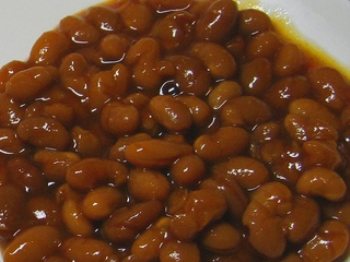
A family favorite that is really good and very easy to make. This barbecued bean recipe makes a terrific side dish for any picnic or barbecue and draws raves from everyone. It's a great summer-time dish that is prepared on the stove-top (doesn't heat-up the house with a long oven cooking time). I think these beans taste even better after a day or two, so they are perfect for those of us who love to get things done in advance!
- salt to taste
- 1/2 cup red wine vinegar
- 1/4 cup ketchup
- freshly ground black pepper to taste
- 1/4 cup worcestershire sauce
- 2 pounds navy or small white beans soaked overnight
- 2 cups white onions chopped
- 2 cups red onions chopped
- 1/4 cup garlic minced
- 1 1/2 tablespoons dijon mustard
- 1 1/4 tablespoons soy sauce
- 2 cups dark brown sugar
- 3 tablespoons dark chili powder
- 2 canned chipotle chilies chopped (along with some of the chipotle sauce; to taste)
- 1 pound canned plum tomatoes crushed by hand or chopped
- 1/2 cup sorghum molasses
- honey to taste
- Carbohydrate 122.91898916 g
- Cholesterol 0 mg
- Fat 2.114142314 g
- Fiber 24.4563495154515 g
- Protein 22.079548706 g
- Saturated Fat 0.2638003492 g
- Serving Size 1 1 Serving (320g)
- Sodium 266.3717816 mg
- Sugar 98.4626396445485 g
- Trans Fat 0 g
- Calories 580 calories
Step-by-step
- Cook white beans according to directions on package until just slightly tender.
- One hour before beans are done cooking, combine the remaining ingredients in a large saucepan or Dutch oven and simmer for 45 minutes. (It is important to cook the beans and make the sauce at the same time so that the hot beans will absorb the hot sauce.) When beans are slightly tender, drain and add to the sauce. Season to taste with honey, salt and pepper. Cook beans in the sauce, uncovered, over medium low to low heat until beans are fully tender and have fully absorbed the flavor, about 30-45 minutes, stirring ocassionally.
- Makes 8 to 10 servings.
Stovetop bean preparation eliminates the radiant kitchen heat generated by multi-hour oven baking while maintaining precise control over the reduction rate of the thick sugar and molasses sauce. Large dried navy or small white beans require a full overnight hydration period in cold water to rehydrate the cellular matrix evenly before boiling begins. Skipping this hydration step results in skins that rupture before the interior starches gelatinize properly, yielding a gritty texture that no amount of subsequent simmering can correct. Soaking also leaches out complex oligosaccharides, reducing the likelihood of digestive discomfort.
Scorched sugar is the primary hazard when combining dark brown sugar, sorghum molasses, and ketchup in a heavy-bottomed Dutch oven. High heat causes the dense carbohydrate mixture to caramelize prematurely and burn at the vessel base, imparting a bitter flavor profile to the entire pot. Maintain a medium-low to low heat setting throughout the final forty-five-minute simmer, and stir the pot every five minutes with a wooden paddle to scrape up any solids adhering to the metal. Utilizing a heavy cast-iron or enameled Dutch oven distributes the thermal energy more uniformly than thin aluminum cookware.
Combining hot, freshly drained beans directly with the simmering aromatic sauce enables rapid osmotic absorption of the vinegar, soy sauce, and chili-infused liquid. If the beans cool down before meeting the sauce, the outer starches tighten, preventing the deep penetration of the sweet and acidic flavor compounds. Maintain a gentle simmer uncovered so excess moisture evaporates continuously, concentrating the chopped plum tomatoes and chipotle chilies into a glossy, clingy coating.
Testing doneness requires pressing a single bean against the side of the pot using the flat of a spoon or your fingers; it should yield completely with zero resistance and a creamy interior, showing no chalky center. Because starch molecules continue to bind flavors as the temperature drops, resting the finished dish covered in the refrigerator for twenty-four to forty-eight hours substantially deepens the overall flavor balance before reheating.



