Tuscan Vegetable Soup
This is a modified version of a recipe from Cooking Light magazine. I make it at least once a month.
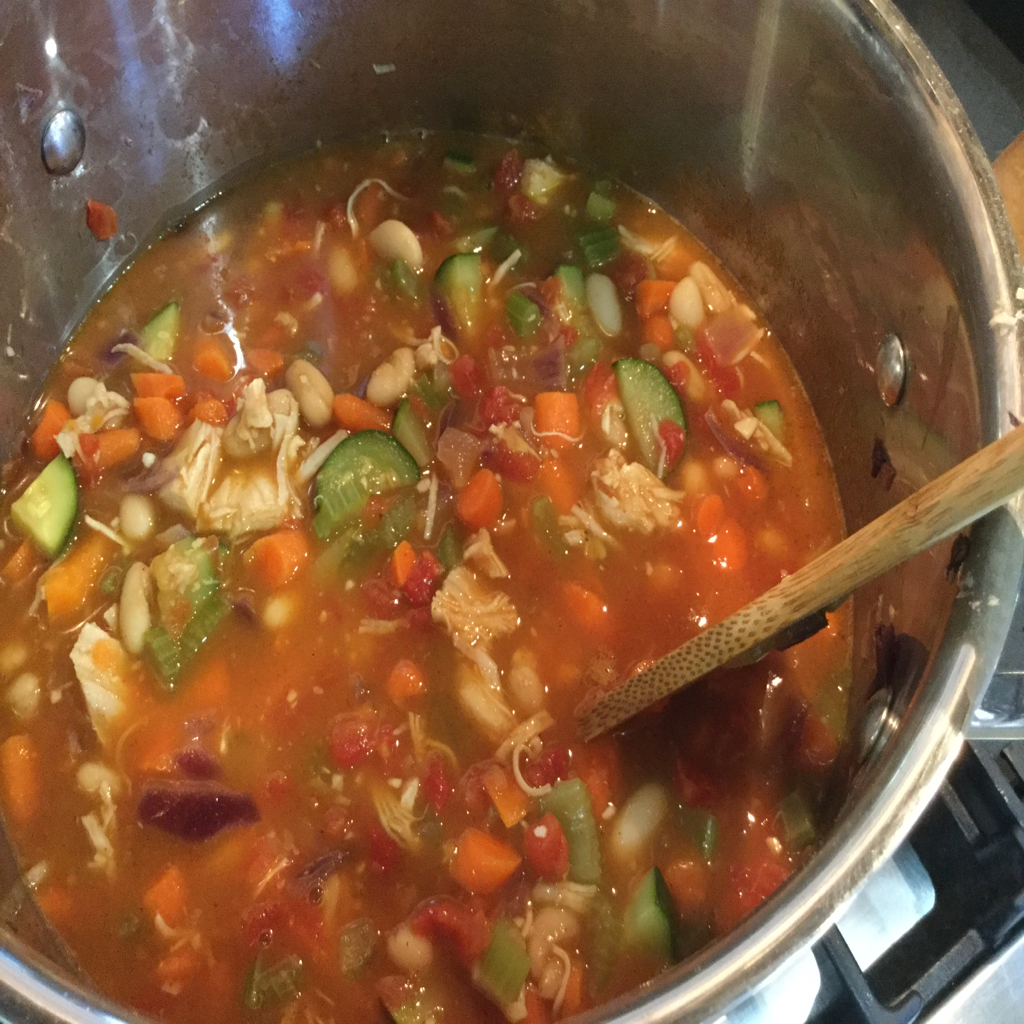
This is a modified version of a recipe from Cooking Light magazine. I make it at least once a month.
- 1 tablespoon olive oil
- 1 can (16 oz) cannellini beans or other small white beans, low sodium, drained & rinsed
- 1 ea carrot medium, diced, about 1/2 cup
- 1/2 ea onion large, diced, about 1 cup
- 2 each celery 2 stalks, diced, about 1/2 cup
- 1 ea zucchini small, about 1/2 pound, diced, about 1 1/2 cups
- 1 clove garlic minced, about 1 tsp
- 2 teaspoons sage fresh, chopped or 1/2 tsp. dried
- 1 tablespoon thyme chopped, fresh or 1 tsp. dried
- 1/2 teaspoon salt more to taste, if necessary
- 1/4 teaspoon pepper freshly ground, more to taste
- 4 cups chicken broth low sodium, can use vegetable broth
- 1 can (14.5 oz) diced tomatoes with juices
- 2 ounces baby spinach fresh, 2 cups lightly packed, chopped
- 1/3 cup parmasan cheese freshly grated, optional
- Carbohydrate 6.7694136073431 g
- Cholesterol 0 mg
- Fat 5.42631327452084 g
- Fiber 1.23536101222316 g
- Protein 17.4711604348799 g
- Saturated Fat 1.44829927061773 g
- Serving Size 1 1 Serving (879g)
- Sodium 2622.02510625408 mg
- Sugar 5.53405259511994 g
- Trans Fat 0.561626819282345 g
- Calories 153 calories
Step-by-step
- In a small bowl, mash half of the beans with a masher or the back of a spoon; set aside.
- Heat the oil in a large soup pot over medium-high heat. Add the onion, carrot, celery, zucchini, garlic, thyme, sage, salt and pepper, and cook, stirring occasionally, until the vegetables are tender, about 5 minutes.
- Add the broth and tomatoes and bring to a boil.
- Add the mashed and whole beans and the spinach leaves; cook until the spinach is wilted, about 3 minutes more.
- Serve topped with the Parmesan, if desired.
A successful vegetable soup relies on recognizing precise physical transformations rather than watching a clock. When aromatics like onions, carrots, and celery are sweated in olive oil over medium-high heat, cell walls break down as pectin degrades, which yields translucent edges and tender textures within five minutes. Rushing this initial phase leaves fibrous cells intact.
Judging Doneness Visually
Assessing the readiness of a broth-based soup requires observing specific structural changes in the pot. Zucchini pieces should turn slightly olive-green and yield easily to the flat edge of a spoon without losing their geometric shape entirely. Introducing chopped spinach leaves at the end demands only three minutes of thermal exposure; the residual heat of the simmering liquid is sufficient to collapse the cellular structure of the greens into a vibrant, uniform wilt without dulling their color. If the greens submerge and turn a drab olive drab, they have overcooked.
Managing Texture Through Starch
Mashing half of the cannellini beans before adding them to the pot alters the viscosity of the surrounding liquid. The released starches act as a natural thickening agent when dispersed into the simmering chicken or vegetable broth, shifting the mouthfeel from watery to velvety. Conversely, boiling the soup too vigorously after the beans are incorporated can break down whole legumes past the point of structural integrity, muddying the clarity of the broth.


