Low Carb Cauliflower Soup
Creamy and flavorful, this low-carb soup is perfect for a light and healthy lunch.
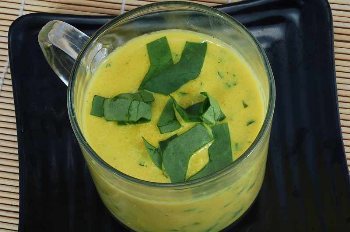
Creamy and flavorful, this low-carb soup is perfect for a light and healthy lunch.
- Carbohydrate 10.567237 g
- Cholesterol 9.3745 mg
- Fat 2.655392 g
- Fiber 1.27418000155091 g
- Protein 1.379419 g
- Saturated Fat 1.6264885 g
- Serving Size 1 1 Serving (604g)
- Sodium 2190.1301 mg
- Sugar 9.29305699844909 g
- Trans Fat 0.1574565 g
- Calories 68 calories
Step-by-step
- Cut up cauliflower into medium (about 1 - 1 1/2 inch) chunks. Don't forget that the center core (except the very bottom) is edible also. Place in saucepan with the vegetable broth. You can use chicken broth if you wish but the dish won't be vegetarian then.
- Cook the cauliflower until very tender (about 15 minutes) then move the broth and cauliflower to a food processor or (in smaller batches) a blender. Be sure to place a towel over the top of the blender. That way you won't get a bath in scalding hot broth if the top comes off while blending the hot liquid.
- Pulse briefly to get things broken up then add the tumeric to give it a rich yellow color. Pulse a few more times and sprinkle in the potato flakes. These give the soup a smoother texture as the cauliflower can be a bit "grainy". Mix in the cream and possibly a bit more broth to adjust the thickness. Blend once more and season with salt & pepper.
- Stir in spinach just prior to serving and garnish with a few shreds on top.
Why does pureed brassica soup sometimes turn out gritty instead of smooth? Cauliflower cells contain stubborn structural walls that resist breaking down completely under heat alone. Cutting the heads into uniform chunks measuring one to one and a half inches ensures even thermal penetration during the fifteen-minute simmer in vegetable broth. Cooking these pieces until completely tender eliminates the raw sulfur compounds before the liquid ever reaches the blade. Processing hot liquids requires caution because expanding steam creates high pressure inside closed containers. Placing a folded kitchen towel firmly over the lid prevents the top from blowing off during operation. Pulsing the mixture briefly breaks down the bulk fibers without incorporating excessive air. Pureed brassica vegetables naturally yield a watery or slightly grainy suspension once liquefied. Introducing a small quantity of potato flakes corrects this structural flaw by absorbing excess moisture while releasing starches that bind the emulsion together. Turmeric provides a warm golden hue without altering the neutral profile of the base. Heavy cream and milk supply dairy fats that coat the tongue, enhancing the perception of richness without adding heavy flour thickeners. Adjusting the final thickness requires a measured addition of extra broth rather than dumping all remaining liquid in at once. Folding finely chopped spinach in at the very end leaves bright green flecks throughout the pale yellow background. Making this batch yields ten generous portions, but smaller households can easily halve all quantities by reducing the vegetable broth to one cup and scaling the dairy proportionally. Retaining the edible core parts of the head eliminates unnecessary food waste while adding extra bulk to the pot.



