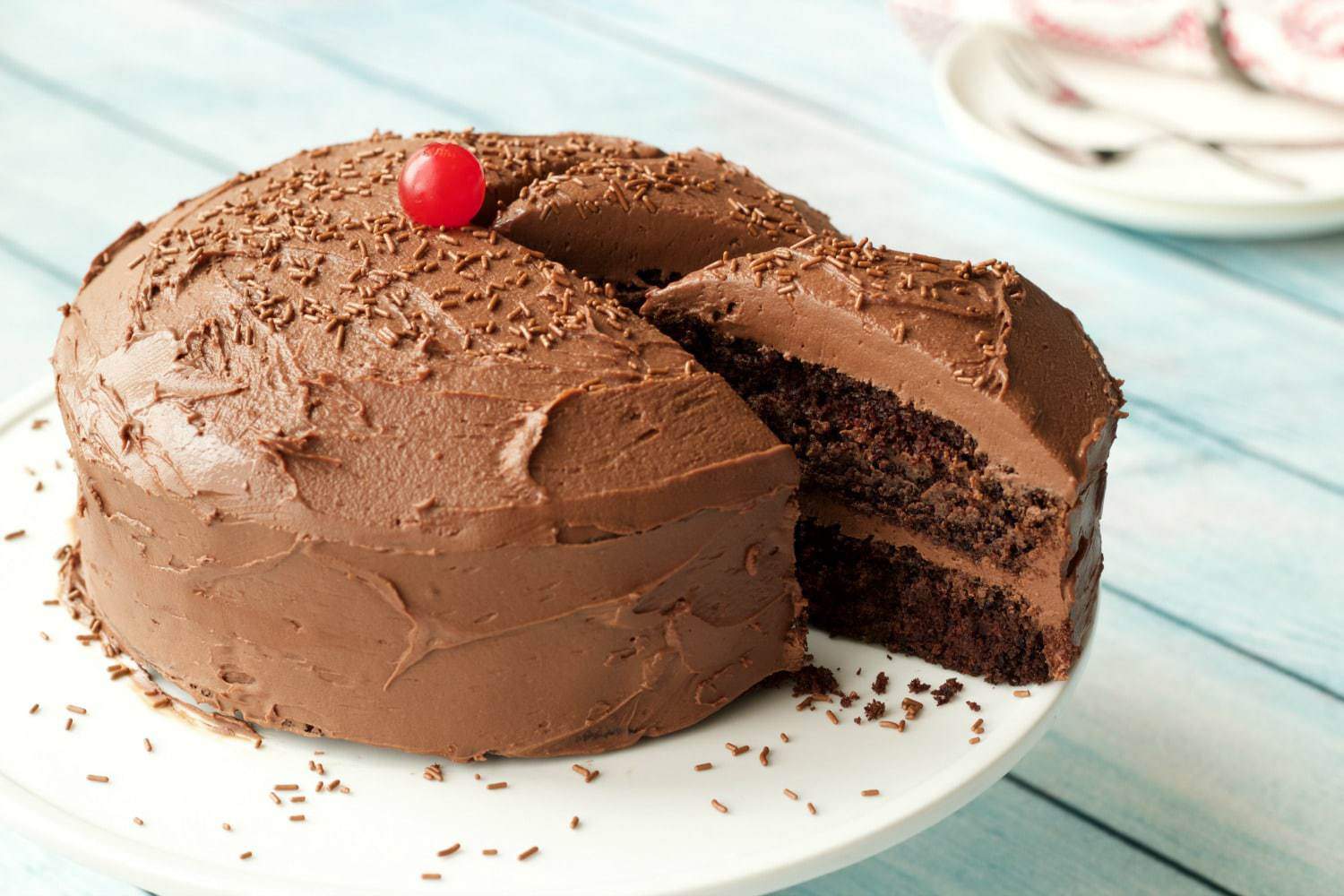
Try this Chocolate Cake (Vegan) recipe
- Carbohydrate 490.723262366116 g
- Cholesterol 0 mg
- Fat 3.1091200014912 g
- Fiber 8.02264013224409 g
- Protein 20.9813440157184 g
- Saturated Fat 0.980284400235853 g
- Serving Size 1 1 Serving (779g)
- Sodium 1428.19075833638 mg
- Sugar 482.700622233872 g
- Trans Fat 0.73415680049453 g
- Calories 2053 calories
Step-by-step
- Preheat over to 190 Celcius (360? F).
- Grease and flower a 20cm cake tine.
- In a mixing bow combine flour, sugar, cocoa, bicarbonate soda and salt.
- Make sure you get all the lumps out of the cocoa.
- Make a well in the center of the dry ingredients and add vanilla, vinegar and apple sauce.
- Gradually stir in water.
- Avoid over stirring.
- Bake for 30 minutes or until a toothpick comes out clean.
- Cool in tin on rack for 10 minutes then transfer cake to the rack to cool.
- Sift icing sugar over top and serve.
- Will freeze well.
Ingredient measurements rarely convey how chemical leaveners behave when combined with acid in a batter. Cocoa powder contains natural acids that react immediately with bicarbonate of soda upon hydration, generating carbon dioxide bubbles that lift the crumb without eggs. Sifting the flour and cocoa together before adding liquids breaks down persistent cocoa clumps, ensuring an even distribution of color and flavor throughout the crumb. Skipping this step leaves bitter pockets of dry powder in the baked interior.
Stirring the wet ingredients into the dry requires restraint. Overmixing develops gluten networks in the plain flour, producing a tough, rubbery texture instead of a tender crumb. Mixing only until the liquid disappears keeps the internal structure soft and delicate. Pouring the batter into a greased and floured twenty-centimeter tin prevents sticking, allowing the delicate edges to release cleanly after baking at 190 degrees Celsius.
Baking times fluctuate based on moisture levels inside the oven. Apple sauce introduces pectin and water, which extends the baking window significantly beyond the baseline thirty minutes. Testing with a wooden skewer inserted into the center provides the most reliable indicator of doneness; moist crumbs clinging to the wood mean the interior remains underbaked, whereas a clean withdrawal signals completion.
Slicing the cake on the second day reveals a denser, more cohesive crumb structure as the starches retrogress and retain moisture. Storing leftovers tightly wrapped at room temperature prevents the crumb from drying out prematurely. Leftover slices also freeze well for up to three months when wrapped in parchment paper and sealed inside a plastic bag.


