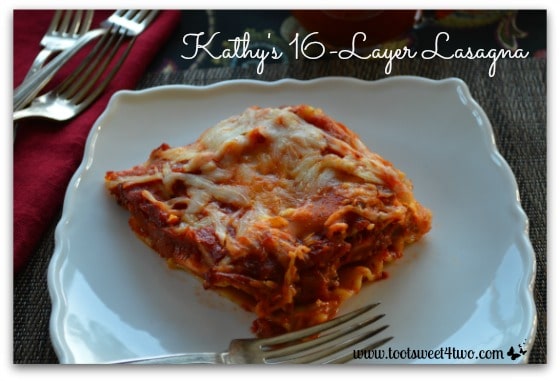
My absolute favorite recipe
- Carbohydrate 56.0311083151373 g
- Cholesterol 394.493002775 mg
- Fat 70.3838804053131 g
- Fiber 3.38732978667477 g
- Protein 86.1518714825557 g
- Saturated Fat 40.4621405610808 g
- Serving Size 1 1 Serving (476g)
- Sodium 1705.28459252611 mg
- Sugar 52.6437785284626 g
- Trans Fat 6.299987528853 g
- Calories 1210 calories
Step-by-step
- Brown ground beef along with chopped onion. Drain when brown.
- Add tomato paste (Add a can full of water)
- Add 1 to 2 tablespoons garlic powder
- Let simmer on low or medium low.
- Bring large boiler of water to boil (about ½ full of water)
- Add a little salt and lasagna noodles.
- Drain when cooked. Then return noodles to boiler and cover noodles with cold water. Leave there until ready to mix with other ingredients.
- Mix cottage cheese with three raw eggs.
- Shred cheddar & mozzarella cheese and mix together.
- Spray bottom and sides of 9 x 13 baking dish or pan
- Layer each of the parts – order doesn’t really matter – just remember to put shredded cheese between each of the parts.
Part 1 – meat sauce
Part 4 – shredded cheese
Part 2 – noodles
Part 4 – shredded cheese
Part 3 – cottage cheese mixture
Part 4 – shredded cheese
Repeat until all ingredients are gone. End with lots of shredded cheese on top - Cover with aluminum foil (punch air holes) and bake at 350 for about 60 minutes (check frequently).
Adjusting layered pasta dishes requires maintaining exact proportional volumes to prevent structural collapse during baking. Scaling this lasagna up for a larger gathering demands careful management of the 9x13-inch pan constraint. Doubling the ground beef and tomato paste means dividing the contents across two separate baking vessels rather than overloading a single dish. Overfilling prevents adequate heat penetration, leaving the center cold even after sixty minutes at 350 degrees Fahrenheit.
Scaling Proportions Downward
Halving this formulation requires reducing the egg-to-cottage-cheese ratio proportionately to avoid a watery custard layer. Single-serving pans retain moisture differently than large casseroles, necessitating the removal of the aluminum foil cover during the final fifteen minutes of baking to encourage proper surface browning on the cheddar and mozzarella blend. Submerge cooked lasagna noodles in cold water immediately after boiling to halt residual starch gelatinization and prevent sticking.Historical Context of Layered Pasta
Originating from ancient Greek laganon strips, medieval European iterations of layered pasta baked sheets of dough with various fillings long before the introduction of New World tomatoes. Modern adaptations vary widely by geography, substituting regional cheeses like cottage cheese for traditional ricotta based on local availability.


