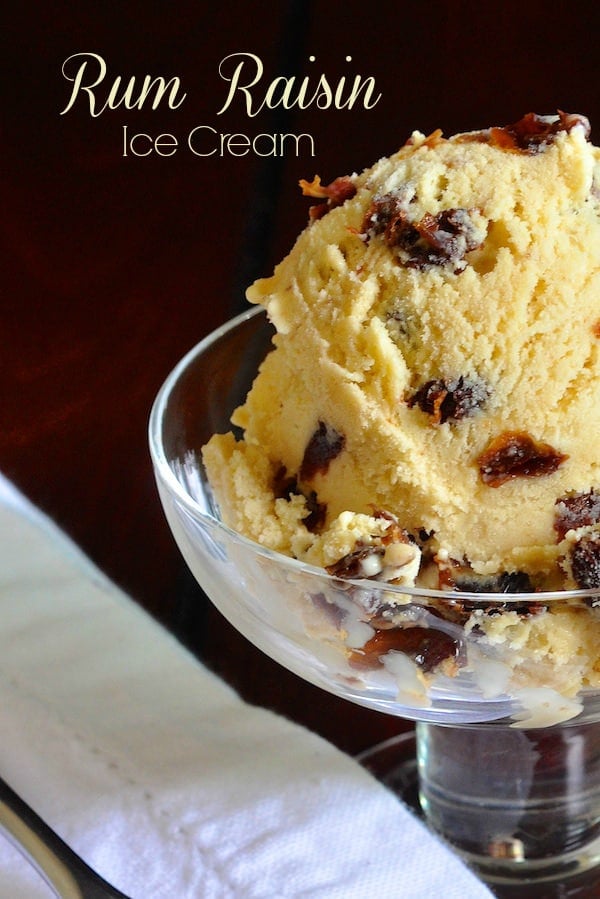
Try this Rum Raisin Ice Cream recipe, or contribute your own
- Carbohydrate 649.7218 g
- Cholesterol 13567.52 mg
- Fat 328.0027 g
- Fiber 0 g
- Protein 180.2944 g
- Saturated Fat 128.05663 g
- Serving Size 1 1 recipe (2109g)
- Sodium 631.12266666792 mg
- Sugar 649.7218 g
- Trans Fat 13.8003 g
- Calories 6534 calories
Step-by-step
- Combine raisins and rum in small bowl. Cover; let stand at room temperature at least 2 hours (I've found better results with a 3-4 hour soak). Drain raisins, reserving 1/2 cup rum (or 1/4 cup, if you like your ice cream less boozy). Combine drained raisins and reserved rum in same bowl.
- Bring milk and whipping cream to boil in heavy large saucepan over medium heat. Meanwhile, whisk egg yolks and sugar in large bowl until blended and slightly lightened in color. Gradually whisk warm ingredients into yolk mixture. Return mixture to saucepan; stir over medium-low heat until custard thickens, about 15 minutes. (The custard should coat the back of a spoon, and a finger swipe down the back of the spoon should leave a clean line.) Strain custard into bowl. Cool. Add raisin mixture to custard. Refrigerate until cold, at least 4 hours.
- Transfer custard to ice cream maker and process according to manufacturer's instructions. Freeze ice cream in covered container until firm enough to scoop, at least 2 hours.
Why does alcohol prevent freezing?
Adding two-thirds of a cup of dark rum to a frozen dessert base changes its freezing point entirely. Ethanol does not freeze at standard home freezer temperatures. If excess alcohol enters the churn, the final product remains soup instead of solid. Restricting the soak to half a cup of reserved rum prevents this structural failure. Plumping the raisins beforehand also stops them from turning into hard, icy pellets in sub-zero environments.
How do you test the custard base?
Proteins in eight egg yolks coagulate when heated, thickening the dairy base. Pull the saucepan off the burner immediately when the temperature reaches 170 degrees Fahrenheit. Stir continuously over medium-low heat to avoid hot spots. Test readiness by dragging a finger across the back of a coated spoon. A clean line must remain without the liquid running back together. Chill this mixture for at least four hours before churning to drop the thermal baseline.


