Grandma's Meatloaf
Tried and True, this recipe was passed down from my maternal Grandmother. It is the meatloaf that she used to serve for Sunday dinner and has been a favorite of our family for as long as I can remember!
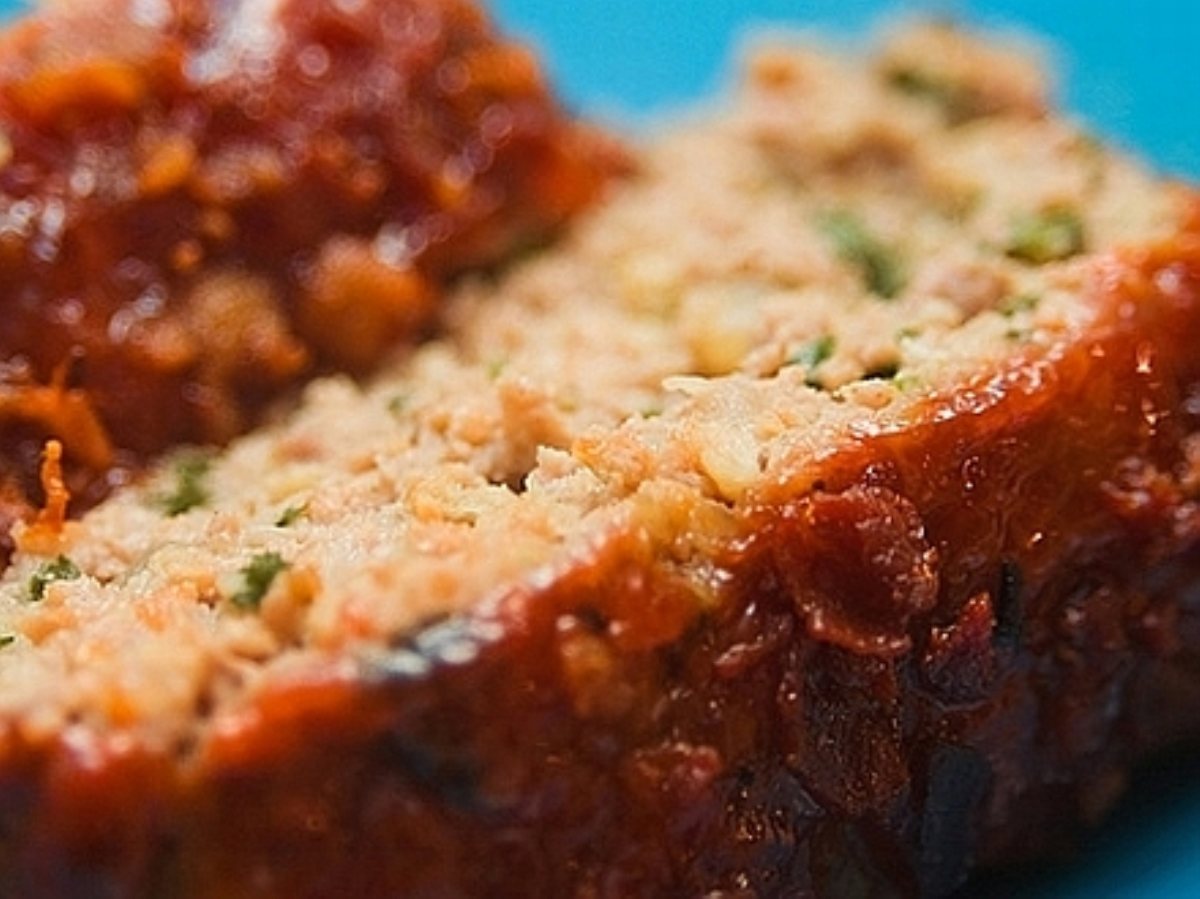
Tried and True, this recipe was passed down from my maternal Grandmother. It is the meatloaf that she used to serve for Sunday dinner and has been a favorite of our family for as long as I can remember!
- 2 large eggs lightly beaten
- 2 tablespoons olive oil
- 2 tablespoons brown sugar
- 1 dash hot pepper sauce
- 1 dash worcestershire sauce
- glaze (optional)
- 1/4 cup chili sauce or ketchup
- 2 tablespoons apple cider vinegar
- meatloaf
- 1/2 large onion finely chopped (about 1 cup)
- 1 can (6 oz) tomato paste
- 2 teaspoons worcestershire sauce
- 1/3 cup milk (scant)
- 2 pounds ground beef (preferably 85 percent lean ground chuck)
- 16 saltine crackers finely crushed (about 2/3 cup)
- 1/4 cup fresh parsley minced
- 1/2 teaspoon kosher salt (or, to taste)
- 1/4 teaspoon fresh ground black pepper (or, to taste)
- Carbohydrate 30.435201850547 g
- Cholesterol 172.320550000676 mg
- Fat 13.7961914079536 g
- Fiber 1.95061459907019 g
- Protein 30.0185772484772 g
- Saturated Fat 4.52812135819841 g
- Serving Size 1 1 Serving (229g)
- Sodium 631.806076784151 mg
- Sugar 28.4845872514768 g
- Trans Fat 5.63792635998261 g
- Calories 368 calories
Step-by-step
- In a small bowl, mix together ketchup, vinegar, Worcestershire sauce, hot pepper sauce and brown sugar. Set aside. (Note: You may double (or more) the glaze, if desired. Also, a second batch of glaze, simmered over medium-low heat until thick and syrupy, about 5 minutes, is good to serve separately with the meatloaf.)
- Preheat oven to 350 degrees F.
- In a medium skillet, saute onions in olive oil until just translucent, about 5 minutes. Let cool.
- In a large bowl, mix together onion, tomato paste, Worcestershire sauce, and milk until well combined.
- Add ground beef, eggs, crushed crackers, parsley, salt and pepper. Mix with fork until evenly blended and mixture doesn't stick to the bowl. If it sticks add more milk. (Note: Handle meat gently; it should be thoroughly combined but not made into a mushy paste.)
- With wet hands, pat mixture into a greased 9- by 5- by 3-inch loaf pan. Line loaf pan with parchment paper or foil for easy clean up, if desired
- Brush with glaze, if desired.
- Place in center of preheated oven and bake, uncovered, until cooked through and a thermometer inserted into center registers 160 degrees F, about 1 1/4 to 1 1/2 hours.
- Drain any excess fat, and allow to rest for 10 to 15 minutes before serving.
Is the center still raw while the edges dry out? Meatloaf often invites skepticism because dense ground meat mixtures obscure visual cues, leaving home cooks guessing about internal readiness. Ground chuck requires thorough cooking to render fat safely, yet overbaking yields a dry block. Achieving structural integrity depends entirely on how the binders interact with the protein network. Crushed saltine crackers absorb moisture effectively while maintaining lighter pockets than breadcrumbs soaked heavily in liquid. Sautéing the onions beforehand removes excess water content that would otherwise steam the meat and create a crumbly texture. Combining the wet ingredients with the aromatics before introducing the beef prevents overworking the protein. Handling ground beef too aggressively develops tough strands, transforming a tender slice into a dense sausage-like mass. Gently mixing with a fork until the components just adhere preserves the delicate crumb structure necessary for a moist slice.
Assessing doneness without a digital thermometer remains a challenge for many kitchen cooks. Inserting a metal skewer into the geometric center of the loaf provides a reliable physical test. Hold the skewer there for ten seconds, then press it against the inside of your wrist. A hot skewer indicates the interior has reached adequate heat transfer. Alternatively, clear juices running from the thickest part signify that the internal fat and moisture have stabilized. Baking at 350 degrees Fahrenheit for approximately 75 to 90 minutes provides the necessary thermal energy for a two-pound loaf of 85 percent lean ground beef to reach 160 degrees internally. Allowing the loaf to rest for 10 to 15 minutes before slicing permits internal juices to redistribute throughout the protein matrix, preventing the slices from crumbling apart upon the cutting board.
Regional variations throughout the American South often incorporate chili sauce alongside tomato paste to add mild acidity and depth to the glaze. Doubling the glaze ingredients allows half to be simmered separately over medium-low heat for five minutes until thick and syrupy, offering a concentrated sauce for the table.



