Thanksgiving Deep Fried Turkey
The popularity of deep fried turkey has grown in the past decade. It's worth the prep and time to have this on your Holiday menu.
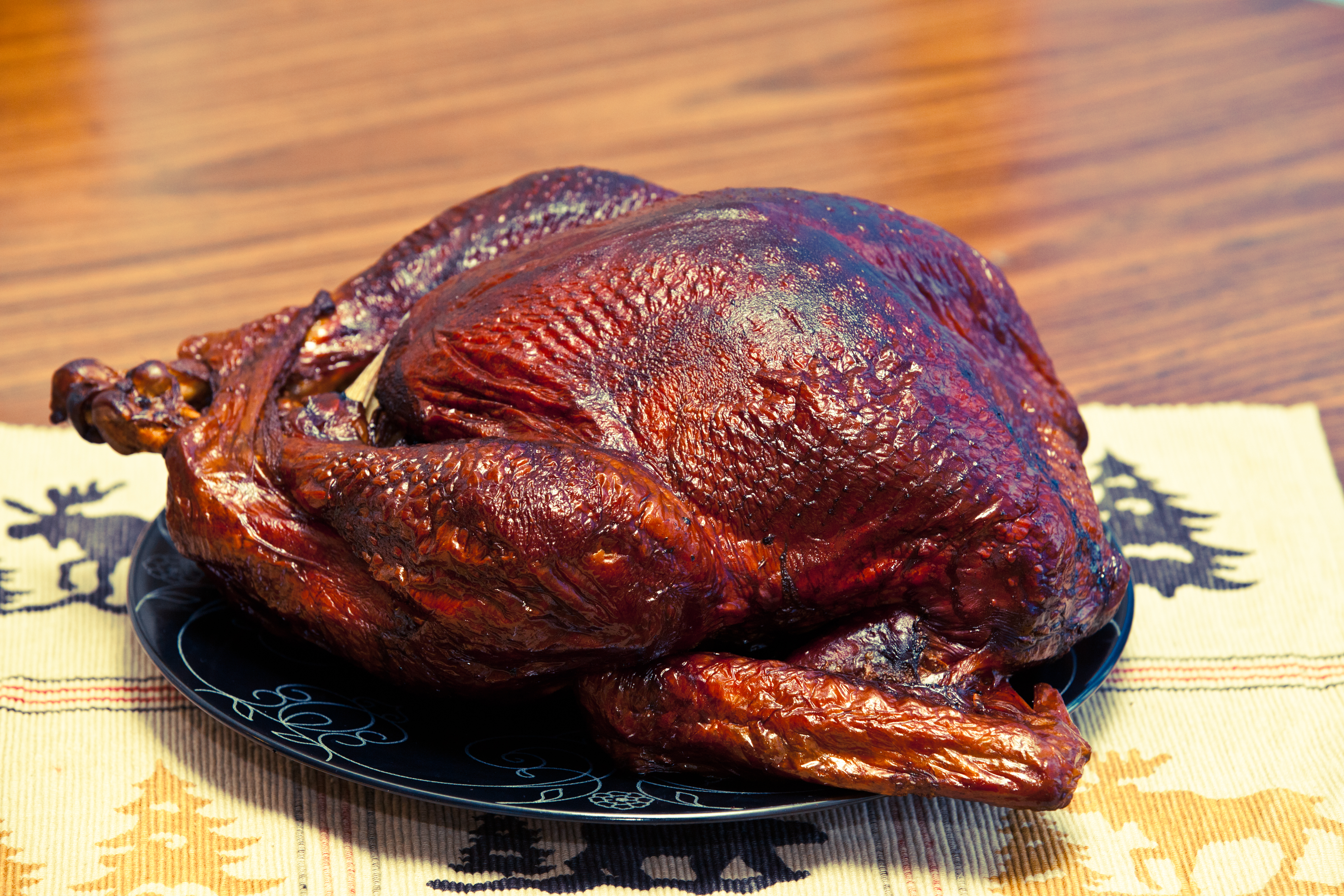
The popularity of deep fried turkey has grown in the past decade. It's worth the prep and time to have this on your Holiday menu.
- 14 lbs turkey completely thawed, (up to 20)
- brine for turkey
- 1/2 cup salt
- 2 gallons water
- 1 bottle italain dressing
- 1/2 cup creole seasonings, like tony chachere's
- 1/4 cup paprika
- 1 tablespoon cayenne pepper
- 4 cloves fresh garlic minced
- for the body cavity of the turkey:
- 3 sprigs fresh thyme (up to 4)
- 1 sprigs sprigs of fresh rosemary (up to 2)
- oil, such as peanut or canola oil for frying
- Carbohydrate 3.59243268592683 g
- Cholesterol 294.8350405 mg
- Fat 18.0506208202322 g
- Fiber 0.881234497610848 g
- Protein 99.2426962733454 g
- Saturated Fat 5.11471384128903 g
- Serving Size 1 1 Serving (1016g)
- Sodium 617.818595460072 mg
- Sugar 2.71119818831598 g
- Trans Fat 2.94937527418913 g
- Calories 598 calories
Step-by-step
- Marinade or Brine your Turkey for at least 8 hours for extra flavor and to make sure it is really moist. You will need a pot big enough to keep in your refrigerator for the 8 hour period to keep your Turkey in. You will mix all ingredients together, and add your Turkey and the marinade to your pot, and cover, and add to the refrigerator overnight. I like to put the fresh herbs directly into the cavity of the bird for a little extra flavor. When you are done marinading you are ready to cook your Turkey.
- You will need a completely thawed turkey, a couple gallons of oil, and a very large cooking pot. You can use canola, vegetable oil, but it is better if you use peanut oil. You will also need to truss the turkey, meaning you need to secure the legs, neck flap, wings and tail to the body of the turkey. Make sure that there is not any type of thermometer or device that will pop out on the turkey. It would melt into the oil, not a good thing.
- To determine the perfect amount of oil you are going to be using, place the turkey in the pot and add water until the turkey is completely covered plus an inch or two left from the top. If you do not have any room for extra water you will need to get a larger pot. You will then remove the turkey and measure the amount of water left, and this is the amount of oil you will need to fry your turkey.
- You will now dry and season your turkey, and make sure that your frying pot is completely dry. You can add any seasonings you like; I prefer to inject my seasonings directly into the bird. You can also add you cooking pot to your stove top and heat to make sure all water is gone before adding to your outdoor fryer heating source. Once completely dry you will add the oil to the pot and bring it to a temperature of about 375 to 400 degrees. Make sure that you are able to get a good read on the temperature. It may fluctuate a few degrees depending on the weather while cooking outside but it should not be that big a deal. You just want to make sure that you are cooking in a covered but ventilated are. If it is raining or snowing it will make your Turkey frying experience for a really bad day.
- The turkey needs to be room temperature and dry. Turn off the burner when you put the turkey in. You are going to lower the turkey into the pot of very hot oil 400 degree oil. The oil is going to splatter some and you will need some very good cooking gloves. Just remember to very slowly lower your turkey into the hot oil. A good method here is dunking your turkey, and I do not mean cannon ball either. When you lower your turkey into the hot oil it will boil up. This is why I suggest turning off the burner or heat source when you do it. You may have to do this multiple times and then one time might do the trick. Just make sure that the oil does not overflow the cooking pot.
- Once the bird is safely resting in the oil, turn the burner back on to get to a temperature of 350 degrees. Don't wander too far because that turkey will be done soon. A deep fried turkey cooks at a rate of about 3 to 3 1/2 minutes per pound. A ten pound turkey should take 30-35 minutes. If you have a bio thermometer you will need to test the turkey for doneness. The internal temperature needs to read 160-165 degrees. Make sure you are testing between the thigh area, and not hitting a bone to get a correct read.
- Remove the turkey from the oil when it's done. Do this slowly and after you have turned off the burner. Let the turkey drain a little bit and you're set to go. Let it rest for about 20 minutes and then carve and enjoy this crisp and delicious bird.
While traditional oven-roasted poultry relies on dry ambient heat to gradually brown the skin, submerging a whole bird in 400 degrees Fahrenheit oil radically accelerates thermal transfer through convection, drastically compressing a multi-hour cooking window into minutes. Peanut oil works exceptionally well here due to its high smoke point of approximately 450 degrees Fahrenheit, though refined canola or corn oil serve as reliable alternatives if peanut allergies are a concern. Water displacement measurement must happen prior to heating any oil; placing the raw turkey into your vessel and filling it with water until the liquid rests two inches above the bird ensures you calculate the exact oil volume needed without risking hazardous overflow onto an open flame.
Thermal Dynamics and Safety Protocols
Lowering a thawed, completely dry fourteen-pound turkey into boiling fat requires extinguishing the burner entirely to eliminate ignition risks from displaced oil splashing onto the heat source. Once the bird settles into the basket and the burner reignites, monitor the temperature closely, maintaining the cooking environment around 350 degrees Fahrenheit. Because conduction through oil cooks meat at a rapid rate of roughly three and a half minutes per pound, constant vigilance prevents scorching. Insertion of an instant-read thermometer into the thickest part of the thigh, making sure steel never touches bone, confirms doneness precisely at 165 degrees Fahrenheit before resting.
- Pat the skin completely dry with paper towels to minimize dangerous steam-driven spatter upon immersion.
- Turn off the propane burner completely before lowering the bird and do not turn it back on until the oil level stabilizes.
- Allow the fried bird to rest uncovered for twenty minutes so internal juices redistribute evenly through the muscle tissue.


