Pavlova
This classic Australian dessert is a light and airy meringue with a crisp exterior and a soft, marshmallow-like interior. Often topped with whipped cream and fresh fruit.
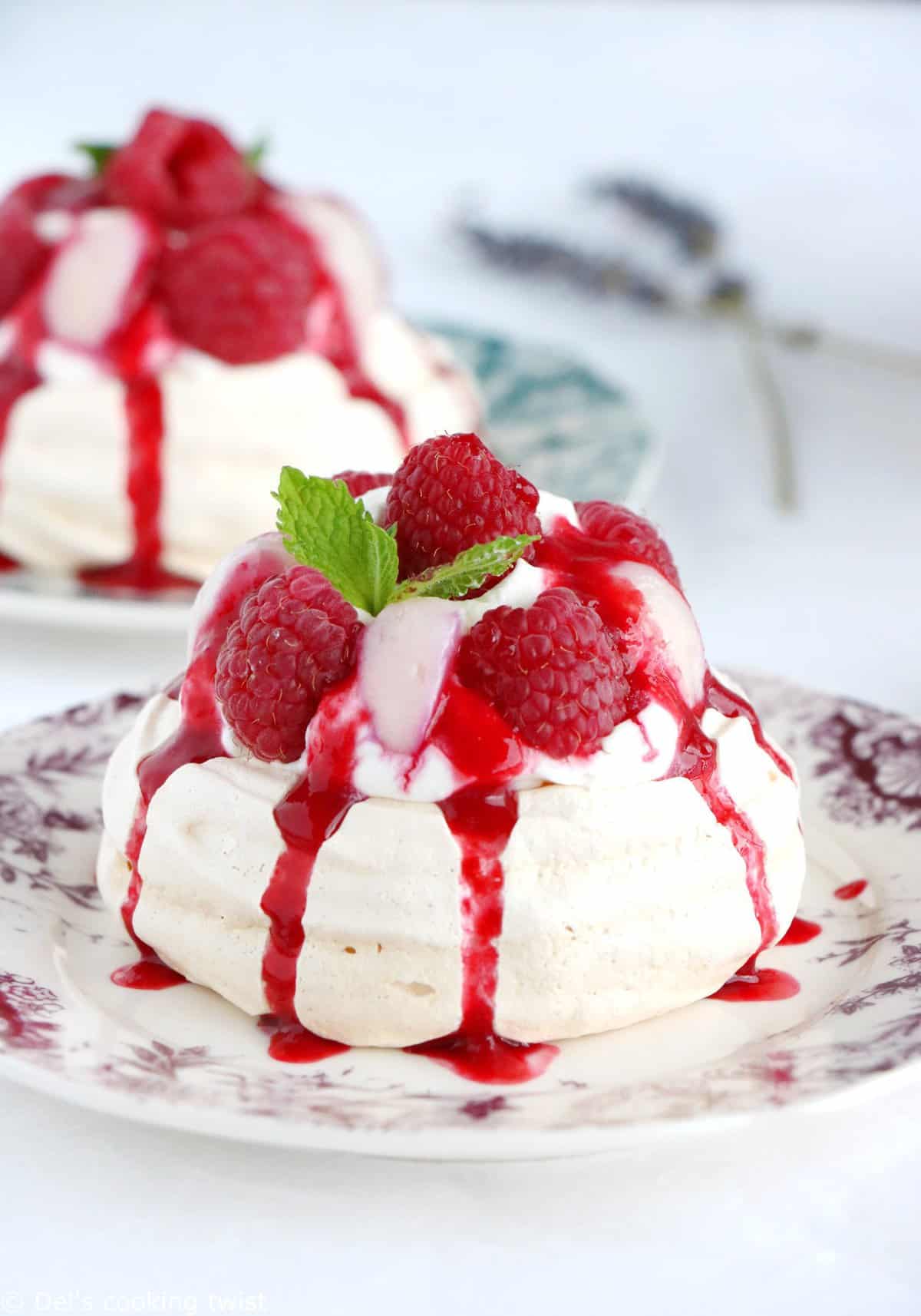
This classic Australian dessert is a light and airy meringue with a crisp exterior and a soft, marshmallow-like interior. Often topped with whipped cream and fresh fruit.
- Carbohydrate 117.3350875 g
- Cholesterol 0 mg
- Fat 1.4584 g
- Fiber 0 g
- Protein 86.328 g
- Saturated Fat 0.0224 g
- Serving Size 1 1 Serving (908g)
- Sodium 1315.914375 mg
- Sugar 117.3350875 g
- Trans Fat 1.34416 g
- Calories 817 calories
Step-by-step
- With an electric mixer, beat the egg whites until soft peaks form, then gradually add the sugar (about 1 tsp every 30 seconds). This will take around 15 minutes. Beat until firm.
- Add the vinegar. When combined, turn out onto a flat baking sheet that has been greased and dusted with cornflour. Shape it so that there will be a hollow in the centre to hold the fruit.
- Cook in a pre-heated, warm oven (350-375 deg. F, 195-210 deg C)) for 10 minutes, then at 200-250 deg. F (110-140 deg C) for 40-50 mins.
- When cooked, turn the oven off, and allow to cool slowly in the oven for at least an hour, preferably overnight. Gradual cooling is important.
- Serve cold, topped with whipped cream and fresh fruit such as strawberries, bananas, and kiwi fruit.
Egg whites do the heaviest lifting in this dessert. Whisking mechanical force unravels tightly coiled protein chains. These proteins entrap air while simultaneously bonding with water molecules. Castor sugar must be introduced gradually during this whipping process. Adding sugar too quickly prevents the proteins from forming the necessary microscopic film around air bubbles. Sugar molecules dissolve into the liquid phase of the egg white, creating a heavy, glossy syrup that reinforces the protein walls. Acid, supplied here via vinegar, lowers the pH and tightens the protein network further. This chemical stabilization prevents the meringue from weeping liquid or deflating prematurely before baking begins.
Baking and Cooling Mechanics
Thermal management dictates structural success. An initial oven blast at 350 to 375 degrees Fahrenheit rapidly expands trapped air pockets. This creates a sturdy exterior shell. Lowering the temperature to 200 or 250 degrees Fahrenheit prevents scorching while gently drying the interior. Cooling requires extreme patience. Shutting off the heat and leaving the meringue inside for at least one hour or overnight prevents thermal shock. Sudden temperature drops cause steam inside the marshmallow-like center to contract rapidly, resulting in a collapsed crust.
- Grease on mixing bowls prevents egg whites from whipping; wipe glass or metal bowls with lemon juice or vinegar beforehand.
- Soft peaks must form before adding sugar; test by lifting the beaters straight up to check if tips curl slightly.
- Uneven browning indicates hot spots; rotate baking sheets halfway through the initial high-heat phase.
- Surface cracking signals too much initial heat; reduce the starting temperature by twenty-five degrees if this occurs consistently.



