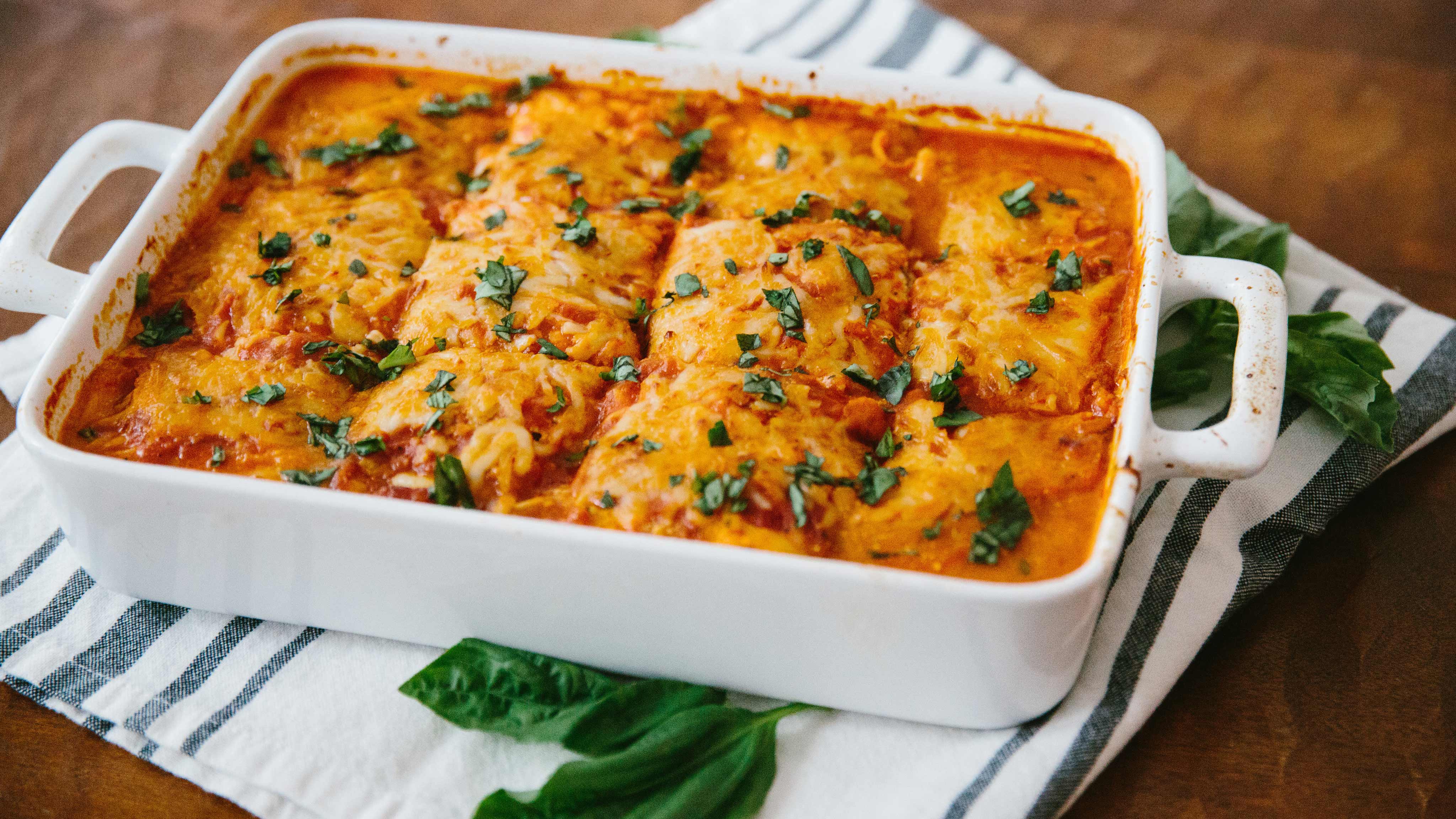
A vegetarian-friendly, reduced-carb version of traditional lasagna
- 1 medium onion chopped
- extra virgin olive oil
- black pepper
- 2 large eggplant ends cut off, skin removed, and cut into 1/4 inch slices (thicker if you prefer)
- 8 cups fresh spinach washed and patted dry
- 3 cups fresh mushrooms (i used baby bella's) stems removed and sliced
- 3 cloves fresh garlic, peeled minced
- 8 ounces fat free ricotta cheese
- 1 cup fresh parmesan cheese shredded or grated
- 2 cups fresh lowfat mozzarella cheese shredded
- 1/4 cup egg beaters (or 1 egg) lightly beat if using real egg
- 1 jar pasta sauce homemade sauce preferred, however use jarred sauce in a pinch
- 1 15 ounce can diced tomatoes with green chilies fresh tomatoes would be better, however this is what i had in pantry
- dried oregano fresh would be best, however this is what i had
- dried basil fresh would be best, however this is what i had
- Carbohydrate 18.8542202569708 g
- Cholesterol 34.3613576780464 mg
- Fat 12.6429451273506 g
- Fiber 6.21809740224396 g
- Protein 15.4189641397013 g
- Saturated Fat 6.36327935446354 g
- Serving Size 1 1 Serving (314g)
- Sodium 723.340692695523 mg
- Sugar 12.6361228547268 g
- Trans Fat 2.17026946420491 g
- Calories 245 calories
Step-by-step
- Heat grill to 350 degrees.
- While grill is heating, place 1 tablespoon olive oil in large saute pan.
- Add onions and garlic to pan, and saute until onions are translucent.
- Add mushrooms to pan, and saute for a few minutes (I like mine more on the firm side, so I cooked them for about 3 minutes).
- Add 1/2 of spinach, and stir frequently.
- When spinach is beginning to wilt, add the remainder of spinach.
- Add a few shakes of black pepper.
- When spinach is wilted, cover and turn off heat.
- Heat oven to 350 degrees
- In a medium mixing bowl place ricotta cheese, 1/4 of the parmesan, egg beaters (or beaten egg), a few shakes of black pepper, 1/2 teaspoon of dried basil, and 1/4 teaspoon dried oregano (adjust seasoning to your preference).
- Mix and set aside.
- Place sauce and tomatoes in a medium sauce pan.
- Heat on medium until bubbly.
- Turn off heat.
- Take a 1/2 cup olive oil, a brush, and eggplant to the grill.
- Brush one side of eggplant slices lightly with oil, and place on grill.
- Close grill cover, and grill for approximately 2-3 minutes or until it just starts to become translucent.
- Quickly brush olive oil on side facing up, and flip.
- Grill for approximately 2-3 minutes.
- If you prefer firmer eggplant, simply reduce grilling time.
- The eggplant will cook further in oven.
- Using a lasagna pan, place about 1 cup sauce on bottom.
- Place one layer of eggplant over sauce.
- Take 1/3 of spinach/onion/mushroom mixture, and place on top of eggplant.
- Place heaping tablespoons of ricotta mixture over each eggplant slice.
- Sprinkle some mozzarella cheese on top, then use another cup of sauce/tomato mixture on top.
- Repeat layers two more times, ending with mozzarella.
- Bake at 350 uncovered for approximately 1/2 hour.
Removing moisture from high-water vegetables prevents watery casseroles. Salting eggplant slices draws out internal water through osmosis, but grilling them at 350 degrees offers a faster dehydration method that simultaneously builds savory char. Brush oil exclusively on the downward-facing side before flipping; applying oil to both sides simultaneously causes the porous flesh to absorb excessive fat, making the final dish greasy.
Mastering Vegetable Swaps
Refrigerated and pantry inventory easily dictates the vegetable filling without compromising structural integrity. Fresh baby bellas or standard button mushrooms release significant liquid during a three-minute saute; cooking them until firm rather than soggy prevents the lasagna layers from sliding apart. Substituting canned diced tomatoes with green chilies for fresh fruit introduces necessary acidity to balance the rich ricotta and mozzarella layers, though draining excess canning liquid remains essential.
The Role of Dairy and Binding
Fat-free ricotta provides the necessary dairy profile without adding excess weight, but it requires a binding agent to set properly during the 30-minute baking time at 350 degrees. Incorporating an egg or liquid egg substitute into the cheese mixture ensures the protein coagulates firmly as the casserole bakes. Shredded low-fat mozzarella sprinkled generously across the top layer melts into a protective barrier, shielding the internal moisture while browning under dry oven heat.


