Mousse of Cantaloupe
It all started with a recipe from an old Italian magazine and I modified it until it took a life of its own. I must say, I have not stopped eating it, and since I made it a few times to get it where I wanted to taste, I am completely in love with it and so excited to share it with the world. One little bit of caution, it is rich and a little bit goes a long way.
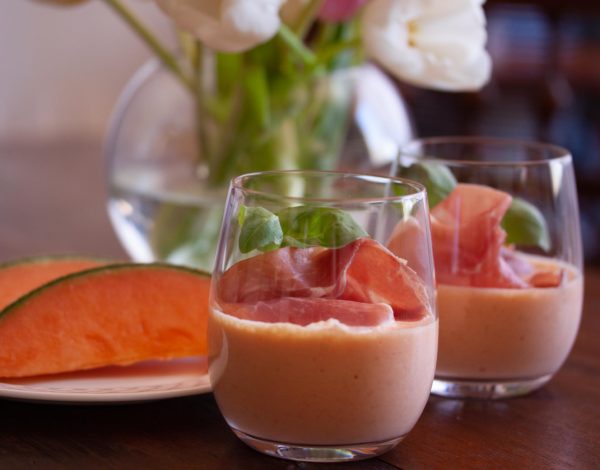
It all started with a recipe from an old Italian magazine and I modified it until it took a life of its own. I must say, I have not stopped eating it, and since I made it a few times to get it where I wanted to taste, I am completely in love with it and so excited to share it with the world. One little bit of caution, it is rich and a little bit goes a long way.
- Carbohydrate 0 g
- Cholesterol 0 mg
- Fat 0 g
- Fiber 0 g
- Protein 0 g
- Saturated Fat 0 g
- Serving Size 1 1 people (78g)
- Sodium 0 mg
- Sugar 0 g
- Trans Fat 0 g
- Calories 0 calories
Step-by-step
- Clean the cantaloupe by removing the outer skin and all the internal seeds. Cut into chunks.
- In a blender add the butter and the prosciutto and blend at medium speed until it all blends well, about 30 seconds.
- Add the cream cheese and blend for another 30 -40 seconds.
- Add the cantaloupe chunks and blend until reduced to a creamy consistency.
- Refrigerate for 3-4 hours before serving.
- Place in a small glass half way, add 1 slice of prosciutto to each glass.
Undercooking or under-blending cantaloupe purées often results in a watery separation rather than a cohesive emulsion. Processing high-water fruit with dense dairy requires a specific sequence to prevent the mixture from breaking during blending. Start by incorporating the room-temperature unsalted butter and cured pork at a medium speed for thirty seconds, allowing the milk solids and animal fats to form a stable base before introducing the moisture from the melon. Cream cheese then acts as a crucial stabilizer, providing casein proteins that trap free water molecules when blended for an additional forty seconds.
Assessing doneness relies entirely on visual and textural cues rather than internal temperature readings. Watch for the vortex in the blender container to tighten and the color to lighten to a uniform pastel orange, which indicates that air has been thoroughly incorporated into the emulsion. Chilling the finished mixture for at least three to four hours in the refrigerator allows the butter fat to resolidify and set the structure properly. For proper sequencing in a busy kitchen, complete the blending phase early so the dessert has adequate time to firm up before assembly with the remaining sliced meat.
Adjusting the ratio of soft cheese to fruit yields a firmer consistency if the melon has an exceptionally high sugar and water content. Keeping portions small is advisable because the high fat content from the dairy and cured protein creates an intensely rich palate weight.


