Simple Sushi
It's easy peasy Japanese! I used the instructions from a sushi kit I received as a gift.
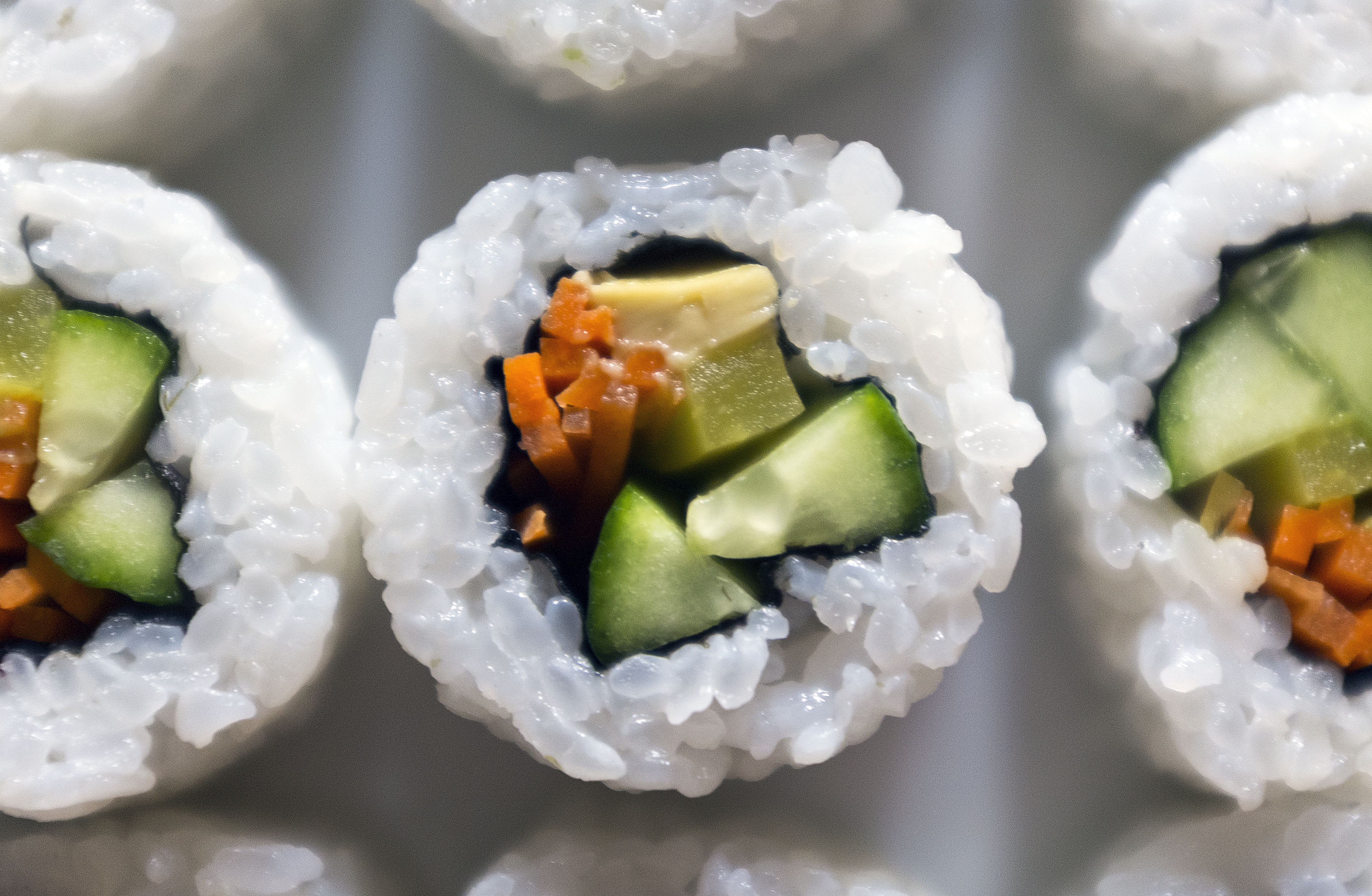
It's easy peasy Japanese! I used the instructions from a sushi kit I received as a gift.
- - sushi rice -
- 1/3 cup unseasoned rice vinegar
- 2 tbsp sugar
- 1 tsp salt
- 3 cups uncooked japanese sushi rice
- 3 1/4 cups water
- - sushi roll -
- 4 cups cooked sushi rice
- 4 sheets nori
- 70 g baby carrots match-sticked
- 90 g english cucumbers match-sticked
- 95 g avocado match-sticked
- 4 tbsp fat free cream cheese match-sticked
- Carbohydrate 160.137860004564 g
- Cholesterol 0.84 mg
- Fat 2.85773666666667 g
- Fiber 6.59973322572311 g
- Protein 14.2813675 g
- Saturated Fat 0.578992166666667 g
- Serving Size 1 1 Serving (345g)
- Sodium 62.6956875024417 mg
- Sugar 153.538126778841 g
- Trans Fat 0.279537416666666 g
- Calories 744 calories
Step-by-step
- Mix rice vinegar, sugar, and salt in small saucepan. Cook over low heat until sugar dissolves. Set aside to let cool.
- Put the rice in a bowl and wash it in cold water. Repeat washing until the water becomes clear (or close to it). Drain the rice in a colander (lined with paper towels to catch the rice).
- Place the rice in a medium saucepan (or you could use a rice cooker) and add water. Let the rice soak for one full hour.
- On the stove, cover with a lid and bring to a boil over high heat. Turn the heat down very low and cook 15-20 minutes until the water is almost gone. Remove the pan from the heat and let it steam for 10-15 minutes.
- Use a paddle to spread the hot rice into a large wooden or glass plate (not metallic because it will react with the vinegar).
- Sprinkle the vinegar mixture over the rice, and use a paddle to fold it into the rice. As you work with the mixture, use a fan to help to cool the rice and remove the moisture. This will give it a shiny look.
- Once the vinegar has been mixed in, the rice is ready to be used. It's the best when used right away, but you could always store left overs in an airtight container in the fridge. The recipe yield about 4 cups of cooked rice.
- Using a rolling mat covered by plastic wrap, place a sheet of Nori, shiny side down, and spread 1 cup of cooked sushi rice over the Nori. Leave a 1/2 inch strip uncovered at one end (length-wise).
- If you are spreading the cream cheese, do this first length-wise near the middle of the rice. If you match-sticked everything, arrange the ingredients together in the center of the rice also.
- Roll the mat away from you, using your fingers to help hold the ingredients down in place. Press forward to shape the sushi into a cylinder. Grip the rolled mat firmly with both hands, then remove the sushi.
- Cut the rolled sushi into bite-sized pieces. Take a very sharp knife and wipe it with a wet cloth before you slice the roll. Slice with one, swift motion rather than sawing back and forth.
- You could definitely find pictures for these instructions online if not on the Nori wrapper. The recipe makes 4 rolls, serve with ginger, wasabi, soy sauce, whatever...but just enjoy.
Using metallic mixing bowls for seasoned sushi rice is an error that introduces a distinctly metallic taste due to the acidic reaction between the vinegar and the metal surface. Choosing glass or wood vessels prevents this flavor contamination while preserving the integrity of the grains. Washing the uncooked grains thoroughly in cold water removes excess surface starch that otherwise gummy-fies the texture during the absorption phase.
Allowing the rice to soak for one full hour before boiling ensures even hydration throughout the interior of every grain. When folding the cooled vinegar mixture into the warm rice, using a paddle alongside a fan cools the starches rapidly, which creates the characteristic glossy sheen expected in properly prepared maki. Metal knives should be avoided during the final slicing stage because they drag and crush the delicate nori casing; instead, wipe a very sharp blade with a damp cloth and execute each cut using one swift, uninterrupted motion.
Adaptability defines modern home rolling techniques. Swapping standard dairy components for plant-based cream cheese alternatives maintains the structural bind required for tight cylinders without altering the moisture ratio of the filling.



