Four Cheese Baked Macaroni and Cheese
A homey and comforting baked Macaroni and Cheese recipe, sure to become a family favorite.
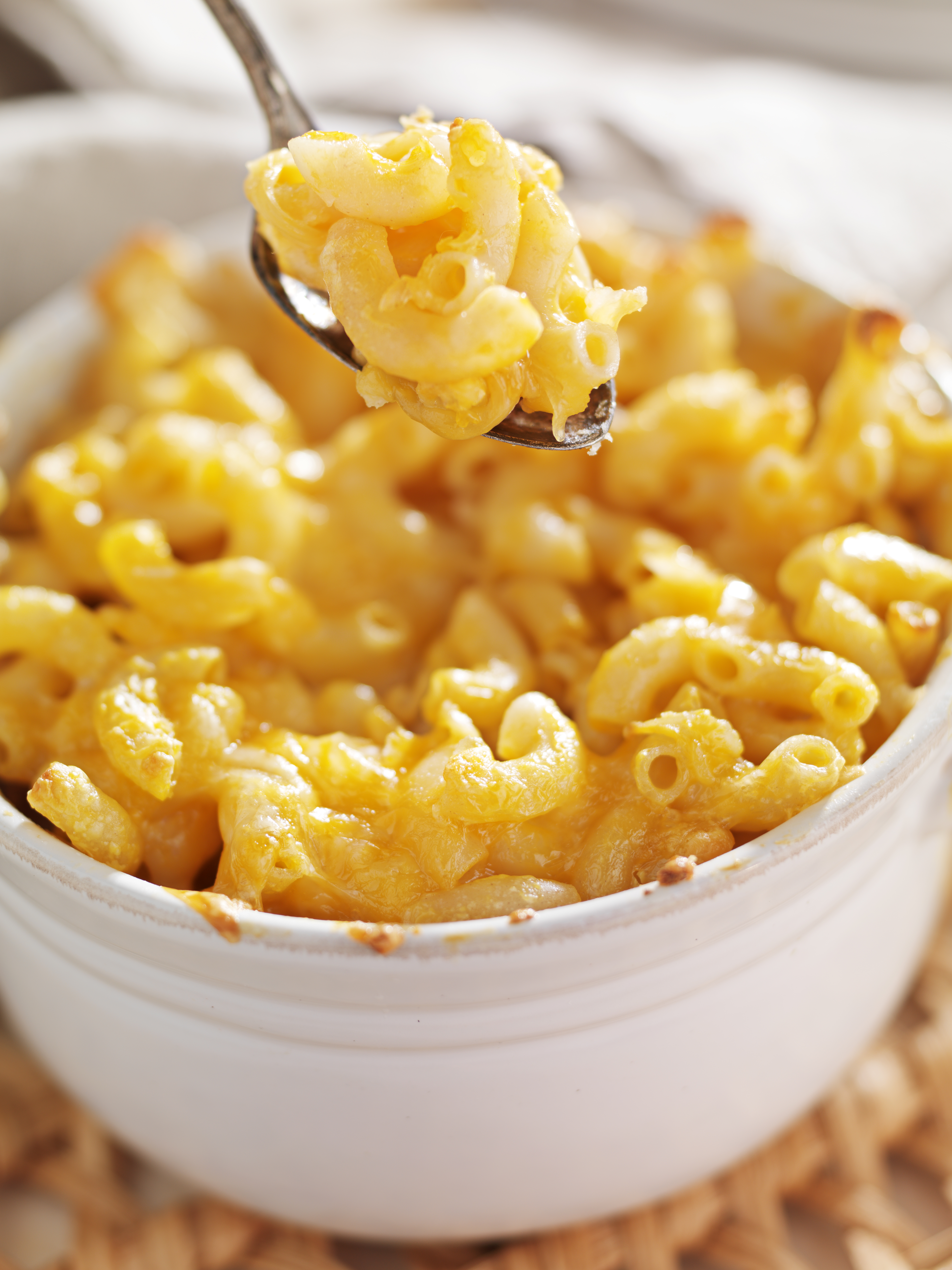
A homey and comforting baked Macaroni and Cheese recipe, sure to become a family favorite.
- 1 tablespoon vegetable oil
- 16 oz elbow macaroni (or whatever type you i use shells sometimes)
- 9 tablespoons butter
- 1/2 cup shredded muenster cheese
- 1/2 cup shredded mild cheddar cheese
- 1/2 cup shredded sharp cheddar cheese
- 1/2 cup shredded monterey jack cheese
- 1 1/2 cup half-and-half
- 8 ounces velveeta (or other processed cheese) cubed
- 2 eggs beaten
- 1/4 teaspoon salt
- 1/8 teaspoon black pepper ground
- Carbohydrate 77.5423469124426 g
- Cholesterol 279.539893733259 mg
- Fat 93.0617900658616 g
- Fiber 2.42210378502606 g
- Protein 43.0903434342313 g
- Saturated Fat 57.0388756004005 g
- Serving Size 1 1 Serving (639g)
- Sodium 812.545341130999 mg
- Sugar 75.1202431274166 g
- Trans Fat 5.37250921944192 g
- Calories 1311 calories
Step-by-step
- Bring a large port of salted water to a boil. Add pasta and cook for about 8 minutes, leave it al dente. Drain well and return to pot.
- In a small saucepan over medium heat, melt 8 TBS of butter; stir into the macaroni.
- In a large bowl, combine all the cheeses and mix well.
- Preheat the oven to 350.
- Add the half-and-half, 1 1/2 cups of cheese mixture, cubed processed cheese and eggs to the macaroni. Mix and season with salt and pepper. Transfer to a lightly greased deep 2 1/2 quart casserole dish. Sprinkle with the remaining cheese and 1 TBS of butter.
- Bake in preheated oven for 35 minutes.
Golden crusts of toasted dairy give way to a bubbling interior where multiple distinct melting points converge into a unified, glossy emulsion. Baking this casserole at 350 degrees Fahrenheit for 35 minutes transforms the exterior strata into a crisp, savory shield while insulating the dense starch matrix underneath. Achieving this state relies heavily on understanding how different proteins behave under sustained dry heat.
Processed cheese products like Velveeta contain emulsifying salts, specifically sodium citrate, which prevent the fats and proteins from separating during the melting process. Natural cheeses such as sharp cheddar and muenster offer superior, complex flavors derived from aging, but they tend to become stringy or oil-off if exposed to high heat without stabilizers. Combining both categories yields a sauce that maintains structural integrity while delivering robust depth. Hand-shredding blocks of natural cheese avoids the anti-caking agents like cellulose powder that manufacturers coat pre-bagged shreds with, which otherwise disrupt smooth sauce hydration.
Undercooking the pasta to a strict al dente state at the eight-minute boiling mark prevents structural collapse during the subsequent oven phase. Starch molecules continue to gelatinize as the casserole absorbs moisture from the half-and-half and eggs during baking. If the pasta starts too soft, the internal matrix ruptures, turning the dish into a dense porridge rather than distinct suspension pockets of tender tubes coated in rich sauce.
Adding beaten eggs directly into the warm starch and dairy mixture introduces structural protein networks that coagulate gently as the oven temperature rises, binding the casserole into clean, sliceable wedges. Distributing the remaining butter and cheese across the surface prior to baking creates localized hot spots of fat that encourage browning through the Maillard reaction. Monitoring the oven until the surface turns deep amber ensures the interior starches have fully set and the dairy emulsions remain stable.



