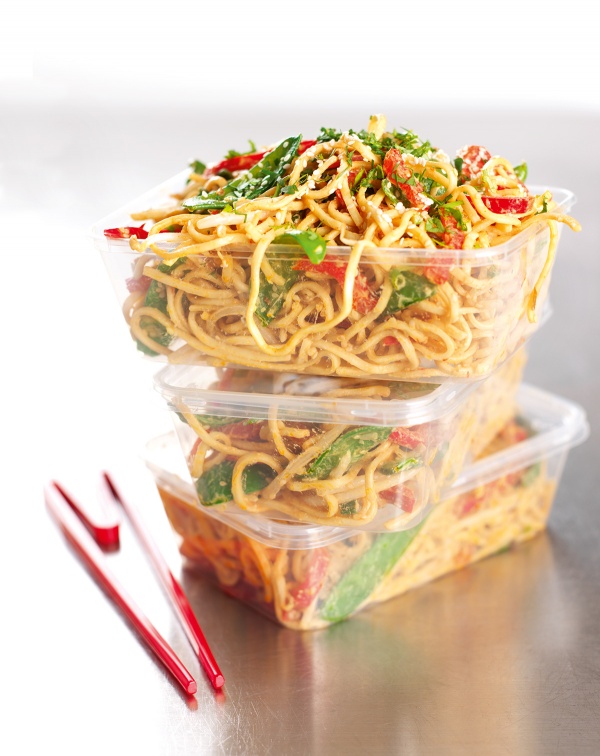
Make this Cook Yourself Thin recipe. Serves 6. Calories per serving: 308
- 2 tablespoons rice vinegar
- 1/4 cup peanut butter
- 1 teaspoon brown sugar
- 1 tablespoon dark sesame oil
- 1/2 cup hot water
- 1/2 cup cilantro chopped
- 1 lime
- 1/4 cup low-sodium soy sauce
- 1/2 cup red pepper
- 8 ounces whole-wheat spaghetti
- 2 tablespoons grated ginger
- 1/2 bag store-bought coleslaw mix
- 1/2 lime, squeezed
- 1/2 cup apple
- 1/2 cup jicama
- 1 teaspoon toasted sesame seeds
- 2 scallions, julienne
- 1/2 cup dry-roasted peanuts for garnish
- cilantro chopped for garnish
- lime wedges for garnish
- Carbohydrate 242.054895803411 g
- Cholesterol 0 mg
- Fat 83.4142841383353 g
- Fiber 19.981400066673 g
- Protein 72.4233643671156 g
- Saturated Fat 12.341674164614 g
- Serving Size 1 1 Recipe (870g)
- Sodium 4151.43153162973 mg
- Sugar 222.073495736738 g
- Trans Fat 4.82156716832311 g
- Calories 1870 calories
Step-by-step
- Bring a pot of water to a boil for the pasta, and cook the pasta according to package instructions. Drain and run under cold water.
- To make the dressing, combine all the ingredients into a small mixing bowl and stir together with a whisk. Add the dressing to the pasta and toss. Stir in the coleslaw mix, red pepper and cilantro. Squeeze a half of a lime over the mixture, and toss.
- Add the remaining ingredients, toss and refrigerate for one hour. Garnish with peanuts, cilantro and lime wedges. Serve.
Rinsing cooked whole-wheat spaghetti under cold running water halts internal cooking immediately and removes excess surface starches that otherwise cause noodles to clump into a dense mass. Cooled pasta absorbs dressings differently than hot pasta, requiring precise viscosity control to coat every strand effectively.
The Chemical Balance of Fat and Acid
Peanut butter provides a high concentration of hydrophobic lipids, which naturally resist water-based emulsions like low-sodium soy sauce and rice vinegar. Whisking dark sesame oil and hot water directly into the peanut butter forces the fat droplets to suspend evenly within the liquid, preventing the oil from separating on the plate. Acidity from fresh lime juice cuts through the dense viscosity of the nut butter, brightening the overall profile and preventing the heavy fats from coating the palate unpleasantly. Grated ginger introduces aromatic compounds that pierce through the richness, balancing the sweetness of brown sugar.Managing Texture and Substitutions
Crisp elements like julienned jicama, diced apple, and shredded coleslaw mix provide necessary structural contrast against tender whole-wheat spaghetti. Refrigerating the fully tossed dish for exactly one hour allows the fibrous vegetables to absorb moisture while softening slightly without losing structural integrity. Swapping peanut butter for almond butter requires adding an extra half teaspoon of neutral oil because almond butter contains less natural fat. Replacing whole-wheat spaghetti with standard semolina pasta changes the absorption rate, necessitating a reduction in liquid by two tablespoons to maintain coating consistency. Toasting raw sesame seeds in a dry skillet over medium heat for precisely three minutes releases essential volatile oils that raw seeds lack entirely.


