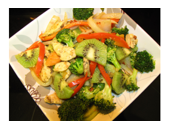
Shrimp Stir-fry for P90X Phase I
- 6 oz shrimp peeled
- 1/4 tbsp low-sodium soy sauce
- 1/2 tsp rice vinegar
- 1/4 cup fat-free chicken broth
- 1/4 tsp garlic minced
- 1/4 tsp ginger minced
- 1/2 cup red onion sliced in wedges
- 1/2 cup broccoli florets
- 1 1/4 cups snow peas trimmed
- 1 1/2 cups mushrooms halved
- 1/4 cup yellow bell peppers cubed
- 1/4 cup canned water chestnuts drained
- Carbohydrate 36.5906325618552 g
- Cholesterol 258.4 mg
- Fat 4.29737287601112 g
- Fiber 9.18135206530701 g
- Protein 46.7153434828614 g
- Saturated Fat 0.721919009429979 g
- Serving Size 1 1 Serving (758g)
- Sodium 735.091715284378 mg
- Sugar 27.4092804965482 g
- Trans Fat 1.65600197105536 g
- Calories 360 calories
Step-by-step
- Rinse shrimp and drain well.
- Heat the soy sauce, rice vinegar, and 2 tbsp of the chicken broth in a saute pan over medium heat. Add garlic and ginger and saute until tender.
- Add all the vegetables to the pan and continue to saute, stirring and adding more broth as necessary. Add shrimp when the vegetables are halfway cooked and saute until the vegetables are tender and the shrimp are opaque.
Controlling Moisture in a Single Skillet
Working with a single skillet limits how much heat retention you can maintain when introducing cold ingredients. Water is the primary enemy of crisp-tender vegetables. Rinsing the shrimp requires thorough patting with paper towels before cooking to prevent excess liquid from cooling the pan surface. When moisture pools, boiling replaces searing, which destroys the structural integrity of mushrooms and snow peas. Maintain medium heat and add chicken broth in small increments of one to two tablespoons rather than dumping it all at once.Staggering the Cook Times
Different cellular structures demand different cooking durations. Broccoli florets and sliced red onion wedges need a head start to soften without losing their vibrant color. Add firm vegetables first, allowing them three to four minutes of direct contact with the heated pan before introducing delicate items. Shrimp cook rapidly, usually turning completely opaque in under three minutes. Introduce the protein precisely when the vegetables reach the halfway point of tenderness to prevent rubbery, overcooked seafood.Fresh Versus Preserved Elements
Fresh aromatics like minced garlic and ginger provide volatile oils that impart sharp pungency, whereas jarred or pre-minced alternatives lack these immediate aromatics due to oxidation in storage. Canned water chestnuts supply an unmistakable crunch that fresh root vegetables cannot replicate in this specific preparation. Drain canned water chestnuts thoroughly in a mesh colander to strip away metallic canning liquid before tossing them into the hot pan.


