Gemelli with Lump Crab, Mushrooms, and Asparagus
Try this recipe for Gemelli with Lump Crab, Mushrooms, and Asparagus, or contribute your own.
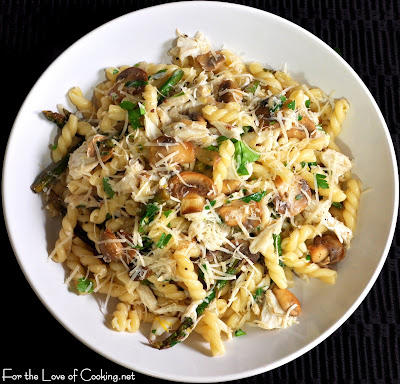
Try this recipe for Gemelli with Lump Crab, Mushrooms, and Asparagus, or contribute your own.
- 2 tbsp butter
- 1/4 cup parmesan cheese grated
- 2 tbsp fresh parsley chopped
- 1/2 lb of gemelli pasta cooked per instructions (retain 1/4 cup of pasta water)
- 1-2 tsp of olive oil
- 8 oz button mushrooms sliced
- 1 cup of lump crab meat
- 7 spears of asparagus ends removed, cut into thirds
- 2 tbsp shallots chopped
- 3-4 cloves of garlic minced
- zest and juice of 2 lemons
- sea salt and freshly cracked pepper to taste
- Carbohydrate 16.3380178147095 g
- Cholesterol 66.5062500331701 mg
- Fat 25.2660036970254 g
- Fiber 3.38517719809956 g
- Protein 9.67200212345666 g
- Saturated Fat 15.7269099735134 g
- Serving Size 1 1 recipe (543g)
- Sodium 288.49827128533 mg
- Sugar 12.95284061661 g
- Trans Fat 1.89626139847053 g
- Calories 320 calories
Step-by-step
- Melt butter and olive oil in a large skillet over medium heat.
- Add shallots, garlic, and mushrooms, sautéing until mushrooms are tender and browned.
- Add asparagus and cook for another 3 to 4 minutes until crisp-tender.
- Stir in the cooked gemelli pasta, lump crab meat, lemon zest, lemon juice, and reserved pasta water, tossing gently to combine and heat through.
- Season with sea salt and freshly cracked pepper to taste.
- Garnish with grated parmesan cheese and fresh chopped parsley before serving.
Managing Moisture in Mushroom Sautéing
Swapping butter for oil entirely during the initial sauté alters how the mushrooms brown. Butter contains roughly 16 to 18 percent water, which releases into the pan and causes steaming rather than the Maillard reaction needed for deep savory flavor. Using olive oil first allows surface temperatures to exceed 300 degrees Fahrenheit quickly, driving out internal mushroom moisture before butter is introduced at the end of cooking.
Emulsifying Starchy Water and Fats
Retaining a quarter cup of starchy pasta water remains the single critical factor preventing a broken sauce. Pasta water contains suspended starches that act as an amphiphilic bridge, binding the rendered fats, grated parmesan, and lemon juice into a unified coating. Pouring the hot cooking liquid gradually into the pan while vigorously swirling incorporates the emulsion without separating the dairy proteins.
Evaluating Asparagus and Pasta Doneness
Assessing doneness without timing devices relies entirely on physical cues. Asparagus pieces are finished when they transition to a vibrant bright green and offer minimal resistance when pierced with the tip of a paring knife. Gemelli pasta should retain a firm core with an opaque white interior when bitten, indicating it has reached an al dente texture.



