Shrimp and Pesto Penne
Okay, I took an old classic and revved it up! If you have guests coming over, this is a GREAT dish to prepare in a large pot as it looks really great at the table. And the flavors.... Ma ma mia! Serve with any wine! The beautiful balance of flavors means that pretty much anything from a Chardonnay to a Shiraz will fit in but avoid overly sweet wines. They will detract from the taste!
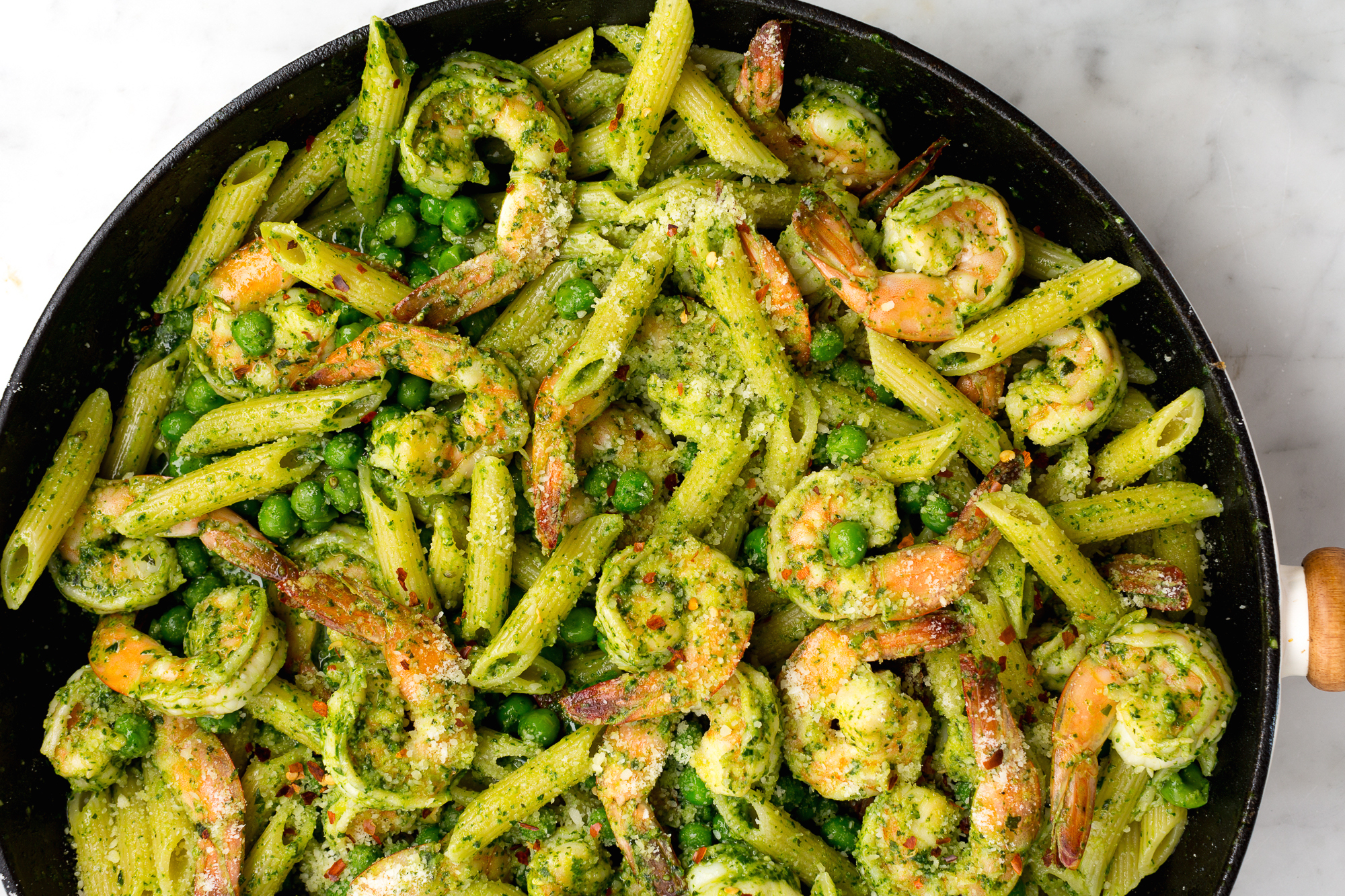
Okay, I took an old classic and revved it up! If you have guests coming over, this is a GREAT dish to prepare in a large pot as it looks really great at the table. And the flavors.... Ma ma mia! Serve with any wine! The beautiful balance of flavors means that pretty much anything from a Chardonnay to a Shiraz will fit in but avoid overly sweet wines. They will detract from the taste!
- 500 grams penne pasta
- cracked black pepper to taste
- 1/2 cup extra virgin olive oil
- 2 tablespoons basil pesto
- 2 tablespoons mint pesto
- 5 cloves fresh garlic flattened and finely chopped
- 1 teaspoon ground oregano flakes
- 2 large fresh tomatoes
- sea salt crystals
- 1 cup parmeggiano grated
- 500 grams shrimp peeled (if you are buying fresh shrimp buy about 750gms)
- 1/4 cup fresh basil chopped
- roasted pine nuts
- 1 cup cheddar grated
- Carbohydrate 49.875385 g
- Cholesterol 257.775 mg
- Fat 31.9842266666667 g
- Fiber 0.872250025510788 g
- Protein 38.694025 g
- Saturated Fat 9.87965166666667 g
- Serving Size 1 1 Serving (285g)
- Sodium 609.851 mg
- Sugar 49.0031349744892 g
- Trans Fat 1.90778666666666 g
- Calories 645 calories
Step-by-step
- Finely Chop the tomatoes. Set aside.
- Finely chop Basil leaves. Set aside.
- Heat 2-3 Table spoons Olive Oil in pan, and when hot, add chopped garlic and some (about a tablespoon) fresh Basil. When Fragrant, add Ground Oregano, and stir. Immediately add washed and drained shrimp.
- Stir fry till prawns are cooked. Salt and pepper to taste. Remove from heat.
- Cook penne in rapidly boiling, salted water as directed on package until al dente.
- When cooked, remove from heat and drain well. Place penne in a bowl and stir in 3 tablespoons olive oil.Coat well.
- Reserve one cupful of Shrimp topping, cheese mix, and a handful of chopped Basil.
- Mix remaining Cheese, pasta (while hot), Topping, Basil and Tomatoes. Mix well, adding salt and pepper to taste.
- Serve in large pot/serving platter topped with (reserved) Cheese, Basil, Pine nuts.
- Serve immediately with Lemon wedges or Tabasco Sauce! Enjoy!
Removing shrimp from heat immediately upon opacity prevents moisture loss through protein contraction. Overcooking causes muscle fibers to tighten excessively, squeezing out internal water and creating a rubbery texture. High heat in the skillet vaporizes volatile aromatic compounds in the garlic and oregano quickly, dispersing fat-soluble molecules into the oil phase.
Combining hot pasta with oil immediately after draining creates a protective lipid barrier around the starch molecules. Starch gelatinization occurs during boiling, making drained pasta prone to sticking unless coated with fat. Olive oil coats each penne tube, preventing water absorption from the remaining sauce components while maintaining an al dente bite.
Using fresh basil and mint pestos introduces enzymatic activity and volatile terpenes that preserved alternatives lack. Dried or jarred ingredients undergo thermal processing that degrades delicate essential oils like linalool and menthol, muting the herbal brightness. Freshly chopped leaves retain intact cell walls that rupture upon mixing, releasing sharp, pungent aromatics directly into the warm dish.
Melting grated parmigiano and cheddar into the warm pasta relies on emulsion chemistry between dairy fats and starch-laden cooking water. Parmesan contributes glutamates that interact with ribonucleotides in the shrimp to enhance savory umami perception. Resterving a portion of the cheese and pine nuts for final garnish provides textural contrast against the soft pasta matrix.



