Steak and Kidney Pie
A time-honoured English dish that takes a little preparation time, but is mouth-watering in the finish. It is frequently, but not always, a one-crust pie, which means that the filling is covered but not completely enclosed by the pastry. What can I say everyone has a favourite recipe and this is mine, it is an amalgamation of the recipes of my mothers, both grandmothers, and my maternal grandfather who could make a really tasty pie.
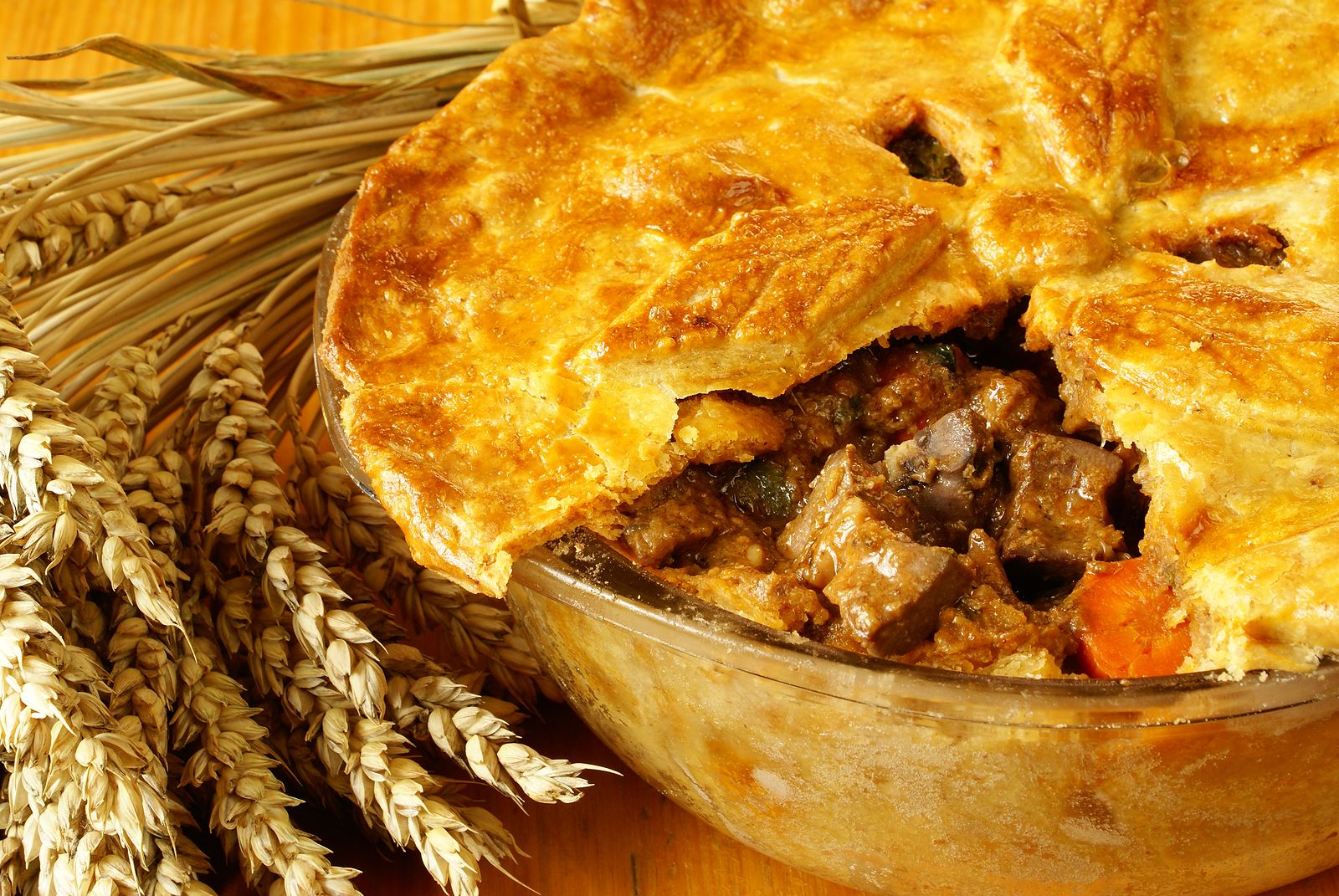
A time-honoured English dish that takes a little preparation time, but is mouth-watering in the finish. It is frequently, but not always, a one-crust pie, which means that the filling is covered but not completely enclosed by the pastry. What can I say everyone has a favourite recipe and this is mine, it is an amalgamation of the recipes of my mothers, both grandmothers, and my maternal grandfather who could make a really tasty pie.
- 1 tablespoon worcestershire sauce
- 1 egg beaten
- 1 tablespoon tomato paste
- 1 tablespoon chopped parsley
- 800 grams stewing steak diced, we use a mix of shin beef and skirt or chuck steak
- 300 grams beef kidney trimmed of fat and membrane and cut into small pieces
- 1/4 cup plain flour seasoned with salt and pepper
- 2 onions peeled and chopped medium to fine
- 2 large portabella mushrooms we sometimes us a few chestnut mushrooms, chopped like the onion
- 4 tablespoons fresh beef suet , trimmed from the beef (or use bacon drippings, lard, or butter
- 350 mililiter beef stock or use a blend of stock and stout, brown ale or beer
- 1 tablespoon fresh thyme leaves
- 1 pastry either short-crust
- Carbohydrate 15.1406573611111 g
- Cholesterol 320.843333333333 mg
- Fat 18.7296538710826 g
- Fiber 1.7160405052773 g
- Protein 43.9465827635328 g
- Saturated Fat 7.48124557407407 g
- Serving Size 1 1 Serving (354g)
- Sodium 441.237728632479 mg
- Sugar 13.4246168558338 g
- Trans Fat 2.45388041880342 g
- Calories 404 calories
Step-by-step
- Toss the beef and kidney into the seasoned flour and mix with the chopped parsley. Meanwhile, in a large, heavy pan, render the beef suet (or melt the bacon fat, lard, or butter). Fry the meat and onions in the hot fat quickly until the meat is lightly brown on all sides and the onions are translucent add the mushrooms and mix in.
- Cover with the stock, add the parsley, thyme and stir in the Worcestershire sauce, tomato paste and add any additional seasonings, and bring to a simmer.
- Cook very gently for 1-hour then taste and check the seasoning let cool.
- If you are using a suet pastry crust, roll out the bottom crust to fit a deep pie dish and fit, a cover with a top crust, crimp closed, and cut a vent hole. Brush over with beaten egg and bake for 1 hour at 325F.
- If using the rough puff pastry, put the mixture in a l ?-quart casserole dish; roll out the pastry to cover, trim off a thin strip to fit the rim of the casserole and dampen the rim, and press the strip into position.
- Now dampen the strip and firmly press the edges of the pastry to the pastry rim and then trim away any surplus with a sharp knife. Make sure the edges are sealed and decorate the top with the surplus dough cut into such shapes as your fancy dictates, but make sure that there is a small vent hole cut in the centre to let steam escape.
- Brush over with the beaten egg and bake for 10 minutes at 450F in a preheated oven; turn down heat to 325F and bake for another 45 minutes or until the contents are bubbling hot and the crust a golden brown.
- Use the same method for short crust and puff pastry pies
- Serve and Enjoy!
The Danger of Uneven Butchery
Most home cooks fail to trim and cut the kidneys to the correct dimension relative to the beef, resulting in pockets of overpowering iron flavor. Kidney tissue requires thorough washing and the complete removal of internal white membranes and core fat channels. Dice the beef into one-inch cubes while slicing the kidney into slightly smaller, uniform half-inch pieces to ensure that the protein distributes evenly across every single bite.
Managing Fat and Liquid Ratios
Rendering solid beef suet provides the authentic flavor profile required for this style of baking, yet substituting rendered duck fat or high-fat unsalted butter yields distinct structural outcomes. When building the braise, keep the simmering liquid level just below the top of the meat during the one-hour initial cook. Excess moisture prevents the thick gravy from clinging to the starch of the seasoned flour coating, leading to a watery filling that compromises the pastry crust.
Controlling Oven Thermodynamics
Baking dense meat pies demands strict thermal management to achieve flaky layers without burning the exterior fat. Starting the pie at 450 degrees Fahrenheit for the first 10 minutes creates immediate steam expansion within the dough before reducing the ambient oven heat to 325 degrees for the remainder of the bake. Always verify that a central steam vent remains completely unobstructed so that internal pressure escapes safely without fracturing the structural integrity of the crust.



