Slow-Cooked Lemon Chicken
Chicken and lemons go very well together. It's easy to adapt this dish to a slow cooker. The result is succulent flesh that falls off the bone and a lemon tang. I served it with parsley potatoes, but you can serve it with steamed rice.
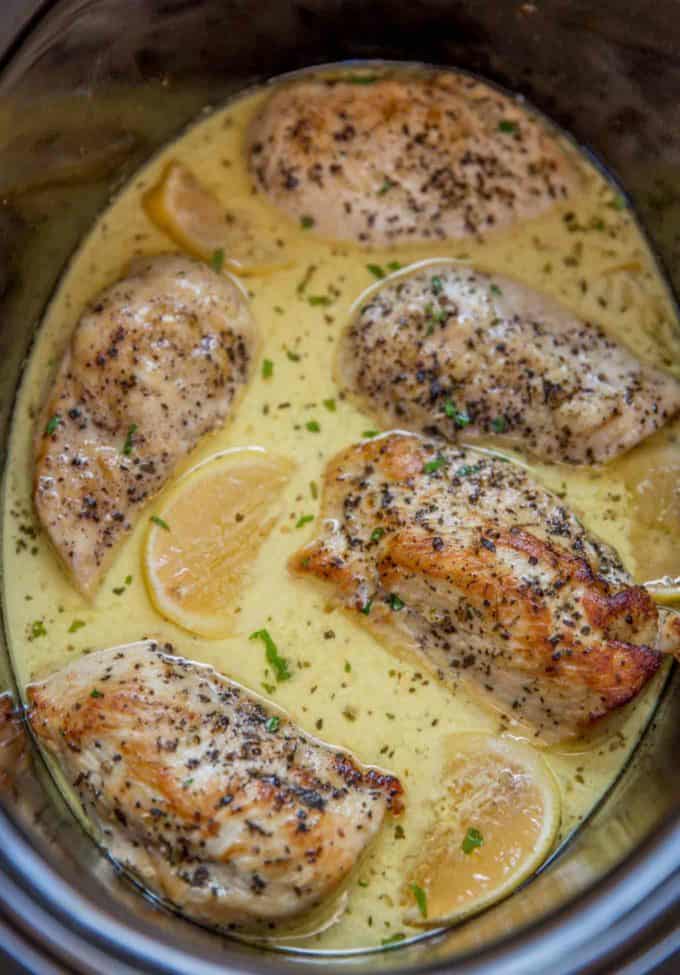
Chicken and lemons go very well together. It's easy to adapt this dish to a slow cooker. The result is succulent flesh that falls off the bone and a lemon tang. I served it with parsley potatoes, but you can serve it with steamed rice.
- Carbohydrate 19.5525650015061 g
- Cholesterol 212.40255 mg
- Fat 40.4546726927944 g
- Fiber 5.39514989204727 g
- Protein 50.3708850003388 g
- Saturated Fat 7.90662415387327 g
- Serving Size 1 1 Serving (725g)
- Sodium 406.403825000959 mg
- Sugar 14.1574151094589 g
- Trans Fat 25.0072615385013 g
- Calories 605 calories
Step-by-step
- Place flour, salt and pepper in a plastic bag and add chicken pieces. Shake the bag to coat the meat.
- Heat oil in a large high-sided fry pan and brown the chicken pieces on both sides for 2-3 minutes in batches. Transfer chicken to the crockpot of a slow cooker or a large casserole dish as they are browned.
- Add onions, garlic and coriander seeds to the oil and sauté for 3 minutes or until the onions start to soften. Transfer to casserole or crockpot.
- Add stock or water to crockpot plus thyme leaves, sumac and the juice of two lemons. Slice the third lemon into thin slices and add to the casserole.
- If using crockpot: Cook on LOW for 5 hours or HIGH for 4 hours.
- If using oven: Place covered casserole in a preheated 160°C oven and cook for 2 hours.
- Serve with steamed parsley potatoes or steamed basmati rice.
Standard measurements overlook how citric acid chemically alters connective tissue over prolonged heating. When hindquarters submerge in liquid containing five hundred milliliters of chicken stock and fresh lemon juice, low and slow thermal energy breaks down tough collagen into gelatin without drying out the protein. Toasting whole coriander seeds beforehand shatters their outer hulls to release fat-soluble linalool compounds into the cooking oil, laying an aromatic foundation that raw spices fail to match. Substituting dried thyme for fresh sprigs requires halving the amount since dehydration concentrates herbal oils intensely.
Browning and Acid Balance
Coating the meat in seasoned plain flour inside a plastic bag creates a dry surface barrier that promotes the Maillard reaction when introduced to hot oil in a high-sided pan. Sautéing onions and crushed garlic for precisely three minutes softens their cellular walls, releasing natural sugars that balance the astringent tartness of sumac and sliced lemons. Operating a slow cooker on low for five hours or transferring a covered casserole into a preheated 160 degree Celsius oven ensures even thermal transfer throughout the dense hindquarter cuts.


