Oh so spicy chicken noodle soup
I started experimenting with my chicken soup and came up with this spicy recipe. It's great on a cold day or when you're sick and congested.
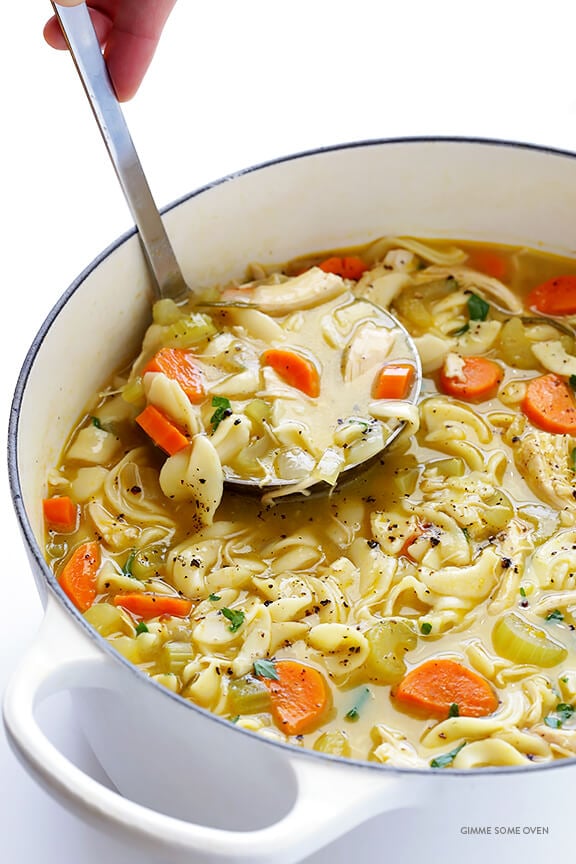
I started experimenting with my chicken soup and came up with this spicy recipe. It's great on a cold day or when you're sick and congested.
- salt and pepper to taste
- 1/2 onion
- 3 cups chicken broth
- 1 tsp garlic minced
- 6 cups water
- 3 boneles skinless chicken tenderloins (up to 4)
- 4 chicken boullion
- 2 tsp ground red pepper or cayenne pepper
- 1 dash oregeno
- 1 cup corn fresh or frozen
- 2 potatoes peeled, sliced thin or cubed
- 1 9-oz package angel hair pasta
- Carbohydrate 13.104722875 g
- Cholesterol 43.108 mg
- Fat 1.510392625 g
- Fiber 1.79747503628731 g
- Protein 19.0559715 g
- Saturated Fat 0.36918745 g
- Serving Size 1 1 Serving (443g)
- Sodium 480.9547375 mg
- Sugar 11.3072478387127 g
- Trans Fat 0.301798425 g
- Calories 144 calories
Step-by-step
- Boil your chicken in the broth until tender and fully cooked. Not much fat should rise from this. Remove chicken from broth and set to the side.
- Add water, boullion, vegetables, and spices to broth. Leave on med to med-hi for 20-30 min.
- While the vegetables are cooking, cut chicken to your preference (I like to just break it apart) and add back to soup.
- Once vegetables are soft, add pasta to soup to cook for about 10 min. You can serve immediately or refrigerate overnight for full flavor.
Ingredient lists omit the physical behavior of components under heat. Water ratios dictate final salinity, and starch types alter broth viscosity.
Broth and Bouillon Mechanics
Chicken bouillon contains high sodium levels that dictate how much additional salt the liquid requires. When substituting fresh stock for the water and bouillon base, reduce the added sodium by half initially. Simmering boneless tenderloins separately prevents over-extraction of proteins into the main pot. Pull the meat when internal temperature reaches 165 degrees Fahrenheit to maintain moisture.
Starch Management
Angel hair pasta cooks rapidly in simmering liquid, absorbing starches that thicken the surrounding broth. Add the pasta during the final ten minutes of cooking to prevent disintegration. Cubed potatoes release amylase into the broth, creating a naturally cloudy texture. Rinsing diced potatoes before adding them removes surface starches for a clearer liquid.
Thermal and Spice Adjustments
Cayenne pepper disperses uniformly through hot liquids, but fat-soluble capsaicin bonds poorly with water alone. Incorporating a small fat source like neutral oil helps distribute the heat evenly across the palate. Refrigerating the finished soup overnight allows starches to fully hydrate and mellows the sharpness of the red pepper.


