Chicken Noodle Soup (like my Grandma's)
One dish that was made using cheap chicken thighs. I'm on a mission to find delicious ways to prepare inexpensive items, most especially proteins. The other two-thirds of the cooked chicken was used to make a casserole, but since that didn't turn out as well as planned, I haven't posted it. I'll tinker with the recipe and post it once successful.
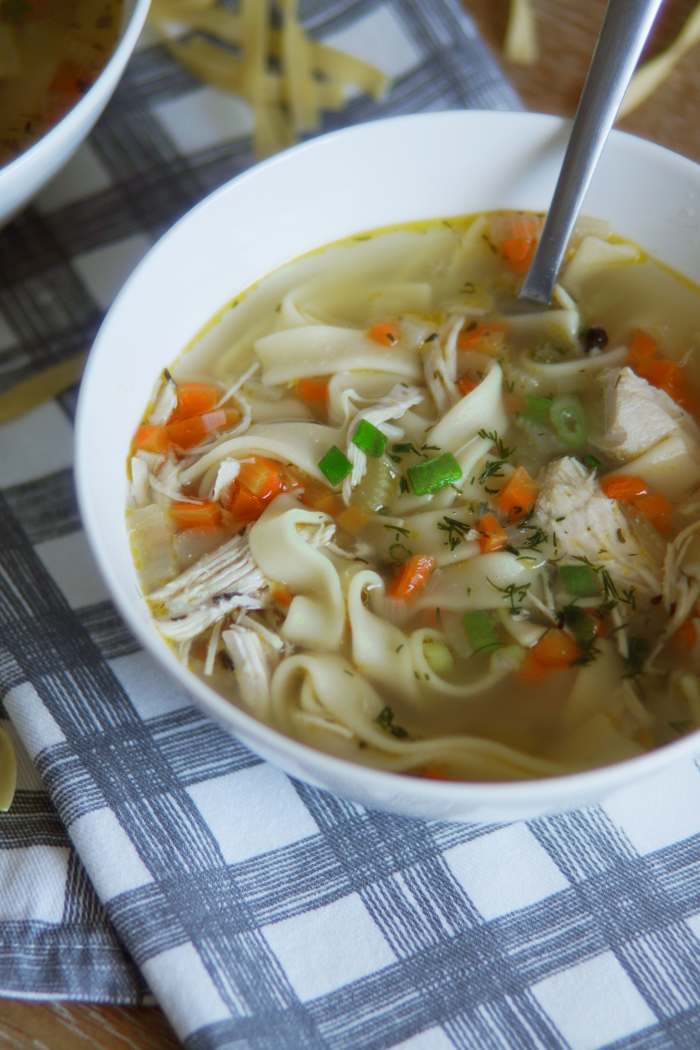
One dish that was made using cheap chicken thighs. I'm on a mission to find delicious ways to prepare inexpensive items, most especially proteins. The other two-thirds of the cooked chicken was used to make a casserole, but since that didn't turn out as well as planned, I haven't posted it. I'll tinker with the recipe and post it once successful.
- 1 1/2 teaspoons ground black pepper
- 1 teaspoon poultry seasoning
- 6 cups homemade stock see directions
- 2 cups pulled chicken meat diced
- 4 medium carrots peeled & sliced
- 2 ribs celery sliced
- 1 tablespoon fresh celery leaf washed & diced
- 1 32 ounce carton chicken stock
- 1 16 ounce package kluski noodles
- 3 teaspoons garlic salt
- Carbohydrate 1.7985353125 g
- Cholesterol 0 mg
- Fat 0.0585775 g
- Fiber 0.56976561909914 g
- Protein 0.2068734375 g
- Saturated Fat 0.01275625 g
- Serving Size 1 1 Serving (21g)
- Sodium 123.6413125 mg
- Sugar 1.22876969340086 g
- Trans Fat 0.013135 g
- Calories 8 calories
Step-by-step
- I bought 2 packages of cut chicken thighs, 8 thighs, about 4 pounds.
- First remove skin - you can discard if you wish, but I fried them up crisp with a dash of sea salt & let them cool as a treat for our dog.
- Season all sides of uncooked thighs with garlic salt, black pepper and poultry seasong blend.
- Add 4 tablespoons of canola oil to a dutch oven (or a heavy-bottomed pot) then place over a medium flame.
- Once oil is hot, place seasoned thighs in, then brown them on all sides (leave all browned bits & pan juices in pot).
- Remove to a pyrex casserole dish, cover tightly with foil, them finish cooking them completely for 30 minutes in a 350 oven.
- Remove from oven, remove the thighs to cool.
- Scrape any bits & liquid from pyrex pan into dutch oven.
- Once thighs are cool, pull meat from bones, place in tightly sealed container and refrigerate.
- (About a third of this meat will go into soup, the rest in another meal).
- Return thigh bones to pyrex pan along with a whole medium yellow onion sliced in half, and 2 celery ribs.
- Roast Uncovered in oven at 350 for 45 minutes.
- Dump all contents into dutch oven, then fill with clear cold water (6-8 cups), then cook on high flame for 2 hours.
- Cover tightly and refrigerate overnight.
- Day 2
- Remove dutch oven from fridge, uncover.
- Skim all congealed fat off the top and discard.
- Using a colander, strain liquid into stock pot, discard bones, etc.
- Add the Carton of chicken stock to your homemade stock, then add carrots and celery.
- Cook on medium high until vegetables are tender.
- Add diced chicken meat, celery leaf and reduce heat to low.
- Cook kluski noodles according to package directions, then drain and rinse until cold.
- Add noodles to soup until all heated through.
- Serve hot.
Bone-in chicken thighs drive the economics and flavor of this dish, providing both the meat for the soup and the bones required for a rich, gelatinous homemade stock. Budget-friendly cuts often lack depth unless properly handled, which is why browning the meat in a heavy-bottomed Dutch oven before roasting creates the essential fond needed for a complex base.
Temperature control dictates the outcome of the stock-making process. Roasting the reserved bones at 350 degrees Fahrenheit for 45 minutes unlocks residual connective tissue before a two-hour simmer on the stovetop extracts maximum body. Chilling the strained liquid overnight at 41 degrees Fahrenheit or lower solidifies the rendered fat, allowing for clean skimming before the carrots, celery, and kluski noodles are introduced.
Swapping the homemade broth for a fully commercial alternative alters the final viscosity entirely, stripping away the natural starches and collagen released by long-simmered bones. When substituting commercial stock, supplement with unflavored gelatin to mimic the mouthfeel of a scratch-made reduction.


