Asparagus and Shrimp Risotto
Together the asparagus and the shrimp creates the most delicious main course or starter, this recipe I managed to get from The Olive Garden Restaurant way back in 1992 there may well be one or two changes to it, as most cooks by and large modify one or two things in a recipe.
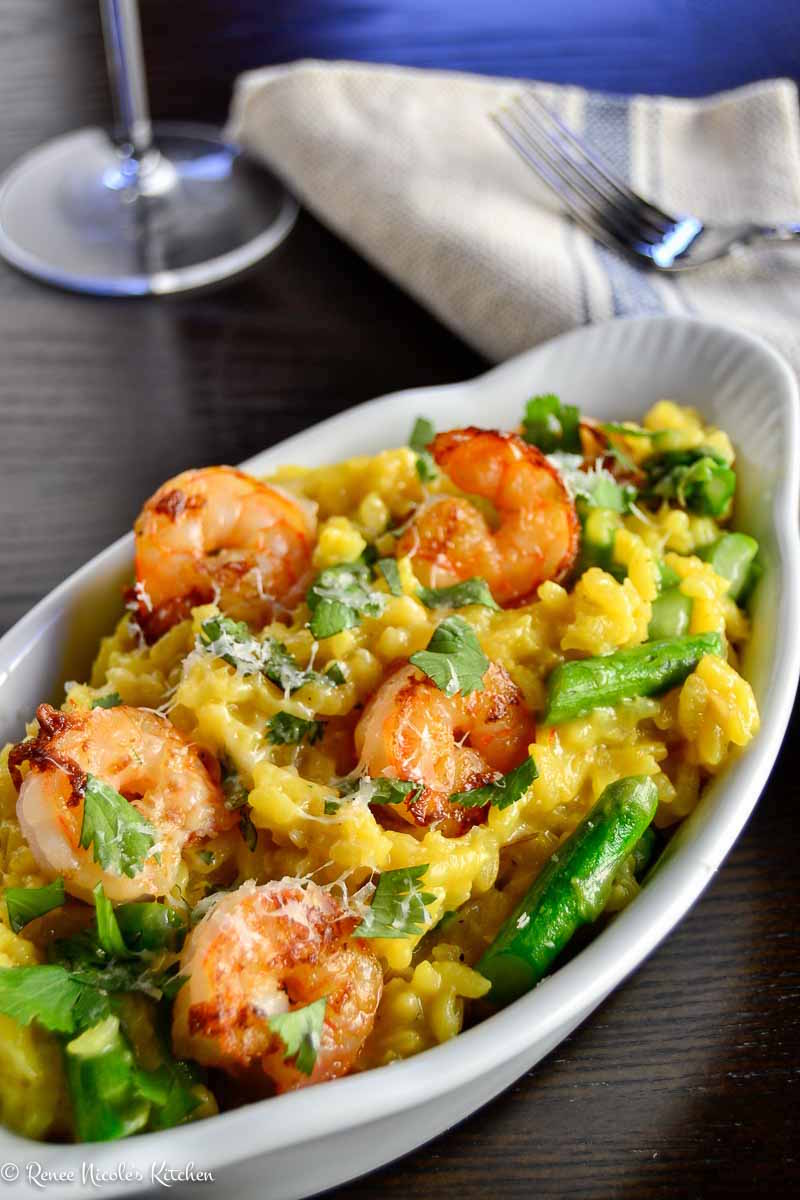
Together the asparagus and the shrimp creates the most delicious main course or starter, this recipe I managed to get from The Olive Garden Restaurant way back in 1992 there may well be one or two changes to it, as most cooks by and large modify one or two things in a recipe.
- 8 cups chicken stock
- 2 tablespoon olive oil
- 1 onion finely chopped
- 2 cups arborio rice
- 1/2 cup dry white wine
- 1 tablespoon lemon zest
- 450 grams medium shrimp peeled and de-veined
- 110 grams unsalted butter divided
- 1 1/4 cups parmesan cheese
- 350 grams asparagus trimmed and cut into 1-inch pieces
- 1 cup tomatoes we always use fresh tomatoes peeled and de-seeded
- 2 tablespoon chopped parsley
- Carbohydrate 87.9123383333334 g
- Cholesterol 177.2 mg
- Fat 27.0020441666667 g
- Fiber 4.07313326589266 g
- Protein 40.132375 g
- Saturated Fat 12.9188824166667 g
- Serving Size 1 1 Serving (923g)
- Sodium 1112.77725 mg
- Sugar 83.8392050674407 g
- Trans Fat 2.16290441666667 g
- Calories 769 calories
Step-by-step
- Bring the chicken stock to a simmer in a medium size saucepan, and keep on a low heat until needed. Heat the oil over a medium heat add the onions and cook for 3 minutes, or until transparent.
- Stir in the rice and cook for 1 minute, then add the white wine, add half of the chicken stock and stir until completely absorbed. Repeat until 4 cups of the stock has been added; stir the risotto frequently to prevent sticking.
- Add the asparagus, lemon zest, and shrimp to the remaining broth and cook for about 2 minutes, or until shrimp is pink, remove the asparagus and shrimp from the broth and then add them to the risotto mixture.
- Add half a cup of the stock at a time until the desired creaminess is reached, there may be some stock left over, it doesn?t matter!
- Once the stock is absorbed, add the butter, parmesan cheese, salt, and pepper to taste.
- Garnish with chopped tomatoes and parsley.
When stovetop space is at a premium, managing a large pot of simmering stock alongside a wide sauté pan requires careful choreography to keep temperatures stable. Arborio rice demands continuous attention because its high amylopectin starch content creates that signature velvety suspension, releasing slowly as liquid is absorbed rather than dissolving all at once. Maintaining the chicken broth at a bare simmer in a separate vessel prevents the cooking temperature from dropping when added to the grains, ensuring even gelatinization of the starch granules throughout the stirring process. Fresh asparagus spears demand precise heat control so their natural bright green chlorophyll does not dull into an unappealing olive drab during cooking. Meanwhile, shrimp cook through in mere minutes, turning opaque and pink between 120 degrees and 130 degrees Fahrenheit internal temperature, which makes poaching them briefly in the remaining broth an effective method to prevent rubbery protein fibers. Adjusting this formulation for smaller or larger groups requires proportional scaling of the liquid-to-grain ratio, typically three to four parts warm stock to one part rice, though the total volume absorbed can fluctuate based on the specific pan width and burner BTU output. Swapping fresh spring produce for preserved alternatives alters the moisture balance entirely, as canned or frozen vegetables release excess water that must be evaporated before the final fat and hard cheese are folded in.


