Chocolate Raspberry Bonbons
Over here, we're making our own (healthier) candy-especially these Chocolate Raspberry Bonbons.
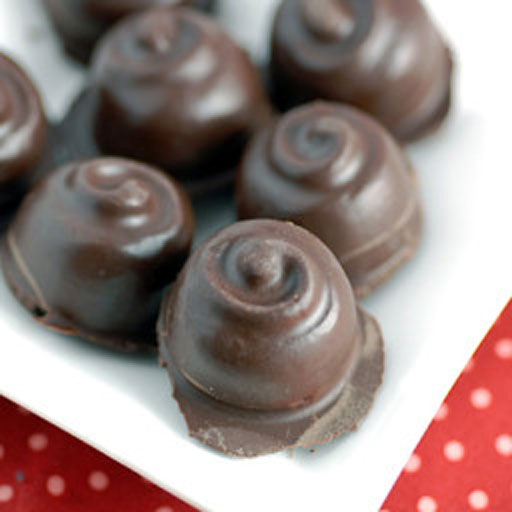
Over here, we're making our own (healthier) candy-especially these Chocolate Raspberry Bonbons.
- Carbohydrate 12.5776 g
- Cholesterol 3.51272727272727 mg
- Fat 4.53345454545455 g
- Fiber 0.575272743051702 g
- Protein 1.1872 g
- Saturated Fat 2.82733818181818 g
- Serving Size 1 1 Serving (20g)
- Sodium 13.6945454545455 mg
- Sugar 12.0023272569483 g
- Trans Fat 0.396530909090909 g
- Calories 96 calories
Step-by-step
- Melt chocolate in a small pan over very low heat; you can use a double boiler if you wish and temper the chocolate
- Using a small paint brush, coat the bottom and sides of a candy mold
- Place mold in freezer for 10 minutes to allow chocolate to harden
- Remove mold from freezer
- Spoon a scant teaspoon of raspberry jam into each chocolate lined candy mold cup
- Paint chocolate over raspberry jam to cover and make final layer
- Place in freezer for 10 minutes to harden
- Remove from freezer, turn mold upside down and pop candies out of mold
- Serve
Crisp cocoa shells yield instantly to a tart fruit center when bitten, offering a sharp contrast between brittle fat and viscous preserves. Achieving this distinct textural break relies entirely on thermal control during the initial coating phase. When melting chocolate chunks over very low heat, maintaining a temperature below 120 degrees Fahrenheit prevents cocoa butter separation and guarantees a glossy finish once chilled.
Working with Preserved Fruit Versus Fresh Fruit
Selecting raspberry jam instead of fresh berries is a structural necessity rather than a mere flavor preference. Whole fresh raspberries contain roughly eighty-five percent water by weight, which will immediately cause melted chocolate to seize into an intractable paste upon contact. Preserved jam provides concentrated pectin and sugar solids that maintain viscosity without introducing free moisture into the fat matrix. Because commercial jams vary in seed content, passing the preserves through a fine-mesh sieve prior to filling the molds ensures a smooth center that will not clog narrow piping tips or leave hard particulate pockets inside the finished bonbon.
- If the chocolate shell cracks upon removal from the mold, the freezing duration exceeded ten minutes or the temperature dropped past the optimal contraction point.
- Stir the chocolate continuously during melting to distribute heat evenly across the solids without scorching the sugars.
- Store finished confections in a sealed container at 55 degrees Fahrenheit to prevent sugar bloom caused by ambient humidity.



