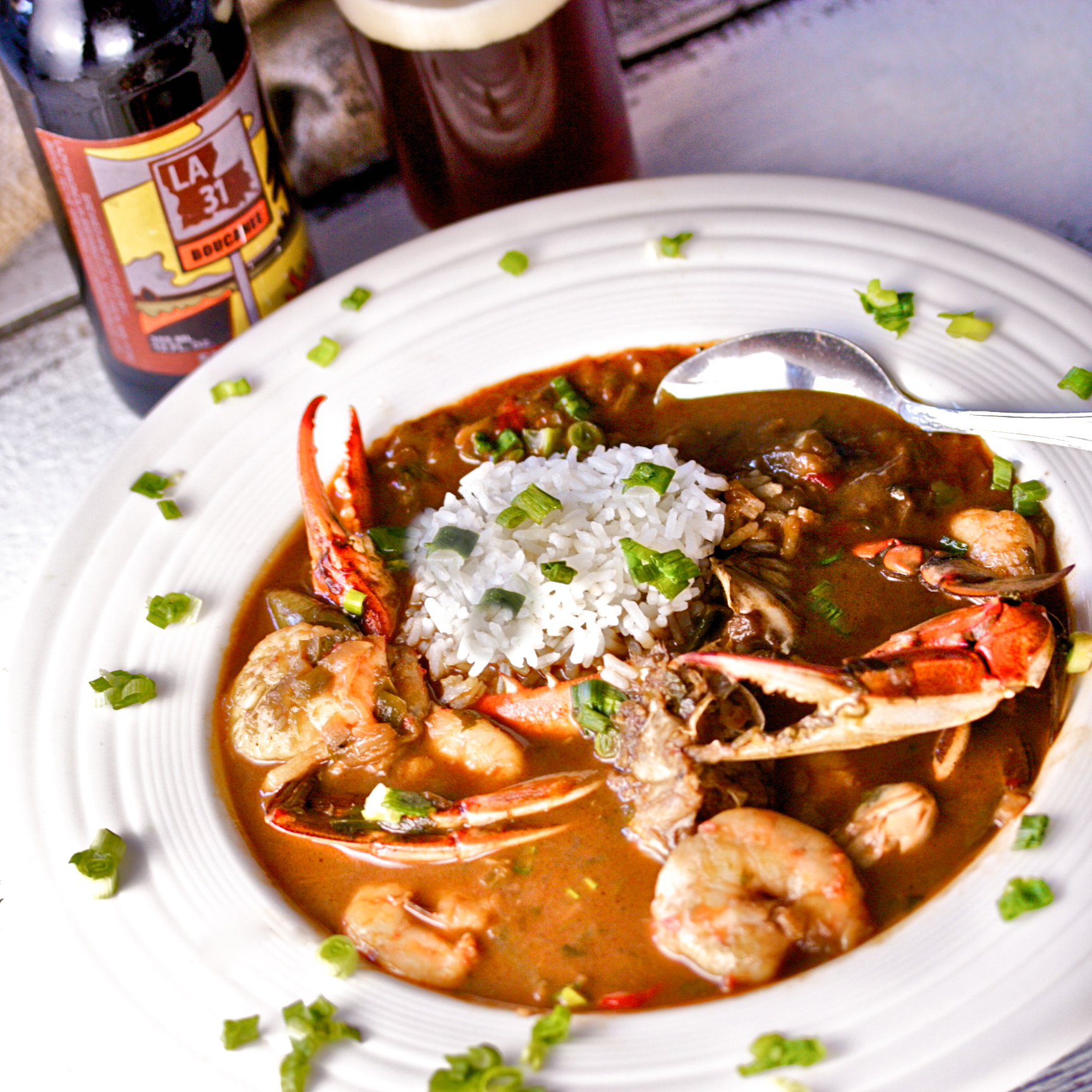
Family recipe of gumbo as made by my grandmother for as long as I can remember.
- 1 onion chopped
- 1 teaspoon pepper
- 1 clove garlic chopped
- 2 teaspoons salt
- 5 tablespoons shortening
- 1 bell pepper chopped
- 6 tablespoons flour
- 1 pound shrimp
- 1 can tomatoes
- 1/4 cup celery can use less if desired
- 1 chicken whole, cut up
- 1 lb andoulle sausage can use link pork
- 1 can okra can use gumbo file instead, if desired
- 1 package crab boil 1 cap liquid
- Carbohydrate 8.05962049637139 g
- Cholesterol 140.68 mg
- Fat 21.1896304999534 g
- Fiber 1.1237000137893 g
- Protein 27.3428824995088 g
- Saturated Fat 6.72912124999263 g
- Serving Size 1 1 Serving (240g)
- Sodium 136.158699999905 mg
- Sugar 6.93592048258209 g
- Trans Fat 1.71071849998455 g
- Calories 338 calories
Step-by-step
- Add the shortening to a heated skillet, once melted, sift in flour to make a roux.
- Once deeply browned, add in the onion, bell pepper, celery and garlic. Simmer until wilted.
- Move to a stock pot with the chicken, sausage, okra and tomatoes.
- Add water to suit and a capful of the crab boil, along with the salt and pepper. Cook until tender.
- In a separate pot, cook the shrimp with crab boil according to directions. Once the chicken is tender, add the shrimp and cook for 15 more minutes.
- Best served plain or with rice, and gumbo is always better the second day.
Deep mahogany broth blankets tender pieces of poultry, smoky pork, and tender shellfish, carrying the unmistakable warmth of crushed peppercorns and aromatic vegetables. Achieving this rich consistency requires strict attention during the initial phase, specifically when combining shortening and flour to build a dark roux. Because flour burns easily on direct heat, maintaining a steady medium-low flame prevents scorched particles from imparting an acrid taste to the entire batch. Whisking continuously while incorporating the dry powder into the melted fat ensures even browning without hot spots developing along the bottom of the skillet.
Historical roots in southern Louisiana trace this dish back to a blend of French, Spanish, and West African culinary traditions, where thickeners like okra pods or powdered sassafras leaves were essential for body. Early cooks relied on available local ingredients, combining wild game or seafood with the foundational holy trinity of onions, celery, and bell peppers. This regional adaptation evolved into a standard method where proteins are simmered slowly until their fats and connective tissues melt into the stock, deepening the overall savoriness. Incorporating spicy sausage alongside mild poultry creates a deliberate contrast in texture and spice level that defines authentic coastal pots.
Preparing large portions of this soup for ten people can crowd standard home cookware, making it necessary to divide the stock between two vessels if your stockpot holds less than eight quarts. When reducing the yield for smaller households, maintain the ratio of one part flour to slightly less than one part fat to ensure the thickening power remains effective. Measuring liquids carefully prevents the broth from turning thin, particularly when substituting canned tomatoes or adding extra water to compensate for evaporation during the long simmer. Monitoring the liquid level ensures the meats remain submerged while rendering their flavors into the surrounding broth.
Allowing the finished dish to rest overnight in the refrigerator encourages the starches and proteins to meld, resulting in a noticeably richer flavor profile by the second day. Reheating leftovers gently on the stove top prevents the delicate shrimp from overcooking and becoming rubbery before serving over steamed white rice. Storing the pot properly cooled and covered extends its quality for up to three days without losing the distinct pungency of the garlic and pepper.


