Baltimore Crab Cakes
Phillips seafood restaurant in Baltimore's Inner Harbor serves some of the best crab cakes. Here is a copycat recipe for this traditional Maryland delicacy.
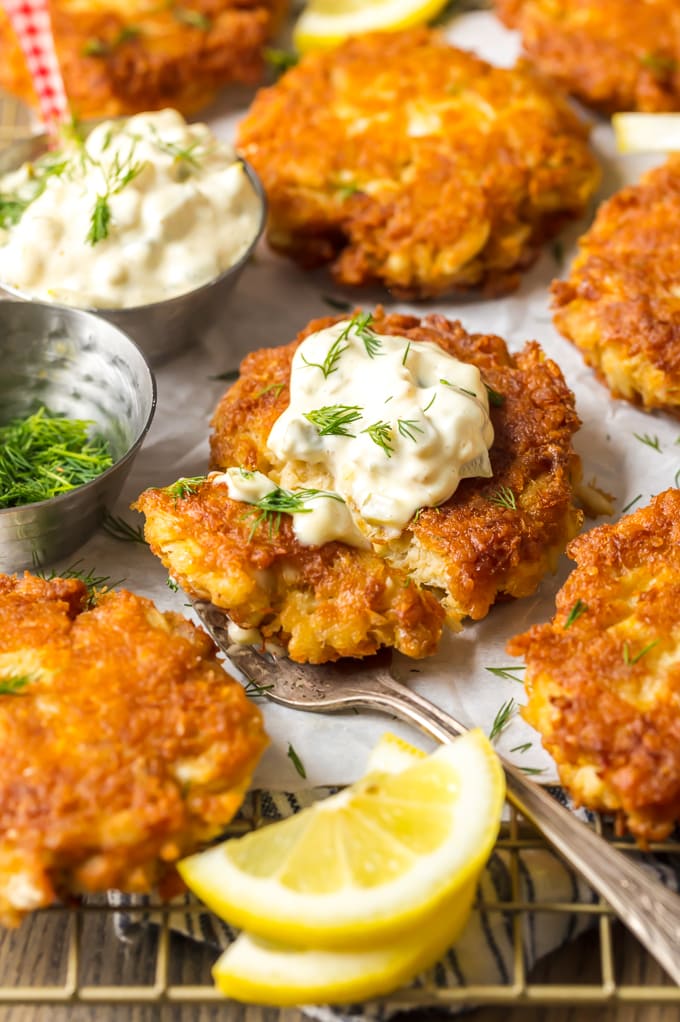
Phillips seafood restaurant in Baltimore's Inner Harbor serves some of the best crab cakes. Here is a copycat recipe for this traditional Maryland delicacy.
- 1 large egg
- 1/4 cup breadcrumbs
- 1/2 teaspoon lemon juice freshly squeezed
- 8 ounces crabmeat shell pieces removed (backfin recommended)
- 1 teaspoon worcestershire sauce (or 2 tsp. worcestershire for chicken)
- 1/8 teaspoon freshly ground mustard seeds or dry mustard
- 1/2 tablespoon mayonnaise
- 1/2 tablespoon sour cream
- 1 1/2 teaspoons prepared mustard
- 1 1/2 teaspoons unsalted butter melted
- 3/4 teaspoon parsley flakes
- 1/2 teaspoon old bay seasoning (or other crab or seafood seasoning)
- lemon wedge or lemon slice
- Carbohydrate 14.7666290618149 g
- Cholesterol 81.86753125 mg
- Fat 5.52680601537538 g
- Fiber 2.09134890473491 g
- Protein 14.3133959632735 g
- Saturated Fat 1.88049461717206 g
- Serving Size 1 1 Serving (123g)
- Sodium 674.88476032381 mg
- Sugar 12.6752801570799 g
- Trans Fat 0.759885398426234 g
- Calories 160 calories
Step-by-step
- Whisk together all ingredients except crab meat.
- Fold in crab meat.
- Divide mixture into 4 parts and shape into cakes approximately 3/4? thick.
- Pan fry the cakes in a little peanut oil or canola oil.
- Serve hot, garnished with lemon.
Operating in a compact galley kitchen requires cast iron skillets with heavy mass to retain heat evenly across small burners. High heat management prevents the delicate crust from burning before the interior warms through, requiring a medium flame for roughly four minutes per side when pan frying in peanut oil. Maintaining proper oil temperature stops the cakes from absorbing excessive grease while achieving a deep golden brown exterior.
Folding the backfin crabmeat gently into the binder preserves the large lumps rather than breaking them down into a paste. Checking the meat thoroughly for stray shell fragments before mixing protects diners from unpleasant textures. Using mayonnaise alongside sour cream supplies the necessary moisture without overwhelming the subtle sweetness of the shellfish.
Refrigerating cooked leftovers within two hours in an airtight container maintains food safety standards for up to forty-eight hours. Reheating these items demands a dry skillet over low heat rather than a microwave, which turns the delicate proteins rubbery and releases trapped moisture into the crust.
Substituting prepared mustard with ground mustard seeds alters the pungency, requiring a reduction in quantity by half to avoid overpowering the Old Bay seasoning. Adjusting the Worcestershire sauce maintains the umami profile regardless of which mustard variety is selected for the binding paste.



