Slow Cooker Enchiladas
One of my favorite recipes to fix in the Crock Pot. I love the mixture of beans and the way it tastes all together.
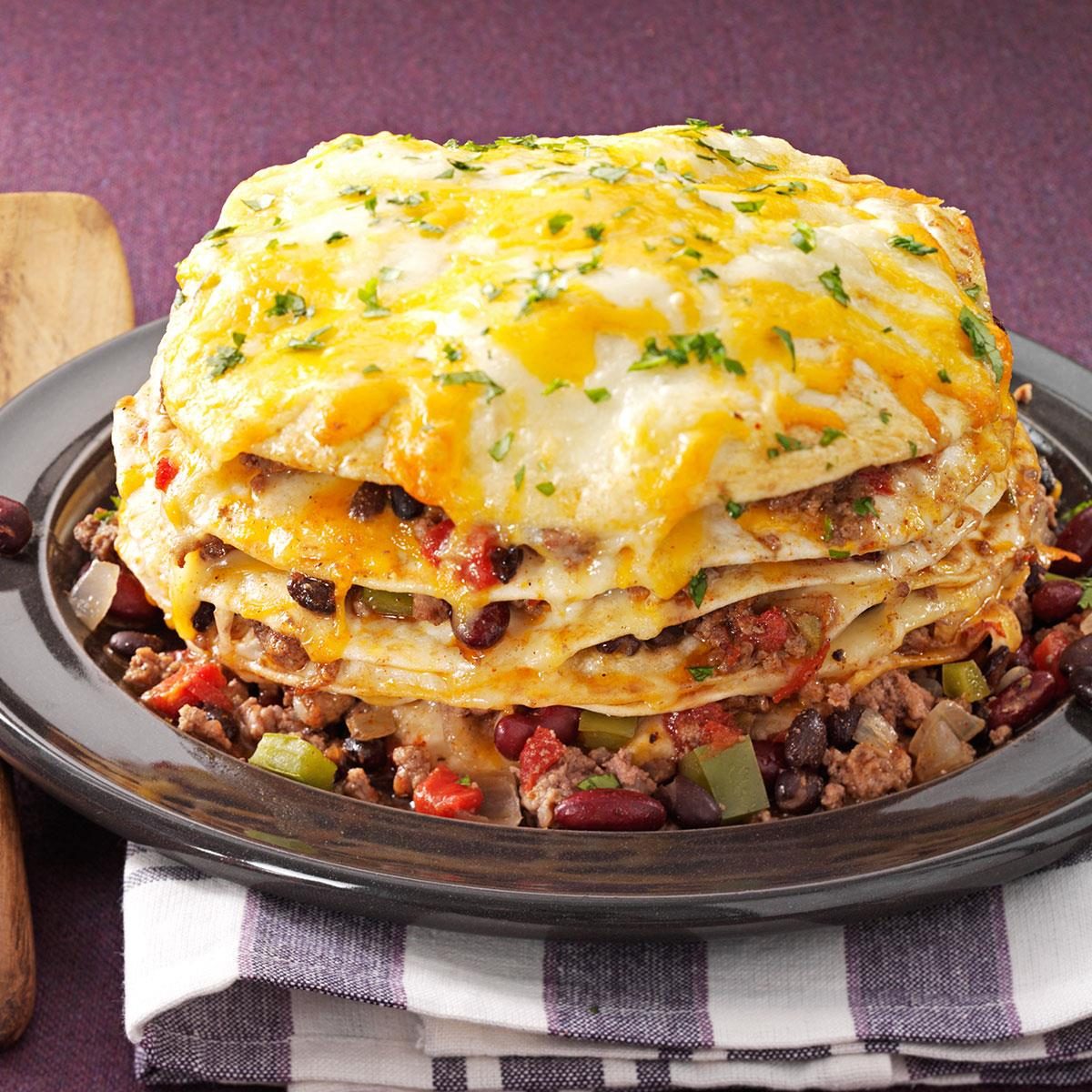
One of my favorite recipes to fix in the Crock Pot. I love the mixture of beans and the way it tastes all together.
- 1/2 teaspoon salt
- 1/3 cup water
- 1 pound ground beef
- 1/2 teaspoon ground cumin
- 1 teaspoon chili powder
- 1 cup onion chopped
- 1 cup sharp cheddar cheese shredded
- 1 cup monterey jack cheese shredded
- 1/2 cup green pepper chopped
- 1/4 teaspoon pepper
- 1 can pinto or kidney beans 16 ounce, rinsed and drained
- 1 can black beans 15 ounce, rinsed and drained
- 1 can diced tomatoes and green chilies undrained
- 6 flour tortillas (6 or 7 inches)
- Carbohydrate 56.690637375 g
- Cholesterol 93.2354166666667 mg
- Fat 32.8839670833333 g
- Fiber 15.6232437697808 g
- Protein 35.8380644583333 g
- Saturated Fat 15.0770064666667 g
- Serving Size 1 1 Serving (364g)
- Sodium 662.526513583333 mg
- Sugar 41.0673936052192 g
- Trans Fat 5.81080473333333 g
- Calories 659 calories
Step-by-step
- In a skillet, cook beef, onion and green pepper until beef is browned and vegetables are tender; drain.
- Add the next eight ingredients; bring to a boil.
- Reduce heat; cover and simmer for 10 minutes.
- Combine cheeses.
- In a 5 quart slow cooker, layer about 3/4 cup beef mixture, one tortilla and about 1/3 cup cheese.
- Repeat layers.
- Cover and cook on low for 5-7 hours or until heated thru.
The ingredient list reveals nothing about how dense this casserole becomes as starches migrate during a long slow cook. Flour tortillas behave differently than corn when subjected to hours of heat and moisture, absorbing liquids rapidly and fusing the layers into a cohesive block rather than distinct rolled cylinders. Browning the ground beef and softening the chopped onion and green pepper in a separate skillet prior to assembly drives off excess surface water that would otherwise pool at the bottom of the ceramic insert. Rinsing canned pinto and black beans removes the canning starches that thicken sauces unpredictably, keeping the diced tomatoes and green chilies from turning pasty.
Adapting this dish for varying household sizes requires attention to the vessel dimensions rather than strict linear math. A five-quart slow cooker provides the exact footprint needed for six to seven-inch tortillas to lie flat without folding the edges awkwardly against the walls. Halving the quantities demands a smaller three-quart cooker to maintain the correct depth of layers; if baked in too large a surface area, the liquid evaporates prematurely, leaving the top tortilla dry and rigid before the center reaches serving temperature.
Assembling the components ahead of time is viable if the assembled insert is refrigerated immediately for no longer than twenty-four hours before cooking. Extended raw contact between flour tortillas and acidic canned tomatoes causes the dough to degrade structurally, yielding a torn mess upon serving. Freezing the unbaked casserole directly in the ceramic insert is discouraged due to thermal shock risks; instead, build the layers in a disposable aluminum pan, freeze solid, and transfer the block back to the slow cooker body while adding twenty minutes to the overall low heat setting.
Leftovers demand careful handling because dairy fats separate during refrigeration and reheating cycles. Store portions in airtight glass containers for up to three days, and refresh individual servings in a microwave at fifty percent power to prevent the sharp cheddar and Monterey Jack cheeses from oiling off. Adding two tablespoons of water around the perimeter before reheating restores moisture lost to evaporation during the initial slow cooking phase.


