Gingerbread House Bundt Cake
Made in a molded Nordic Ware pan, you can decorate to suit or just dust with confectioners sugar. Either way, it's sure to delight at your next holiday potluck. The only problem I have is that often people tell me it "looks too good to eat."
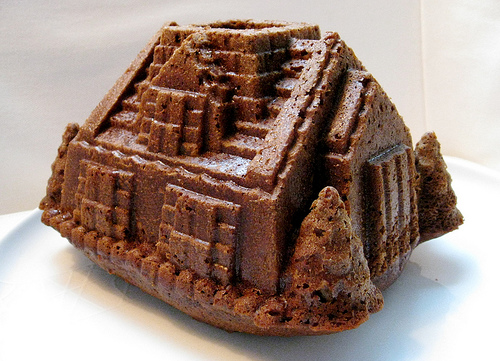
Made in a molded Nordic Ware pan, you can decorate to suit or just dust with confectioners sugar. Either way, it's sure to delight at your next holiday potluck. The only problem I have is that often people tell me it "looks too good to eat."
- 1/4 cup water
- 4 eggs
- 1 tsp salt
- 1/2 cup granulated sugar
- 1 cup granulated sugar
- 2 tsp baking powder
- 1 1/4 cups milk
- 2 tsp vanilla extract
- 2 2/3 cups cake flour
- 1 tbs ground ginger
- 1 1/2 tsp ground cinnamon
- 1/4 tsp freshly grated nutmeg
- 16 tbs/2 sticks unsalted butter
- 3/4 cup firmly packed light brown sugar
- 1/3 cup finely chopped crystallized ginger
- for the glaze (optional)
- 1 tbs grated fresh ginger
- 1 tsp ground ginger
- Carbohydrate 83.9685703720157 g
- Cholesterol 250.7898125 mg
- Fat 40.7123973958594 g
- Fiber 1.53107711752069 g
- Protein 14.2323091617432 g
- Saturated Fat 24.1631217291749 g
- Serving Size 1 1 Serving (275g)
- Sodium 176.662373826359 mg
- Sugar 82.437493254495 g
- Trans Fat 2.87186077084096 g
- Calories 758 calories
Step-by-step
- Have all ingredients at room temperature.
- Position a rack in the lower third of the oven and preheat to 325°F (165°C). Using a small pastry brush, brush the inside of the Gingerbread House Bundt Pan with softened shortening or butter, making sure to coat the detailing in the pan. Dust with cake flour; tap out excess flour.
- To make the cake, over a sheet of waxed paper, sift together the flour, ground ginger, baking powder, salt, cinnamon and nutmeg. In a small bowl, stir together the milk and vanilla; set aside.
- In the bowl of an electric mixer fitted with the flat beater, beat the butter on medium speed until creamy and smooth, about 30 seconds. Add the granulated sugar and brown sugar and continue beating until light and fluffy, about 5 minutes, stopping the mixer occasionally to scrape down the sides of the bowl. Add the eggs one at a time, beating well after each addition.
- Reduce the speed to low and add the flour mixture in three separate additions, alternating with the milk mixture, and beginning and ending with the flour. Beat each addition until just incorporated, stopping the mixer occasionally to scrape down the sides of the bowl. Using a rubber spatula, gently fold in the crystallized ginger.
- Spoon the batter into the prepared pan and spread it to the outer edges, making sure the batter reaches the detailing at the top of the pan. Bake until the cake is golden and a toothpick inserted into the center comes out clean, 65 - 70 minutes. Transfer the pan to a wire rack and let cool upright in the pan for 15 minutes.
- Meanwhile, make the glaze. In a small saucepan over medium-high heat, combine the granulated sugar, fresh ginger, water, and ground ginger. Heat, stirring, until the sugar is dissolve, 3 to 5 minutes. Remove from the heat and steep for 15 minutes. Just before using, reheat the glaze, then strain it through a fine-mesh sieve into a small bowl.
- Tap the Bundt pan gently on a work surface to loosen the cake. Set the rack over a sheet of waxed paper, invert the pan onto the rack and lift off the pan. Using a pastry brush, brush the warm cake with the warm glaze. Let the cake cool completely, at least two hours, before serving.
Intricate cast aluminum Bundt pans demand meticulous preparation to prevent tearing during release, requiring solid shortening brushed into every crevice rather than liquid cooking spray that pools at the bottom. Standard all-purpose flour works as a direct one-to-one replacement for cake flour if you whisk two tablespoons of cornstarch per cup into the dry ingredients to soften the crumb. Dairy butter can be swapped for plant-based sticks containing at least eighty percent fat without altering the creaming time required to aerate the sugars. Natural souring occurs when regular milk is combined with a splash of apple cider vinegar to mimic buttermilk if lactose-free options lack acidity.
Gluten-free flour blends containing xanthan gum perform reliably when the mixing duration is reduced by half to prevent tough protein development in the batter. Sugar quantities can be scaled down by fifteen percent without compromising the structural integrity or moisture retention of the final crumb. Crystallized ginger distributes evenly throughout heavy batters when tossed in a tablespoon of the measured dry flour mixture before folding. Freshly grated nutmeg yields superior volatile oils compared to pre-ground varieties, intensifying the spiced profile significantly.
Straining the warm ginger glaze through a fine-mesh sieve removes fibrous bits that would otherwise ruin the glossy finish applied to the unmolded pastry. Letting the baked dessert rest undisturbed in the pan for exactly fifteen minutes allows the internal steam to loosen the crust from the intricate metal geometry. Unmolding the warm ring onto a wire rack positioned over parchment paper catches excess glaze runoff for clean kitchen counters. Cooling the finished pastry for two full hours ensures the crumb sets firmly enough to slice cleanly without crumbling.
Pairing this spiced cake with unsweetened whipped cream or black drip coffee balances the dense, sugary crumb profile effectively. Leftovers keep well under a domed cake stand at room temperature for up to three days before drying out noticeably. Wrapping individual slices tightly in plastic wrap allows for freezer storage up to one month without flavor degradation. Brushing leftover glaze onto plain morning toast utilizes surplus syrup efficiently without waste.


