Quesadillas
If you love cooking you'll love this recipe. I got tired of restaurant quesadillas that all you can taste is the salsa! With these you don't even need salsa. They are packed with layers of flavor & the juices just run down your chin!
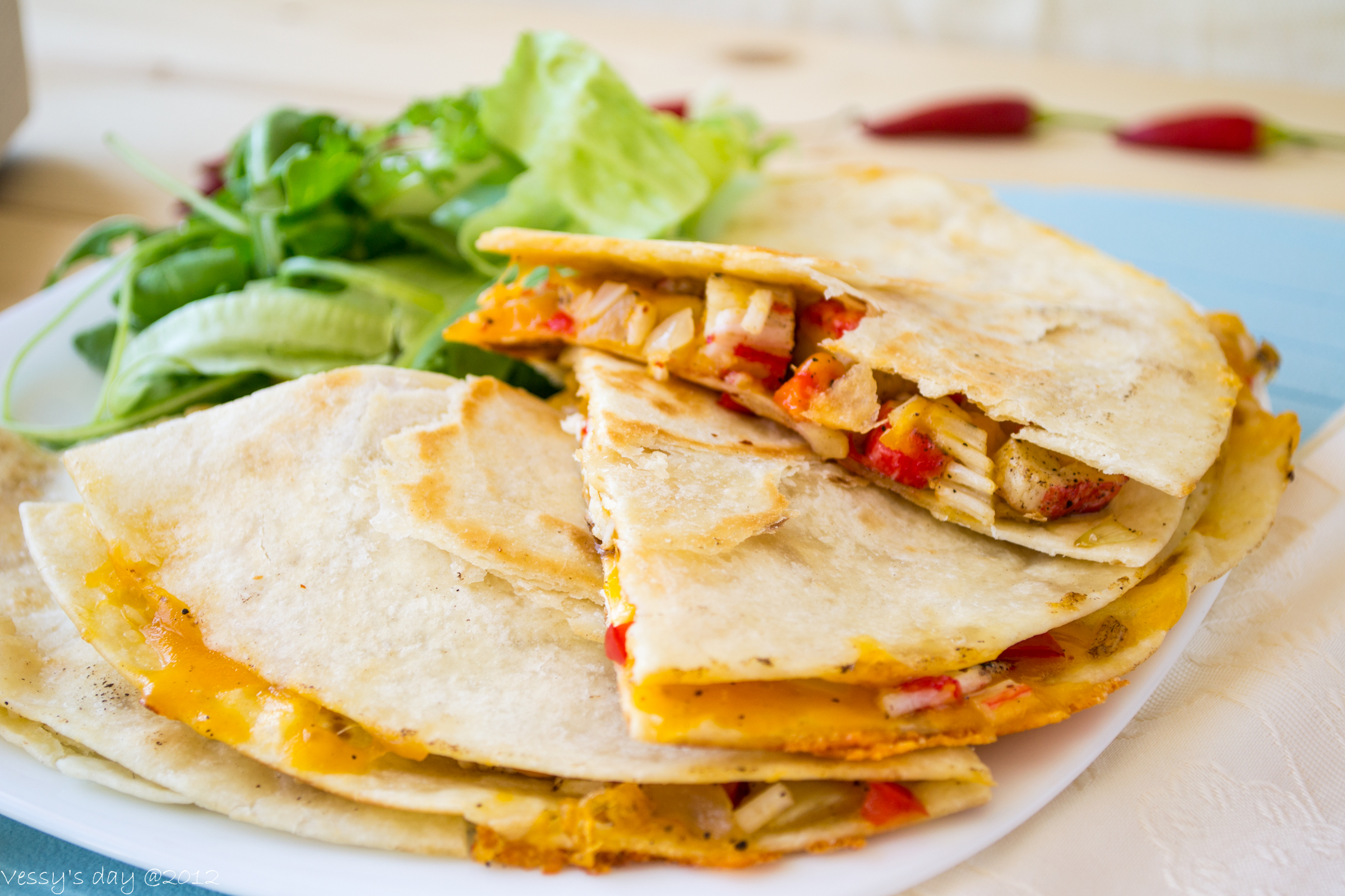
If you love cooking you'll love this recipe. I got tired of restaurant quesadillas that all you can taste is the salsa! With these you don't even need salsa. They are packed with layers of flavor & the juices just run down your chin!
- cooking spray
- 1 red onion thinly sliced
- freshly ground black pepper
- 1 tsp cumin
- 1 handful fresh cilantro chopped
- 1 lime juiced
- sea salt
- 1/3 cup tequila
- cajun seasoning
- 3 tbs olive oil
- 4 boneless chicken breast
- 1 red bell pepper
- 1 yellow bell pepper
- 1 orange bell pepper
- 4-5 baby portabellas
- 2 jalapenos
- 2 garlic cloves minced*
- 3 tbs salted butter
- tortilla shells; taco sized
- pepper jack cheese
- Carbohydrate 13.6348155 g
- Cholesterol 136.88 mg
- Fat 3.6713005 g
- Fiber 2.86679494819641 g
- Protein 56.5635195 g
- Saturated Fat 0.88399835 g
- Serving Size 1 1 Serving (494g)
- Sodium 200.529733333333 mg
- Sugar 10.7680205518036 g
- Trans Fat 1.0813314 g
- Calories 363 calories
Step-by-step
- Preheat oven to 425 degrees on the roast setting.
- Using cooking spray brown one side of each tortilla shell in a skillet; then set aside.
- Cut bell peppers into 3 inch sections; discard the seeds & stems. (Skins are easier to remove from large sections). Spread peppers out on a sheet pan skin side up. (2 cookie sheets work great.) *Add whole garlic cloves to the pan for additional flavor. Drizzle veggies with olive oil, salt, & pepper to taste. Roast veggies until the skin starts to blister. cover them with a lid, turn the oven off & let them sit in the oven with the door cracked for about 10 minutes. Sweating the peppers makes pulling the skins off much easier. When time's up remove the skins. Slice the bell peppers & chop the jalapenos. Discard the roasted garlic cloves & transfer the pepper mixture to a large bowl.
- In a large skillet heat 3 tablespoons olive oil & 3 tablespoons butter. Add onions, mushrooms, cilantro, & minced garlic. Remove the skillet from the stove & pour in the tequila, then stir in the lime juice. Saute until onions start to soften. Stir in pepper mixture & heat about 30 seconds more. Adjust seasonings to your taste. Transfer mixture back to the large bowl.
- Generously coat chicken breast with Cajun seasonin on both sides (less if you don't care for spicy). Grill chicken then transfer to cutting board & let rest for 2 minutes. Slice chicken.
- To assemble:
- Warm a skillet over medium heat. Remove from burner before spraying with cooking spray. Place uncooked side of tortilla shell down in pan. Add cheese, chicken, veggie mixture, & more cheese. Top with another tortilla uncooked side up. Spray top of tortilla before flipping (don't forget to take the pan off the burner before using the spray). When bottom is browned & crisp flip the quesadilla & brown the other side. Repeat with remaining ingredients.
When constrained by an unyielding refrigerator full of cooked poultry and roasted vegetables, turning yesterday's assembly into today's lunch requires distinct thermal management. Storing components separately prevents structural failure in the tortilla, but pre-assembled units demand careful handling. Microwaving destroys crispness by driving moisture directly into the starch matrix. Instead, place assembled quarters into a dry skillet over medium-low heat, applying a heavy press to maintain direct contact between metal and dough until the internal temperature reaches 165 degrees Fahrenheit.
Mastering the Pepper Steam Technique
Peeling bell peppers demands thermal shock. Roasting at 425 degrees Fahrenheit until the exterior blisters creates pockets of steam beneath the skin. Trapping that vapor inside a covered sheet pan for ten minutes forces the outer membrane to separate from the flesh effortlessly. Skipping this sweating phase leaves a tough, bitter skin that ruins the texture of the filling.
- Wrap leftover chicken tightly in plastic film to prevent lipid oxidation for up to three days.
- Vent the oven door slightly during the steaming phase to regulate internal humidity.
- Discard whole garlic cloves used during roasting; their volatile compounds degrade under high dry heat.



