BBQ Shrimp
This dish has nothing to do with a barbecue pit or barbecuing. Why is it called barbecued shrimp? Beats the hell out of me. If youre really curious, ask someone at Pascals Manale Restaurant on Napoleon Avenue in New Orleans; its where the dish was created. Me, I dont care. This dish is so good you can call it whatever you want. Just, um, dont have it every day. Youll know why immediately when you see the first ingredient listed:
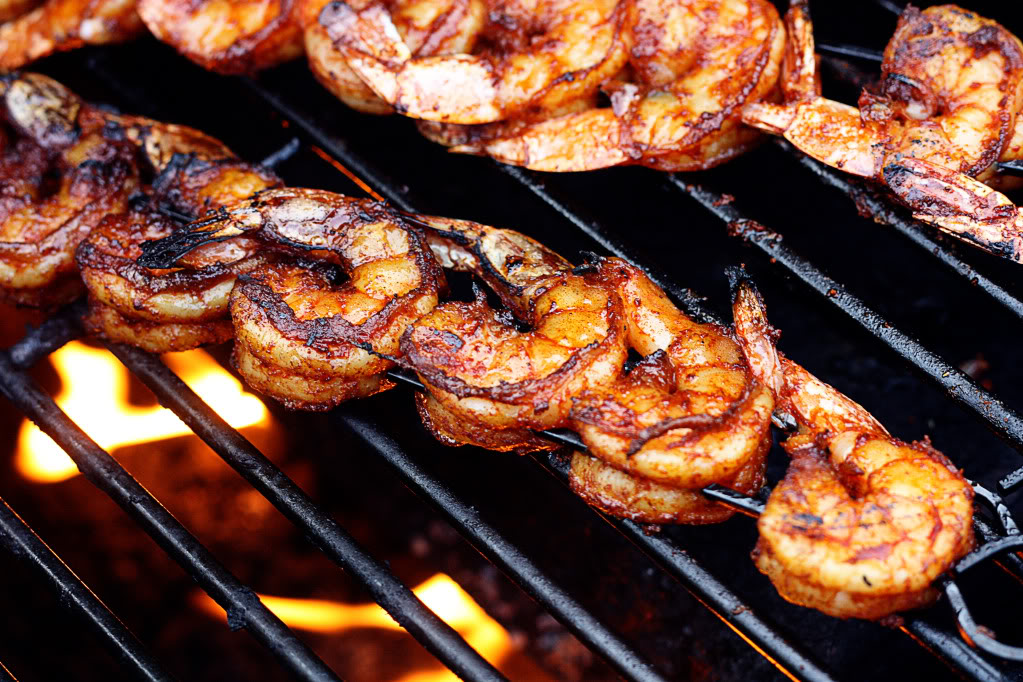
This dish has nothing to do with a barbecue pit or barbecuing. Why is it called barbecued shrimp? Beats the hell out of me. If youre really curious, ask someone at Pascals Manale Restaurant on Napoleon Avenue in New Orleans; its where the dish was created. Me, I dont care. This dish is so good you can call it whatever you want. Just, um, dont have it every day. Youll know why immediately when you see the first ingredient listed:
- 2 teaspoons fresh lemon juice
- 1/2 cup worcestershire sauce
- 2 tablespoons fresh rosemary chopped
- 2 tablespoons creole seasoning
- 8 sticks butter do not use margarine
- 6 ounces beer microbrew preferably
- 5-10 cloves fresh garlic, peeled finely minced
- 1 medium onion very finely minced
- 3 ribs celery very finely minced
- 3-4 tablespoons fresh parsley chopped
- 4 pounds shrimp heads and shells on
- Carbohydrate 306.955602576226 g
- Cholesterol 275.78416096 mg
- Fat 6.5719132004 g
- Fiber 7.12280019210346 g
- Protein 68.8177878225467 g
- Saturated Fat 1.13338618944 g
- Serving Size 1 1 Serving (624g)
- Sodium 421.433721977448 mg
- Sugar 299.832802384123 g
- Trans Fat 1.9718527504 g
- Calories 1611 calories
Step-by-step
- Melt a stick of the butter in a skillet. Saute the garlic, onions, celery, parsley, rosemary and seasoning blend for about 2 - 3 minutes.
- Melt the rest of the butter. Add the beer (drink the rest of the bottle). Add the sauteed stuff, Worcestershire and lemon juice.
- Drown the shrimp in the seasoned butter, using as many baking dishes as you need. Make sure the shrimp are more or less submerged. If they're not ... melt more butter and add to the sauce. (Aah, what the hell ... what's another stick or two when you're already up to these butterfat levels?) Bake in a 350 degree oven until the shrimp turn pink, about 15 minutes.
- Serve in big bowls. Put in a handful of shrimp and ladle lots of the spicy butter sauce over it. Roll up your sleeves and wear a bib (DO NOT wear nice clothes when eating this!) Serve with plenty of French bread to sop up da sauce!
- Try to avoid going to have your cholesterol and triglycerides taken for a few weeks afterward. Remember that this is a special treat. Don't eat this all the time if you want to live. But hey, every now and again ... LIVE!
Limited oven space requires careful dish management when scaling up shell-on shrimp preparations because overcrowding prevents proper submersibility in the sauce. Originating at Pascal's Manale Restaurant on Napoleon Avenue in New Orleans, this iconic dish bypasses traditional barbecue pits entirely in favor of an intensely spiced, rich liquid medium. Keeping the heads and shells intact during baking adds significant depth to the sauce as natural juices leach out into the surrounding fats. Selecting a microbrew beer with robust malt characteristics balances the sharp salinity of the Worcestershire and the heat of the Creole seasoning.
Aromatic vegetables must be minced extremely fine so they distribute evenly throughout the heavy emulsion without creating unwanted texture blocks in the final bowl. Sautéing the garlic, onions, celery, parsley, rosemary, and seasoning blend in a single initial stick of butter for two to three minutes softens the cellular walls and releases fat-soluble aromatics. Incorporating the remaining butter alongside the beer, Worcestershire, and lemon juice forms the foundational liquid that finishes in a 350-degree oven until the crustaceans turn uniformly pink, approximately fifteen minutes.
Dietary adaptations for this preparation require careful consideration given the heavy dairy and shellfish components inherent to the regional tradition. Substituting plant-based block fats for dairy butter alters the thermal emulsion point and changes how the sauce clings to French bread. Shellfish allergies necessitate utilizing firm-fleshed white fish or root vegetables cut into chunks, though cooking times must be adjusted downward to prevent over-softening.
Large bowls serve as the only practical delivery vessel to accommodate both the shellfish and the substantial volume of liquid required for proper enjoyment. Providing heavy-duty paper napkins or bibs remains essential due to the aggressive splatter potential of shell-on seafood submerged in seasoned butter. Crusty French bread cut into thick batons acts as the primary vehicle for absorbing the remaining pan liquids once the shrimp are consumed.


