Tater Tot Hotdish
One of my favorites growing up and an instant go-to when I crave comfort food. Super easy to make and relatively quick. Also, super versatile! Play with the veggies you add or the kind of flavoring you add (ie, different soup, spices, etc…)
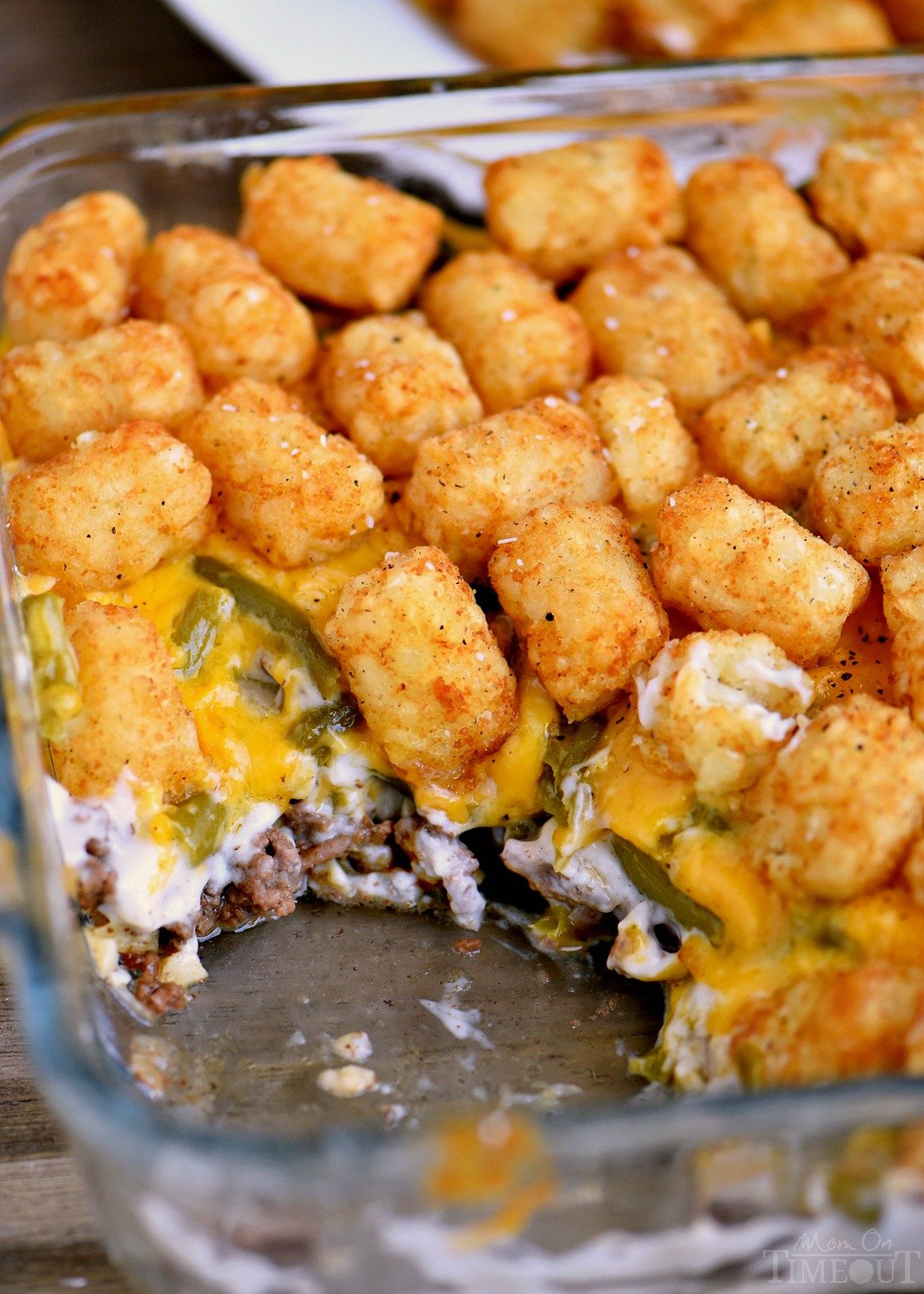
One of my favorites growing up and an instant go-to when I crave comfort food. Super easy to make and relatively quick. Also, super versatile! Play with the veggies you add or the kind of flavoring you add (ie, different soup, spices, etc…)
- salt & pepper
- 1 can cream of mushroom soup
- 1 can whole kernel corn drained
- 1 pound ground beef or turkey
- 1 can green beans drained
- 1 medium onion (yellow or white) chopped
- 1 cup sour cream or greek yogurt any desired fat content you prefer, add as much or as little as you like, to your desired consistency.
- 1 16oz bag frozen tater tots
- Carbohydrate 38.4034205 g
- Cholesterol 67.1371352666667 mg
- Fat 25.57294975 g
- Fiber 3.93403496115406 g
- Protein 19.7371664305 g
- Saturated Fat 9.47239338736667 g
- Serving Size 1 1 Serving (362g)
- Sodium 1109.3662107 mg
- Sugar 34.4693855388459 g
- Trans Fat 3.15395748065 g
- Calories 453 calories
Step-by-step
- Preheat oven to 350 and grab a 9x13 pan or any equal-volume casserole dish. Brown ground meat in skillet. When almost cooked through, add chopped onion and finish cooking. Drain mixture. (I like to season the mixture with a local seasoning I've grown up with, kind of like a spices seasoning salt, so if you have a go to spice, feel free to add it as I'm sure it'll only make the dish more comforting.)
- While meat is cooking, I like to mix the soup and sour cream together. Season with a pinch of salt and a good amount of pepper. (Adjust pepper to your liking or depending on your seasoning mixture you added to the meat, if you added any.). I do this in the dish that I'll be baking the whole dish in, so as to save on doing dishes, one of my most hated of chores.
- Combine meat mixture in with cream mixture and cans of green beans and corn. Mix well. (This is the point where you can add more sour cream/yogurt if you'd like it creamier, or remember to use less next time if you don't want it as creamy.)
- Spread mixture evenly in your casserole dish and cover with a nice, dense layer of the frozen Tater Tots. Place in center of oven and bake, uncovered, for 35-45 minutes, until tots are nice and browned.
A simple list of canned vegetables and frozen potatoes obscures the chemical interactions occurring inside the casserole dish. Preserved vegetables retain less moisture than fresh produce, which prevents the cream base from breaking down into watery pools during baking. Swapping canned green beans for fresh blanched beans introduces excess water, requiring a longer reduction phase in the skillet. Canned soup acts as a stable emulsion due to added starches, binding the sour cream and meat fats without splitting at 350 degrees.
Thermal conductivity dictates the success of this preparation. Arranging the frozen potato cylinders in a dense, overlapping layer creates a continuous crust that shields the underlying sauce from direct heat while browning. If the tots are scattered sparsely, the sauce boils away too rapidly and scorches the edges of the 9x13 pan.
Fat ratios in the protein component dictate final viscosity. Draining the browned beef or turkey removes excess rendered tallow that would otherwise pool on the surface. Greek yogurt functions as a direct 1:1 substitute for sour cream, though higher protein counts in yogurt can cause slight curdling if heated past boiling points.
Uncovering the pan for the entire 35 to 45 minute duration is mandatory for crisp exterior textures. Trapping steam beneath foil prevents the potato starch from dehydrating properly, resulting in a soggy topping rather than a rigid crust.


