Apple Crisp
Excellent You must try this when apples are in season you will never make any other crisp I promise Enjoy
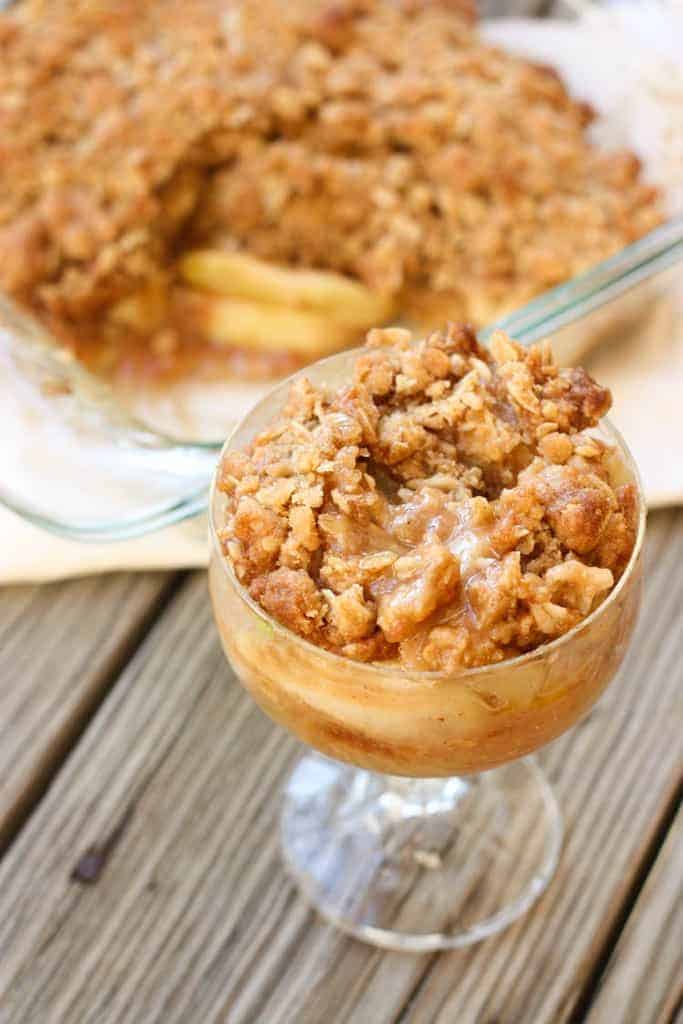
Excellent You must try this when apples are in season you will never make any other crisp I promise Enjoy
- Carbohydrate 106.294508125 g
- Cholesterol 45.7546875 mg
- Fat 23.603241875 g
- Fiber 8.83413153998554 g
- Protein 7.6911925 g
- Saturated Fat 11.513404375 g
- Serving Size 1 1 Serving (347g)
- Sodium 19.0204375 mg
- Sugar 97.4603765850145 g
- Trans Fat 2.116460625 g
- Calories 643 calories
Step-by-step
- Preheat oven to 375 degrees.
- Grease a pan, (13x9)
- In a large bowl combine apples, lemon juice, cinnamon, nuts and brown sugar.
- In a medium bowl, combine the remainder of the ingredients.
- With your hands, cuisinart or 2 knives, bring the mixture to a crumble.
- Spread the apple mixture into the pan.
- Top it off with the crumble mixture.
- Bake for 40-45 minutes or until top is browned.
- Let stand for 15 minutes prior to serving.
Cortland apples provide the structural foundation for this dish because their flesh softens readily while retaining enough integrity to prevent the filling from becoming watery. When slicing ten to fourteen fruits, aim for uniform thickness so every piece cooks at an identical rate within the thirty-minute preparation window. Tossing the fruit with lemon juice introduces necessary acidity, which inhibits enzymatic browning and balances the dense sweetness of the accompanying sugars.
Achieving the correct topping texture relies entirely on how the unsalted butter is incorporated into the dry mixture of rolled oats, flour, and spices. Working cold butter into the flour and oats using a pastry blender, two knives, or fingertips creates small pockets of fat that melt during baking to produce distinct crisp clusters rather than a uniform paste. Thoroughly cutting the butter into pieces no larger than a pea ensures the fat distributes evenly without melting prematurely from hand warmth.
Baking at 375 degrees Fahrenheit for forty to forty-five minutes provides sufficient thermal energy to caramelize the sugars and cook the fruit completely. Monitoring the visual cues is essential; pull the pan from the oven only when the topping turns a deep golden brown and the juices bubble visibly around the edges. Allowing the dessert to rest undisturbed for fifteen minutes allows the fruit starches to cool and thicken the juices properly.
Scaling quantities up or down requires maintaining the proportional ratio between the fruit base and the oat topping to preserve the proper structural balance. Halving the components works well in an eight-inch square baking dish while retaining the same oven temperature and baking duration. Leftovers keep covered in the refrigerator for up to three days, though the crisp topping will naturally soften over time as it absorbs moisture from the fruit.



