Carrot Cake with Cream Cheese Frosting Recipe
Here is how to make a Carrot Cake with Cream Cheese Frosting, a favorite recipe in my family. It takes a little preparation, but you will find the procedure is not difficult, and it is totally worth the effort!
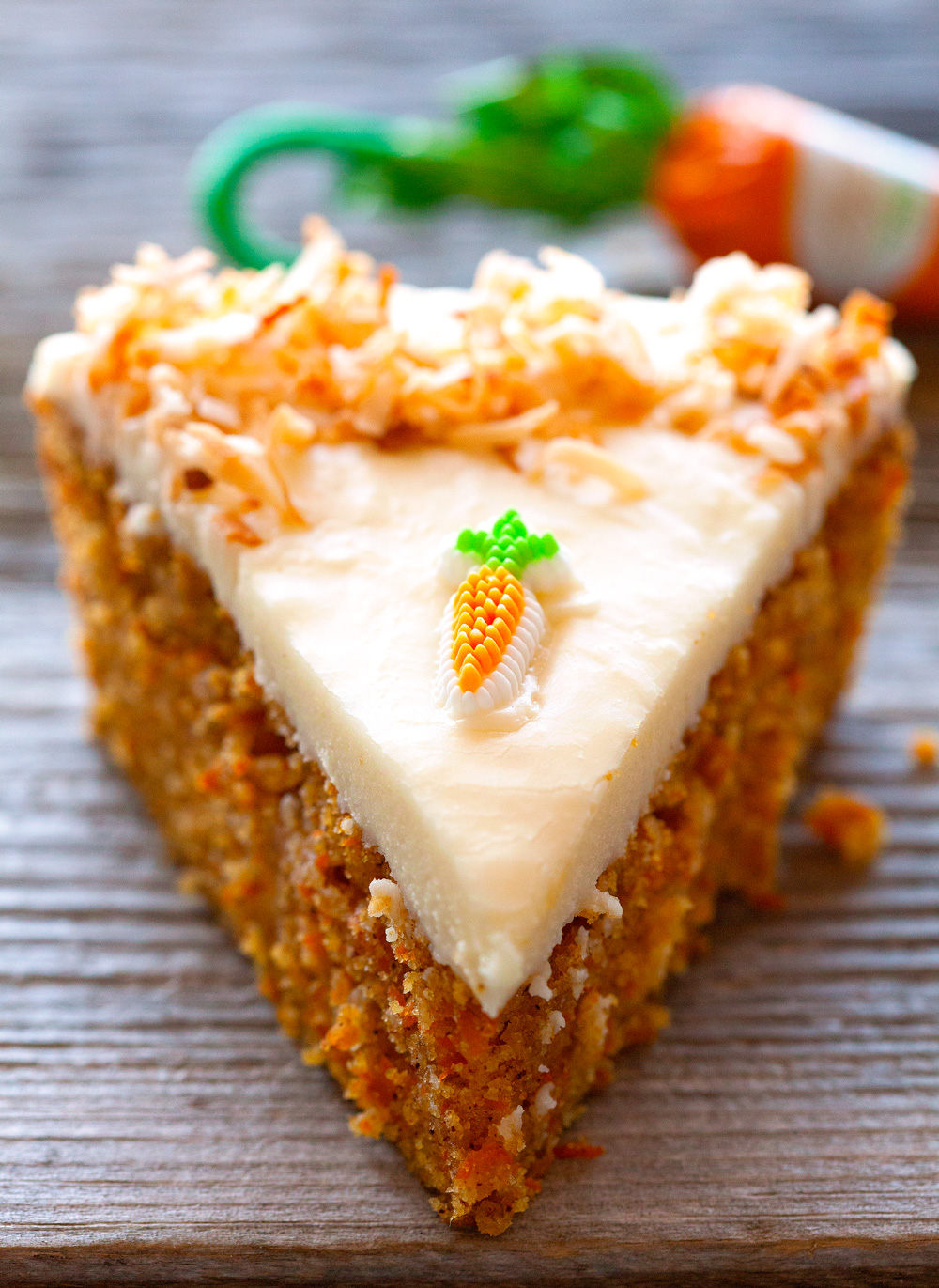
Here is how to make a Carrot Cake with Cream Cheese Frosting, a favorite recipe in my family. It takes a little preparation, but you will find the procedure is not difficult, and it is totally worth the effort!
- Carbohydrate 113.7503475 g
- Cholesterol 445.68 mg
- Fat 37.75341625 g
- Fiber 3.63115003085136 g
- Protein 19.18424125 g
- Saturated Fat 11.131615 g
- Serving Size 1 1 Serving (328g)
- Sodium 1117.645 mg
- Sugar 110.119197469149 g
- Trans Fat 3.456738375 g
- Calories 857 calories
Step-by-step
- Stir 2 cups flour, 2 cups sugar, and 2 teaspoons cinnamon together.
- Add 1 1/2 cup vegetable oil and 4 eggs.
- Mix well.
- Add 2 cups finely grated carrots, 8 oz. crushed pineapple (drained), 1/2 cup pecans, and 1/2 cup coconut.
- Blend thoroughly.
- Pour this mixture into 3 prepared 9-inch cake pans.
- (To prepare the pans, spread butter on the bottom and sides, then place a circle of waxed paper on the bottom.
- Spread more butter on top of the waxed paper and sprinkle with a small amount of flour.
- Shake the pan from side to side, coating the bottom and sides with a light dusting of flour.
- Pour off any excess flour.)
- Bake the cake mixture for 30 to 35 minutes in an oven that has been preheated to 350 degrees.
- Watch carefully to make sure the cake does not burn.
- To test for doneness, insert a toothpick in the center of the cake, and, if it comes out clean, the cake is done.
- Cool.
- Frost with Cream Cheese Frosting (below).
- When frosting the cake, remove one cake layer at a time from its pan.
- Place the most even layer on the bottom of your cake plate.
- Spread with a generous amount of Cream Cheese Frosting.
- Place another layer on top, remembering whether there is a thicker and thinner side to the layer.
- Frost the top of the second layer.
- Put the third layer on, swiveling to adjust for any unevenness in the placement of the previous layers.
- Now, frost around the sides completely and cover the top completely.
- If desired, decorate with swirls, or with chopped pecans on top, or around the sides.
- Place in the refrigerator immediately to cool and set up.
- This cake will keep (covered with plastic wrap) in your refrigerator for two weeks.
- To keep the plastic wrap from touching the cake, make a tent by inserting four toothpicks on top to form a large square for the plastic to rest on.
- Combine cream cheese, butter, and vanilla.
- Gradually add 1 1/2 pounds of confectioner's sugar, and beat well.
- If the mixture is too thick, add a small amount of milk.
- If too thin, add more confectioner's sugar.
Moist crumb meets a rich, tangy blanket of dairy when grated root vegetables and crushed pineapple are folded into a dense batter, resulting in layers that remain exceptionally tender for up to fourteen days when properly chilled under a protective plastic tent supported by toothpicks. Achieving this structural integrity requires precise baking vessels, specifically three separate nine-inch cake pans that must be painstakingly greased and lined with waxed paper to prevent the batter from sticking during the thirty to thirty-five minutes in a 350-degree oven.
Standard self-rising flour contains a pre-measured amount of leavening agent and salt, which eliminates the need for separate baking powder additions but demands careful mixing to evenly distribute the rise across all three pans. Grating the raw carrots finely on a box grater ensures they soften completely during the bake without creating noticeable fibrous pockets, while thoroughly draining the crushed pineapple removes excess moisture that would otherwise compromise the structural stability of the crumb.
Building the three tiers demands methodical stacking, beginning with the placement of the most even layer directly on the serving plate before spreading a generous amount of frosting and rotating subsequent layers to compensate for any natural crowning. Regular full-fat block cream cheese yields a noticeably stiffer spreading consistency than reduced-fat varieties, allowing the confectioner's sugar to bind effectively into a stable medium that holds sharp decorative swirls without sagging.
Managing the workflow efficiently in the kitchen means bringing the butter and cream cheese to complete room temperature before beating them with vanilla extract and gradually incorporating the pound and a half of confectioner's sugar. Adjusting the final viscosity of this sweet coating requires minor interventions, adding droplets of milk if the mixture stiffens excessively or dusting in extra sugar if it loosens too much under the beaters.



