Lasagna
This is my absolute favorite lasagna recipe. My family frequently asks for it. I also make it as a Baked Ziti recipe, substituting the lasagna noodles for ziti noodles and everything else stays the same.
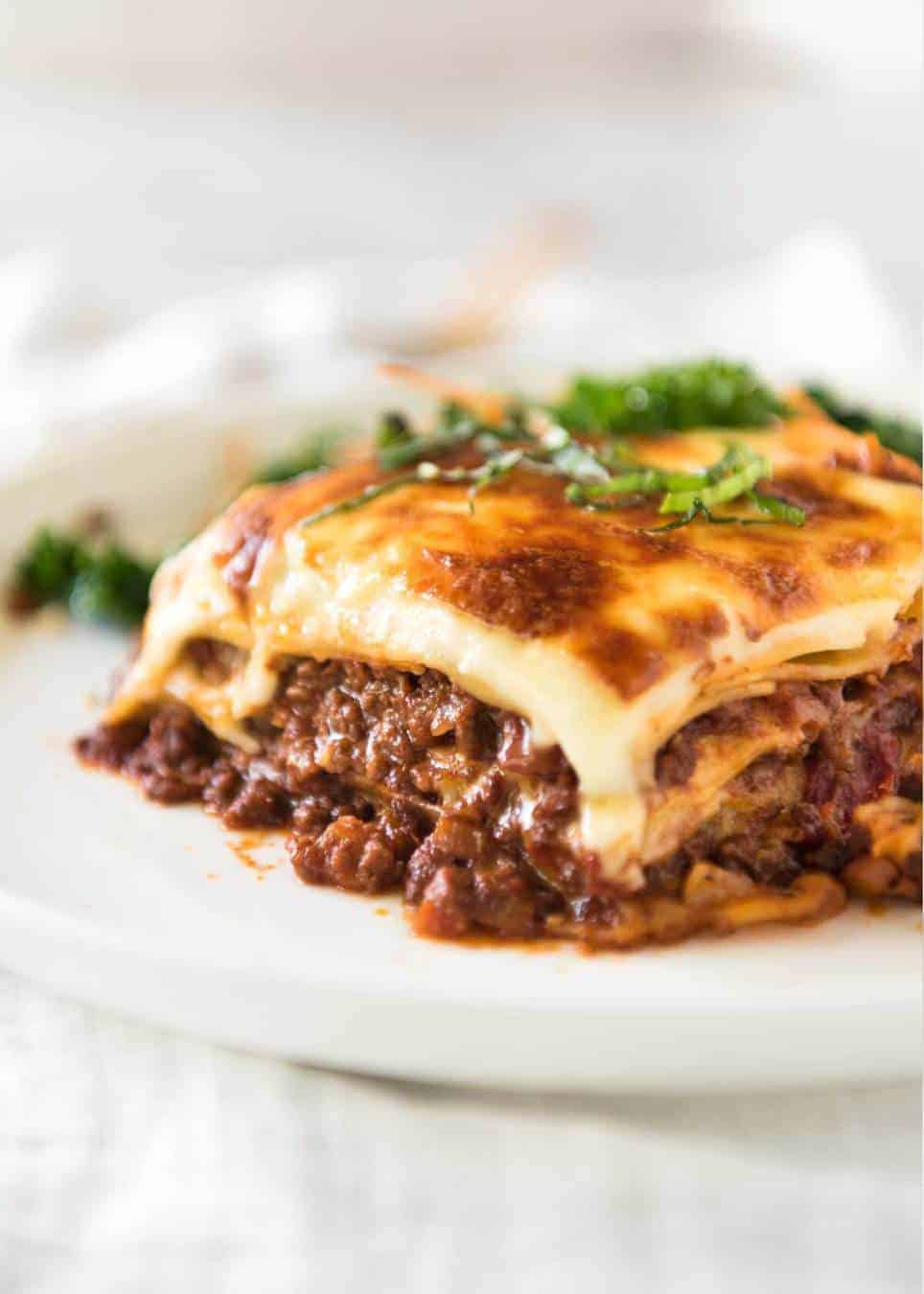
This is my absolute favorite lasagna recipe. My family frequently asks for it. I also make it as a Baked Ziti recipe, substituting the lasagna noodles for ziti noodles and everything else stays the same.
- salt
- 1/2 pound ground beef
- black pepper
- 3 teaspoons basil
- 4 teaspoons italian seasoning
- 1/2 pound italian sausage
- 1/3 cup extra virgin olive oil
- 4 teaspoons garlic minced
- 50 ounces tomato sauce
- 16 ounces lasagna noodles
- 8 ounces parmesan-romano blend cheese, grated
- 8 ounces parmesan cheese shredded
- 12 ounces ricotta cheese
- 8 ounces mozzarella shredded
- Carbohydrate 30.3242210379199 g
- Cholesterol 140.897129832167 mg
- Fat 39.4359413800347 g
- Fiber 1.82070544911309 g
- Protein 45.5802859890814 g
- Saturated Fat 20.5002241762473 g
- Serving Size 1 1 Serving (283g)
- Sodium 1931.82478755005 mg
- Sugar 28.5035155888068 g
- Trans Fat 7.28572583968387 g
- Calories 643 calories
Step-by-step
- Cook ground beef and sausage in a large saucepan. Drain, set aside.
- In same pan, warm the olive oil over medium-low heat. Add garlic, allow to sizzle. Add basil and Italian seasoning; cook for 1-2 minutes. Add tomato sauce, stir. Add meat.
- Reduce heat to low. Cover and simmer at least 30 minutes. Add salt and pepper to taste.
- Meanwhile, fill a large pasta pot with water and add a large pinch of salt. Bring to a boil. Cook noodles according to package directions. Drain noodles and add drop of olive oil to prevent sticking.
- In a large bowl, mix 4 oz. of the Parmesan-Romano grated cheese blend, 5 oz. shredded Parmesan, 12 oz. Ricotta, and 8 oz. Mozzarella.
- Slightly oil a 13"x9" baking dish. Spread a very thin layer of sauce over bottom of dish.
- Layer 4 noodles, 1/3 of sauce, and 1/2 of the cheese mixture. Repeat until dish is full. On last layer, spread 1/3 of sauce and sprinkle generously with Parmesan-Romano grated cheese blend and the remaining 3 oz. of shredded Parmesan.
- Preheat oven to 350 degrees.
- Cover with foil and bake 45 minutes. Remove foil and bake 15 minutes more or until bubbly. Broil until top is browned. Let lasagna stand 10 minutes before serving.
Switching out lasagna sheets for tubular ziti noodles alters the structural integrity of the dish completely, shifting the ratios from flat sheets of pasta to pockets that capture heavy meat sauce inside hollow cylinders. Achieving the right consistency requires careful attention to the heat during the meat sauce reduction. Warming minced garlic and dried herbs like basil and Italian seasoning in extra virgin olive oil over medium-low heat for one to two minutes blooms the fat-soluble compounds without burning the alliums, which turns bitter rapidly. Simmering the tomato sauce, meat, and aromatics on low heat for at least 30 minutes drives off excess water, concentrating the acidity and thickness so the final product does not release watery pools into the baking dish.
Equipment and Assembly Logistics
Constructing a standard 13x9-inch baking dish requires specific hardware to manage the heavy weight and high thermal mass of the ingredients. A heavy glass or ceramic baking dish distributes heat more evenly than thin metal pans, preventing the edges from scorching while the center cooks. When boiling the pasta, use a large stockpot filled with rolling boiling water seasoned with a large pinch of salt; crowding the pot causes the sheets to stick together unevenly. Tossing drained noodles with a drop of olive oil stops them from adhering into a solid block while the cheese filling is mixed. The interior cheese layer combines ricotta, mozzarella, and two varieties of Parmesan to balance moisture and melting properties. Covering the pan tightly with aluminum foil for the first 45 minutes at 350 degrees Fahrenheit traps steam to soften the noodles fully before removing the foil for the final 15 minutes to develop a bubbling exterior. Broiling the surface for the last few minutes creates Maillard reactions on the cheese, but requires constant visual monitoring to prevent burning. Resting the pan for 10 minutes allows the melted proteins to firm up slightly, ensuring clean slices rather than collapsing squares.
- If the sauce appears too thin after simmering, remove the lid entirely during the final 10 minutes of reduction to accelerate evaporation.
- When pasta sheets tear during boiling, patch them together in the pan overlap style; the melted cheese will fuse the seams during baking.
- Leftovers stored covered in the refrigerator improve structurally by the second day as the starches fully absorb ambient moisture, making portions easier to reheat without falling apart.



