Hot Pico De Gallo
This is a quick and easy recipe for some great salsa or Pico De Gallo. I like it really hot as you can see with the Serrano peppers.
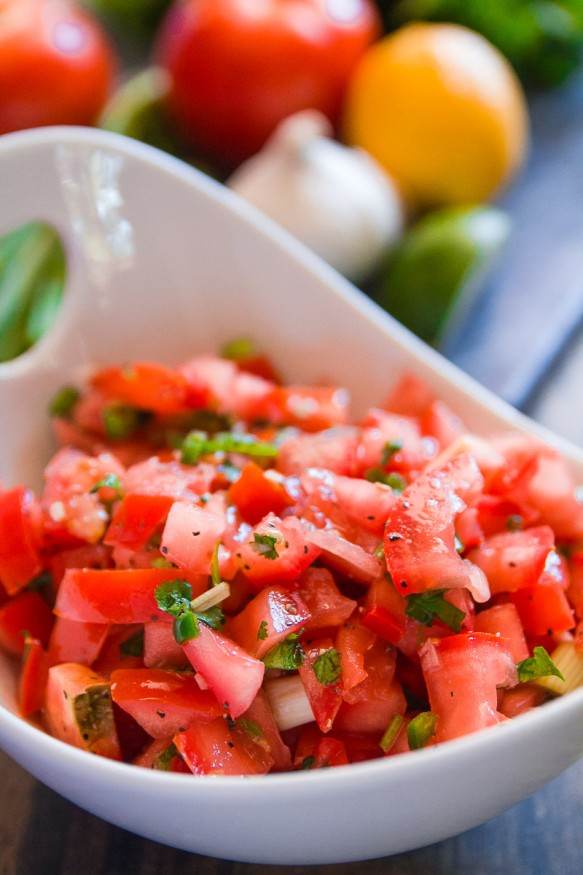
This is a quick and easy recipe for some great salsa or Pico De Gallo. I like it really hot as you can see with the Serrano peppers.
- Carbohydrate 18.376 g
- Cholesterol 0 mg
- Fat 0.80234 g
- Fiber 5.29120019674301 g
- Protein 3.76584 g
- Saturated Fat 0.122669 g
- Serving Size 1 1 Serving (413g)
- Sodium 20.56 mg
- Sugar 13.084799803257 g
- Trans Fat 0.232816 g
- Calories 83 calories
Step-by-step
- Mix the tomato, onion, cilantro and peppers in a large bowl.
- Add zest from the limes and then the juice.
- Mix well and then let sit in the refrigerator for at least an hour.
- Add the salt and pepper to taste.
Swapping white onions for sweet Vidalia onions alters the chemical balance completely by reducing the sharp sulfur compounds that normally cut through the acidity of the citrus and the capsaicin heat of the peppers. Roma tomatoes contain less internal water than globe varieties, making them the preferred choice for raw salsas because they prevent the mixture from pooling into a watery broth at the bottom of the bowl. Seeding the tomatoes before dicing is non-negotiable if maintaining a clean, chunky texture is the goal. Leaving the seeds intact releases excess moisture and pectin that dilutes the dressing and turns the crisp vegetables into a soggy mess. Chopping serrano peppers with the seeds and membranes included introduces the highest concentration of capsaicin, which binds to oil-soluble receptors on the palate and creates a sharp, immediate burn that contrasts with the bright, citrusy top notes. Removing those white ribs and seeds scales back the heat significantly for a milder profile. Letting the combined ingredients rest in the refrigerator for at least sixty minutes allows the salt to draw out excess moisture through osmosis while simultaneously forcing the cell walls of the onions and tomatoes to soften and absorb the lime juice. Citrus acid breaks down surface proteins slightly during this resting phase, marrying the individual flavors into a cohesive whole before the black pepper is added at the end.



