Mango Ice Cream
At Norwood West, Palm Springs this was a wonderful success with everyone above all when we served it with a Tequila Sauce, I remember Roger Moore with this dish, he constantly had a second helping.
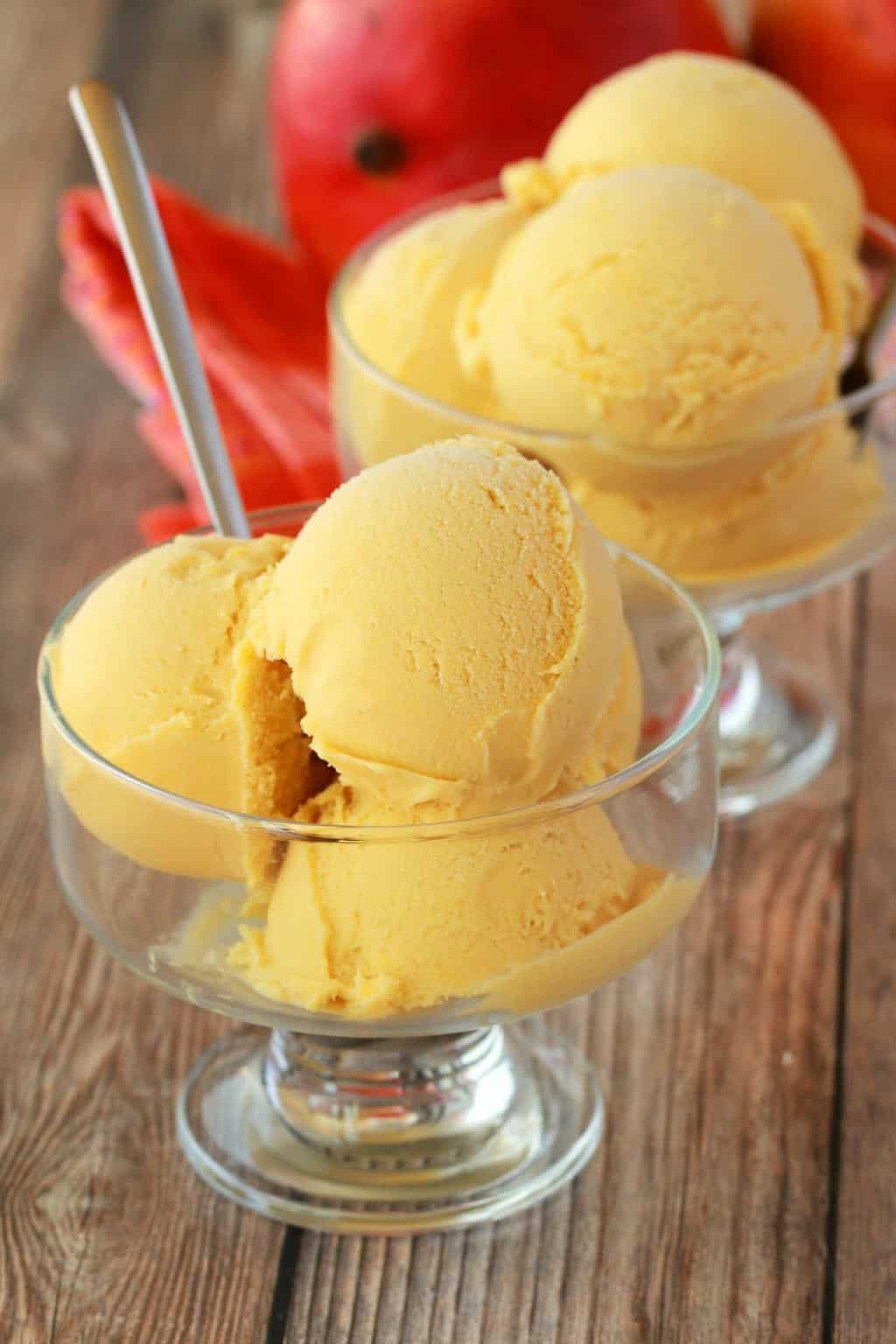
At Norwood West, Palm Springs this was a wonderful success with everyone above all when we served it with a Tequila Sauce, I remember Roger Moore with this dish, he constantly had a second helping.
- Carbohydrate 38.226678125 g
- Cholesterol 587.398333333333 mg
- Fat 19.8633666666667 g
- Fiber 1.32841663406541 g
- Protein 8.55033333333333 g
- Saturated Fat 9.08640166666667 g
- Serving Size 1 1 Serving (174g)
- Sodium 37.3747916666667 mg
- Sugar 36.8982614909346 g
- Trans Fat 0.918387083333334 g
- Calories 355 calories
Step-by-step
- Peel the mangoes and cut away as much flesh from the stones as you can. Blend the chopped mangoes, limejuice, corn syrup and salt in a food processor, blend until smooth, pausing the machine to scrape down the sides once or twice.
- Pour the purée through a strainer to remove any fibrous bits of mango, you should be left with about 1½ cups of purée, set to one side
- In a medium bowl, beat the sugar into the egg yolks until thickened and pale yellow. Beat in the cornflour and set aside.
- Bring the milk to a simmer in a heavy, medium saucepan and slowly beat the hot milk into the eggs and sugar.
- Pour the mixture back into the pan and place over a low heat and stirring constantly with a whisk or wooden spoon cook until the custard thickens slightly (Be careful not to let it boil or the eggs will scramble).
- Remove from the heat and pour the custard through a strainer into a large, clean bowl, let the custard cool slightly, then stir in the mango purée and double cream, cover and leave in the fridge until cold preferably we leave it overnight.
- Stir the chilled custard, and then freeze in one or two batches in your ice cream machine according to the manufacturer’s instructions. When finished, the ice cream will be soft.
- For firmer ice cream, transfer to a container and freeze at least 2 hours
Smooth, vibrant orange scoops release a potent tropical aroma underpinned by cooked dairy fats and sharp lime juice. Fresh mangoes yield a brighter, more complex acidity than canned pulp, though canned varieties offer consistent sugar levels year-round.
Adapting Bases for Dietary Needs
Heavy cream contributes milk fat that coats the tongue, slowing down the melting rate. Whole milk provides necessary water content for dissolving the three-quarters cup of granulated sugar without graininess. Swapping dairy components requires balancing fat percentages to maintain mouthfeel. Plant-based milks lack the necessary proteins for proper curd thickening during the custard phase.Controlling Temperature Transitions
Whisking hot milk into the egg yolks must happen slowly to prevent premature coagulation at one hundred sixty degrees Fahrenheit. Strain the finished custard through a fine-mesh sieve to catch any stray egg bits before chilling the mixture below forty degrees Fahrenheit. Overnight refrigeration hydrates the cornflour fully, yielding a denser frozen structure.Second-Day Transformations
Freshly churned ice cream exits the machine at a soft-serve consistency unsuitable for slicing. Transferring the batch to a freezer-safe container for at least two hours solidifies the fat crystals. Letting the container sit at room temperature for ten minutes before scooping restores optimal plasticity.


