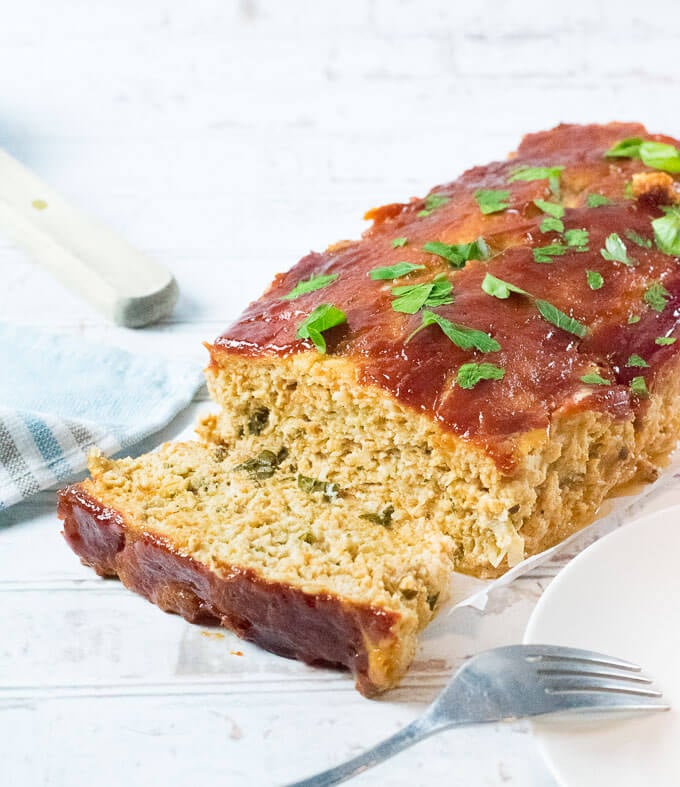
A low fat substitute for regular meatloaf and tastes a lot better
- Carbohydrate 6.04103083333333 g
- Cholesterol 269.426666666667 mg
- Fat 15.5333933333333 g
- Fiber 0.847524987181028 g
- Protein 31.0371075 g
- Saturated Fat 4.4936125 g
- Serving Size 1 1 Serving (209g)
- Sodium 311.072166666667 mg
- Sugar 5.19350584615231 g
- Trans Fat 1.59985716666667 g
- Calories 285 calories
Step-by-step
- Preheat oven to 425.
- Combine chicken, tomato paste, marjoram, parsley, garlic, onion, Worcestershire sauce and eggs in a bowl. Place mixture in a nonstick loaf pan; spread ketchup on top.
- Bake uncovered for about an hour or until meatloaf is firm to the touch in the center. Let meatloaf settle 10 minutes before serving.
Replacing traditional ground chuck with lean ground chicken radically alters the moisture retention and fat render of the finished loaf. Because poultry breast lacks the intermuscular fat of beef, the mixture requires deliberate binding agents like beaten eggs and tomato paste to hold a cohesive structure during high-heat baking at 425 degrees Fahrenheit.
Using fresh herbs such as chopped marjoram and parsley introduces volatile aromatic oils that dried alternatives simply cannot replicate. Fresh garlic and onion also contribute moisture and enzymatic activity that soften the dense protein matrix, whereas dehydrated alliums tend to absorb liquid and create hard pockets within the slice.
Assessing doneness without an instant-read thermometer relies entirely on tactile feedback and structural rigidity. Press the center of the loaf firmly; resistance and a completely firm center indicate the proteins have fully coagulated.
Allowing the baked loaf to rest for ten minutes before slicing is chemically mandatory for moisture redistribution. During this window, the internal temperature stabilizes and contracting muscle fibers reabsorb escaping juices.


