Teriyaki Meatballs
The velvety teriyaki sauce coats the tender, juicy meatballs in a layer of saucy gloriousness and the result is so delicious that I had to tell my five year old he couldnt eat more meatballs than his current age.
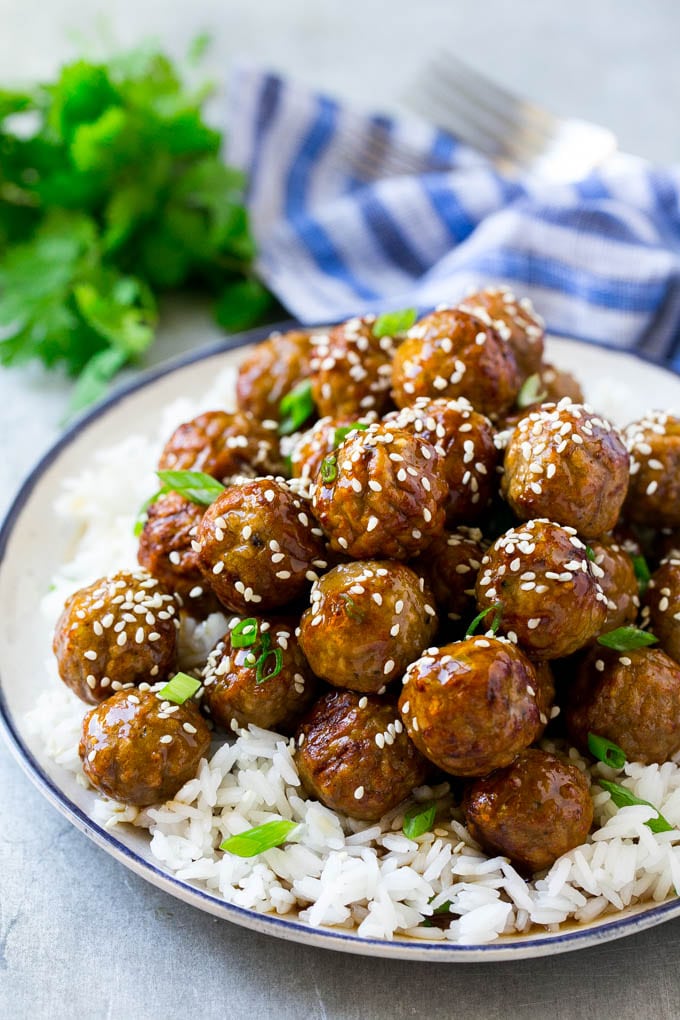
The velvety teriyaki sauce coats the tender, juicy meatballs in a layer of saucy gloriousness and the result is so delicious that I had to tell my five year old he couldnt eat more meatballs than his current age.
- 2 eggs
- 1 teaspoon salt
- 1 1/2 teaspoon worcestershire sauce
- 1/2 teaspoon garlic powder
- 1/4 teaspoon garlic powder
- 1/2 cup soy sauce
- 2 tablespoons honey
- 3 tablespoons milk
- 1/2 cup brown sugar packed
- 1 teaspoon ground ginger
- 3 tablespoons corn starch
- 1/4 teaspoon black pepper
- 2 pounds ground beef at least 90% lean
- 2/3 cup bread crumbs
- 1 3/4 cups water
- Carbohydrate 136.971884200949 g
- Cholesterol 331.208541066667 mg
- Fat 51.4065529813704 g
- Fiber 11.3514748423965 g
- Protein 80.6687065756689 g
- Saturated Fat 19.3985833370313 g
- Serving Size 1 1 Serving (1271g)
- Sodium 517.62053000931 mg
- Sugar 125.620409358552 g
- Trans Fat 7.91321323550737 g
- Calories 1300 calories
Step-by-step
- For the sauce, in a medium bowl mix the soy sauce, 1 3/4 cups water, ginger, garlic powder, brown sugar, honey and cornstarch together.
- In a separate small bowl, dissolve the cornstarch into the 1/2 cup cold water.
- Set both bowls aside.
- For the meatballs, in a large bowl, combine all the meatball ingredients except for the ground beef and mix well.
- Add the ground beef and mix until combined.
- Form ground beef mixture into 1 to 1 1/2-inch meatballs.
- In a 12-inch nonstick skillet, heat two tablespoons oil over medium heat until the oil is rippling and hot.
- Add the meatballs to the hot skillet and brown on all sides, turning with a pair of tongs.
- The meatballs don't need to be completely cooked through, just equally browned on all sides.
- When the meatballs have browned, pour the sauce ingredients over the meatballs and gently turn the meatballs to coat them in the sauce.
- Heat the sauce until just simmering and add the cornstarch/water mixture, carefully mixing so as not to break apart the meatballs as you combine the cornstarch mixture with the Teriyaki sauce.
- Simmer the meatballs and sauce over medium heat, maintaining a constant simmer but not cooking at too high of a boil, until the meatballs are cooked through and the sauce is thick and smooth (if the sauce becomes overly thick, add a tablespoon of water at a time to thin), about 10-15 minutes, turning the meatballs every two or three minutes to ensure even cooking.
- Serve over rice or couscous.
Ingredient quantities rarely warn you about the physical limits of a skillet, yet overcrowding a twelve-inch pan turns browning into a steam bath. Ground beef containing at least ninety percent lean fat releases moisture as proteins tighten; if too many spheres crowd the surface, the liquid pools faster than the fat can render. Maintain space between each piece so the exterior proteins undergo proper Maillard reactions rather than graying out in accumulated juices. Turning the meat with tongs every two minutes prevents flat spots while building an even crust across the entire surface.
Structuring the meatball binder requires restraint because heavy proportions of breadcrumbs and milk create dense, rubbery proteins. Two eggs combined with two-thirds of a cup of breadcrumbs provide just enough suspension to hold the ground beef together without forming a solid dense core. Mix these binders thoroughly before introducing the meat, ensuring the seasonings distribute evenly without requiring excessive manual manipulation that warms the fat. Cold beef maintains firmer texture during shaping, preventing the mixture from smearing between the palms.
Thickening a soy sauce and brown sugar glaze demands careful management of cornstarch to avoid a pasty finish or a scorched bottom. Dissolving the starch in cold water before introducing it to the simmering pan prevents stubborn lumps from forming in the hot liquid. Maintain a medium heat setting that produces a gentle bubble rather than a violent boil, which can scorch the high sugar content found in the brown sugar and honey mixture. Should the reduction become too viscous, incorporating water one tablespoon at a time restores a smooth consistency.
Prepared batches store efficiently in an airtight container within the refrigerator for up to three days or freeze safely for longer preservation. Reheating frozen portions requires gentle stovetop warming over low heat with a splash of water to loosen the thickened glaze without breaking down the structure of the beef. Avoid high microwave settings during reheating, as intense localized heat forces moisture out of the meat and leaves the protein dry and tough.



