Green Papaya Salad
A traditional healthy dish for Thais. High fiber, low calorie and nutritious. Good for weight loss.
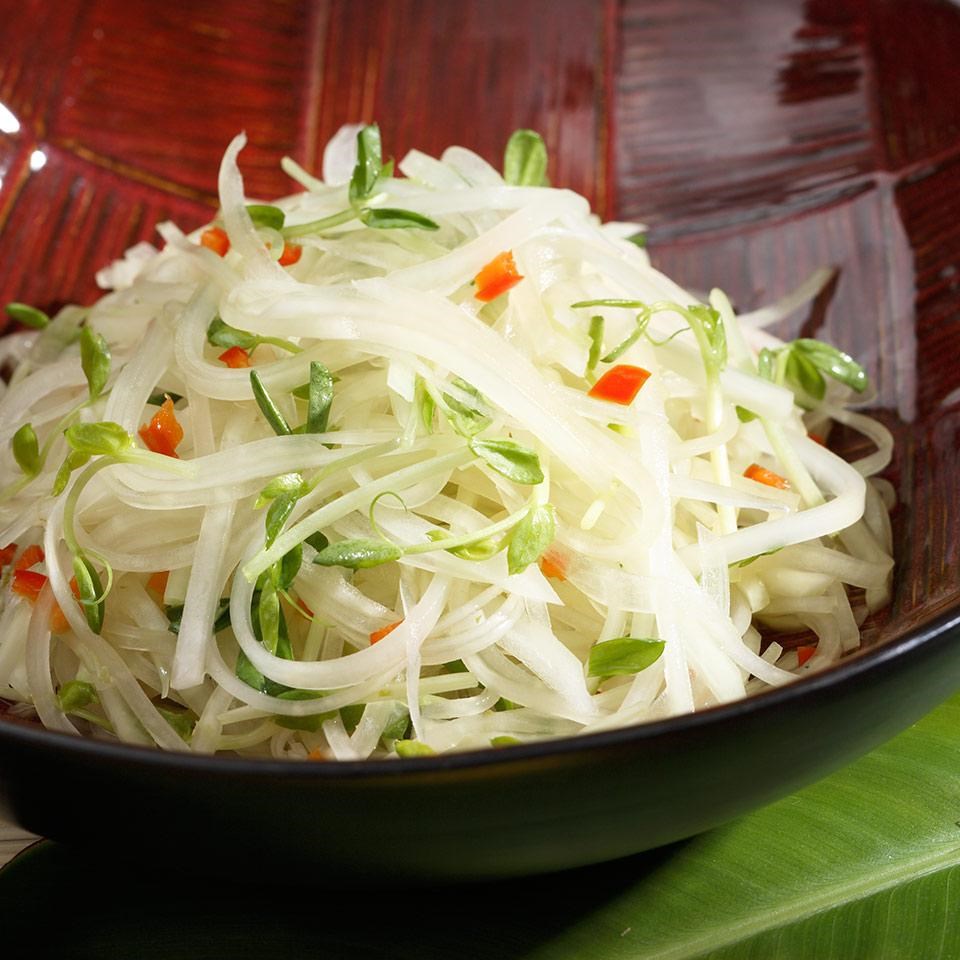
A traditional healthy dish for Thais. High fiber, low calorie and nutritious. Good for weight loss.
- 2 cloves garlic
- 2 cups unripe green papaya sliced into thin and long sticks
- 6 cherry tomatoes
- 3 green long beans
- 2 small red/green chillies (mild spicy)
- 2 tbsp fish sauce
- 1 1/2 tbsp lime juice
- 2 tsp palm sugar
- 1 tbsp roasted peanut
- 2 tbsp dried shrimps
- note: i normally also mix sliced carrot with green
- Carbohydrate 37.6568314423583 g
- Cholesterol 27.3 mg
- Fat 4.61412508371633 g
- Fiber 8.14482367488807 g
- Protein 10.1229858185865 g
- Saturated Fat 0.69632857716701 g
- Serving Size 1 1 Serving (583g)
- Sodium 1502.70276460239 mg
- Sugar 29.5120077674702 g
- Trans Fat 0.458159343850482 g
- Calories 211 calories
Step-by-step
- Pound garlics, chillies, halved tomatoes, Long green beans in the mortar with pestle.
- Then add fish sauce, lime juice and palm sugar in the mortar.
- Ensure all are well-mixed.
- Add dried shrimps and sliced papaya (and carrot if prefered).
- Loosely pound (Do not mash).
- Use spoon to mix all ingredients well together and top the papaya salad with roasted peanut before serving.
The Mechanics of Maceration
Crushing aromatics inside a deep ceramic or clay mortar with a wooden pestle releases essential oils from garlic and capsaicin from chilies before the liquid components enter the vessel. Pounding long green beans just until they fracture allows them to absorb the surrounding dressing without losing their structural integrity. When adding the unripe fruit, use a gentle tumbling motion rather than aggressive downward force to bruise the exterior cells just enough for penetration without turning the fibrous strands into mush.
Archival Integrity Over Twenty-Four Hours
Raw fruit salads typically suffer in storage, but green papaya maintains its crunch for up to twenty-four hours when submerged in an airtight container at four degrees Celsius, though the dried shrimp will soften considerably as they rehydrate in the acidic brine. Draining any accumulated liquid through a fine-mesh sieve before serving restores the initial balance of salinity and acidity. Adding a fresh handful of crushed peanuts immediately prior to consumption restores the fat contrast lost during prolonged refrigeration.
Regional Adaptations and Dietary Shifts
Historical trading routes throughout Southeast Asia integrated dried seafood and palm sugar into foundational sour-and-salty preparations long before modern refrigeration existed. Substituting coconut aminos at a one-to-one ratio for fish sauce accommodates plant-based diets, while raw sunflower seeds successfully replace peanuts for nut-free protocols without altering the requisite textural crunch.


