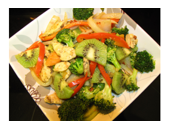
Stir-fry for P90x Phase I
- 1 cup broccoli florets
- 10 oz shrimp peeled
- 3/4 tbsp low-sodium soy sauce
- 1 tsp rice vinegar
- 3/4 cup fat-free chicken broth
- 3/4 tsp garlic minced
- 3/4 tsp ginger minced
- 1 cup red onion sliced into wedges
- 1 3/4 cups snow peas trimmed
- 2 cups mushrooms halved
- 3/4 cup yellow bell pepper cubed
- 3/4 cup canned water chestnuts drained
- Carbohydrate 66.8817036574811 g
- Cholesterol 425.6 mg
- Fat 7.39749347334363 g
- Fiber 14.7020492435063 g
- Protein 79.044944180931 g
- Saturated Fat 1.22154426825517 g
- Serving Size 1 1 Serving (1453g)
- Sodium 1765.30296809368 mg
- Sugar 52.1796544139748 g
- Trans Fat 2.92580939894978 g
- Calories 625 calories
Step-by-step
- Rinse shrimp and drain well.
- Heat the soy sauce, rice vinegar, and 2 tbsp of the chicken broth in a saute pan over medium heat. Add garlic and ginger and saute until tender.
- Add all the vegetables to the pan and continue to saute, stirring and adding more broth as necessary. Add shrimp when the vegetables are halfway cooked and saute until the vegetables are tender and the shrimp are opaque.
Why are my vegetables soggy and my shrimp rubbery? Home cooks frequently ruin high-moisture stir-fries by dumping every ingredient into the pan at once, which creates steam instead of heat and leaves delicate proteins overcooked while dense produce remains raw.
Prevent this by staging the cook and managing the moisture in your skillet. Aromatics like minced garlic and ginger require a gentle medium heat in a small amount of liquid to soften without scorching, while voluminous ingredients such as mushrooms and red onions need careful spacing to release their water content without boiling the surrounding pieces. Introduce shrimp only after the vegetables reach the halfway point of tenderness, timing the addition so that the seafood turns opaque right as the produce finishes softening.
Using fresh aromatics and crisp vegetables yields a vibrant dish, whereas canned water chestnuts or bottled juices introduce excess sodium and dull flavors that require longer reduction times.


