Sour Dough Starter
This starter is usually passed around to family and friends. I played around and discovered how to make the starter from scratch, then as you have extra starter you can pass it along.
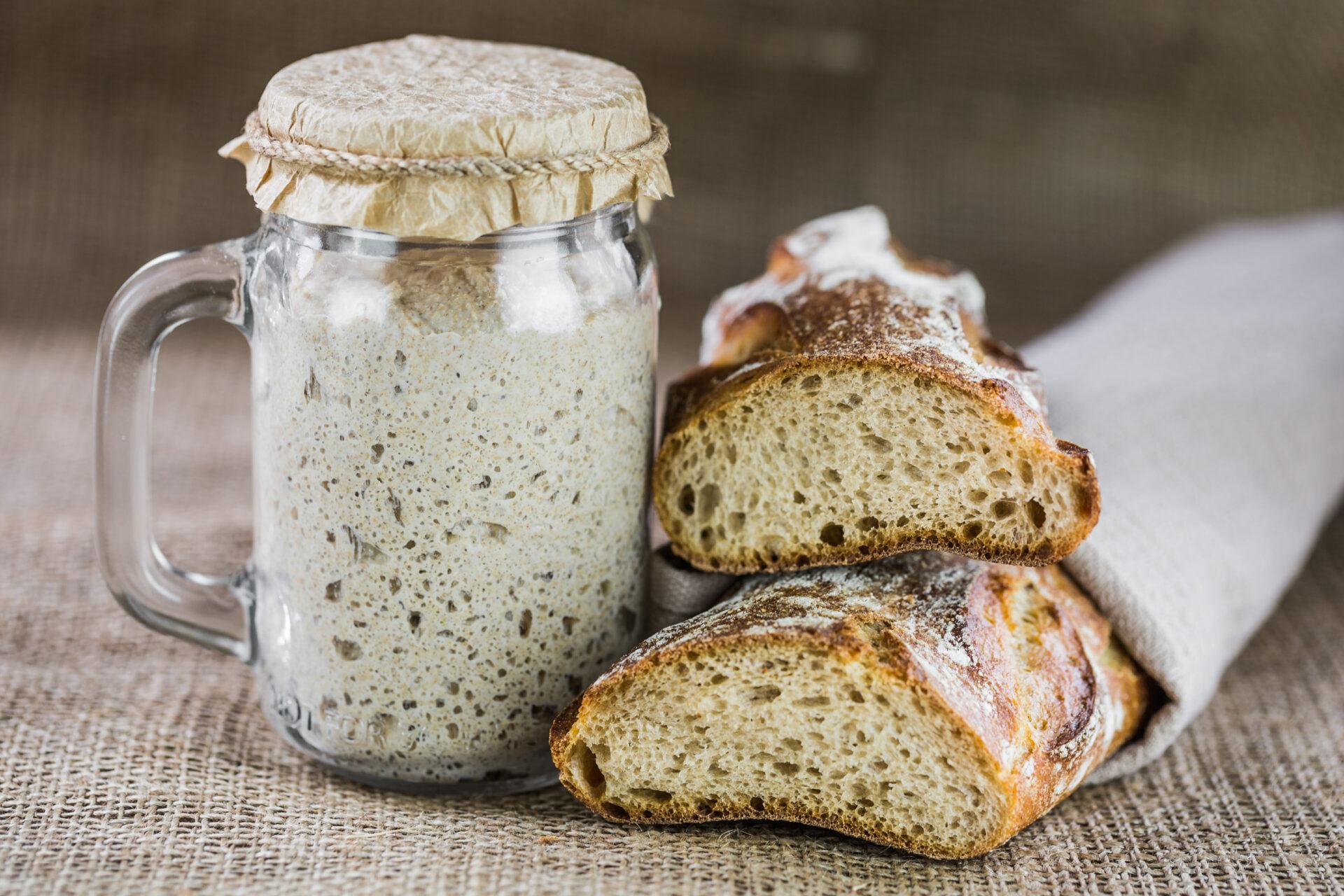
This starter is usually passed around to family and friends. I played around and discovered how to make the starter from scratch, then as you have extra starter you can pass it along.
- Carbohydrate 129.349125 g
- Cholesterol 0 mg
- Fat 0 g
- Fiber 0 g
- Protein 0 g
- Saturated Fat 0 g
- Serving Size 1 1 Serving (366g)
- Sodium 9.48 mg
- Sugar 129.349125 g
- Trans Fat 0 g
- Calories 501 calories
Step-by-step
- Mix together and make sure the yeast disolves completely.
- Then refrigerate for 5 days, take out and add 3/4 cup of sugar, 3 tablespoons of instant potatoes, 1 cup of warm water.
- Put back in fridge for another 3 to 5 days, take it out and feed with the standard 3/4 cup of sugar, 3 tablespoons of instant potatoes, 1 cup of warm water.
- This time leave out covered all day (8 to 12 hours).
- It does not rise, it only bubbles and should smell like beer.
- Use one cup making the bread recipe.
- Return remaining starter to refridgerator.
- Keep in refrigerator up to 3 to 5 days and you must feed it again and make bread, if not making bread again must take a cup out and give away or throw away.
Using quick-rise yeast instead of standard active dry yeast will compromise the long-term fermentation speed and viability of this culture. Active dry yeast requires precise rehydration temperatures, ideally between 105 and 110 degrees Fahrenheit, to wake the fungi without thermal damage. Dehydrated potato flakes act as a starch supplement, feeding the yeast population during the initial multi-day refrigeration phase.
Fermentation and Feeding Mechanics
Cold temperatures slow metabolic activity, which is why the initial five-day refrigeration period allows the colony to stabilize gradually. When transitioning to room temperature feedings, maintain the standard ratio of one cup warm water, three-quarters cup granulated sugar, and three tablespoons instant potato flakes. The mixture will not show significant vertical rise due to the high sugar concentration; instead, watch for persistent surface bubbling and a distinct fermented beer aroma as indicators of healthy microbial activity.
- If the mixture remains completely dormant after twelve hours at room temperature, check that ambient kitchen temperature is above 68 degrees Fahrenheit.
- Store the active culture in a container that allows gas release to prevent pressure accumulation during the refrigeration windows.
- Discard one cup of starter every three to five days if baking cycles are paused to maintain proper volume balance.



