Chocolate Cake
I love this chocolate cake. Made it for my dad every other week. Easy to make, bake at 350 degrees for 30-35 minutes
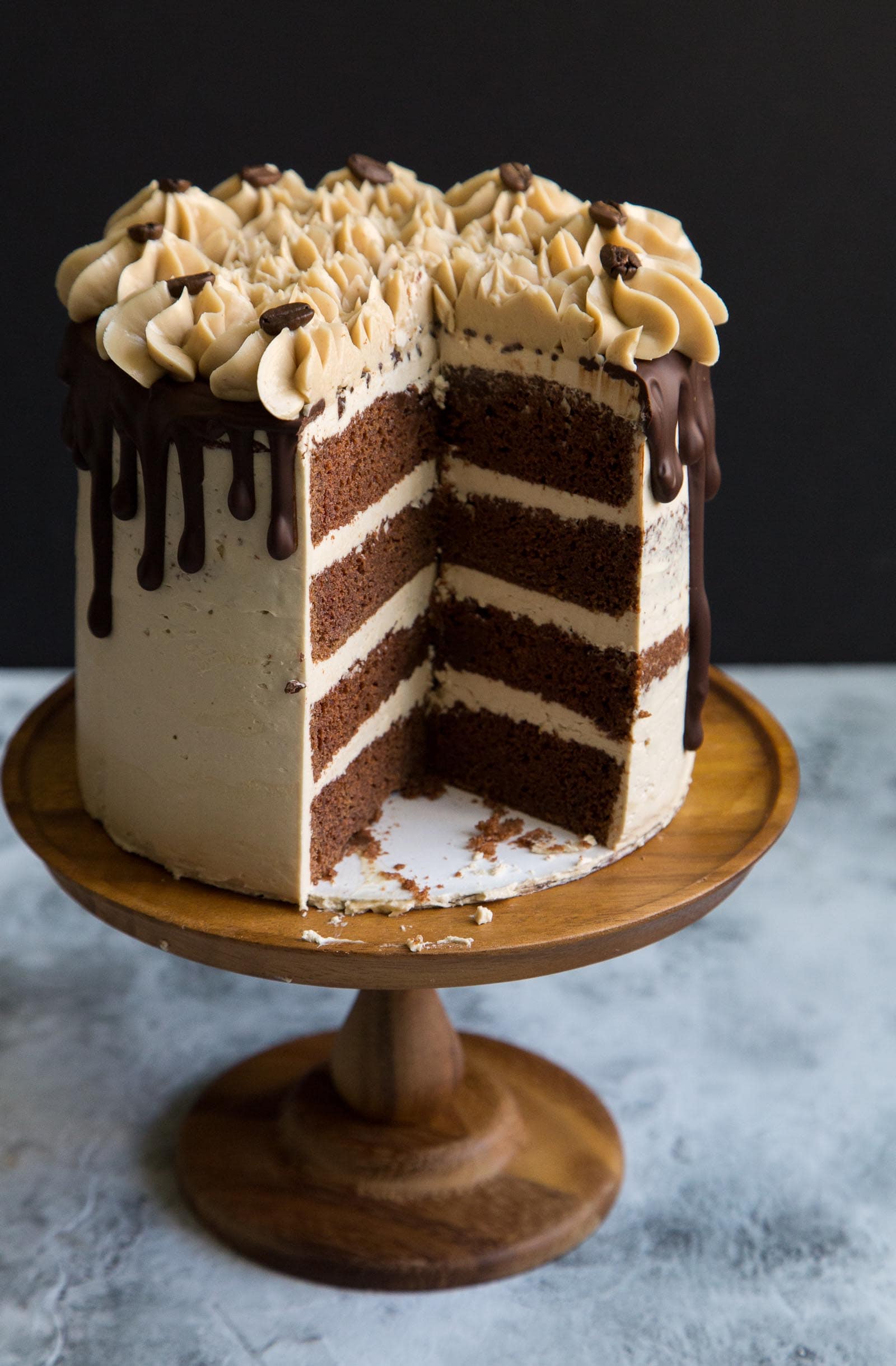
I love this chocolate cake. Made it for my dad every other week. Easy to make, bake at 350 degrees for 30-35 minutes
- Carbohydrate 108.59220793 g
- Cholesterol 176.521124666667 mg
- Fat 13.1368202825 g
- Fiber 0.837816680259382 g
- Protein 8.227448925 g
- Saturated Fat 3.59076379658333 g
- Serving Size 1 1 Serving (180g)
- Sodium 306.178055583333 mg
- Sugar 107.754391249741 g
- Trans Fat 1.27275849666667 g
- Calories 576 calories
Step-by-step
- 350? 30-35 minutes Greased 9x13 pan lined with wax paper on bottom.
- Beat Till Smooth: Crisco, sugars, eggs, and vanilla.
- Gradually add sifted flour ingredients alternating with milk.
- Beat until smooth. About 1 minute.
- Slowly add boiling water. Beat 1 minute.
- Bake. Done when toothpick inserted comes out clean.
- Remove from pan onto wire rack. Remove wax paper.
- When cool return to pan or dish and frost.
The ingredient list hides how liquid temperature dictates crumb structure. Introducing boiling water to cocoa powder forces starch gelatinization early, blooming the cocoa solids while melting solid fats evenly through the batter. This thermal shock traps air bubbles efficiently.
Controlling Crumb Density
Creaming solid fats with granulated and brown sugars incorporates microscopic air cells that expand under heat. Alternate adding flour and milk gradually to prevent gluten overdevelopment. Beat the batter for exactly one minute after adding flour to ensure uniform distribution without toughening the crumb. Bake this cake at 350 degrees Fahrenheit in a greased 9x13 inch pan lined with wax paper. Check doneness at 30 minutes by inserting a wooden toothpick into the center; it should emerge clean. Adjusting proportions for scaling requires weighing components rather than measuring volume to maintain the exact ratio of moisture to leavening agents.
- Dense texture usually stems from over-mixing after flour is added, which overdevelops gluten strands.
- Dry crumb results from over-baking past the 35-minute threshold or incorrect flour measurement.
- Uneven rising indicates expired baking soda or insufficient creaming of the shortening and sugars.


