Flat Iron Steak with Herb Butter
I put all the herbs and butter in a mini food processor and made for quick weekday supper. Serve with smothered garlic fried potatoes
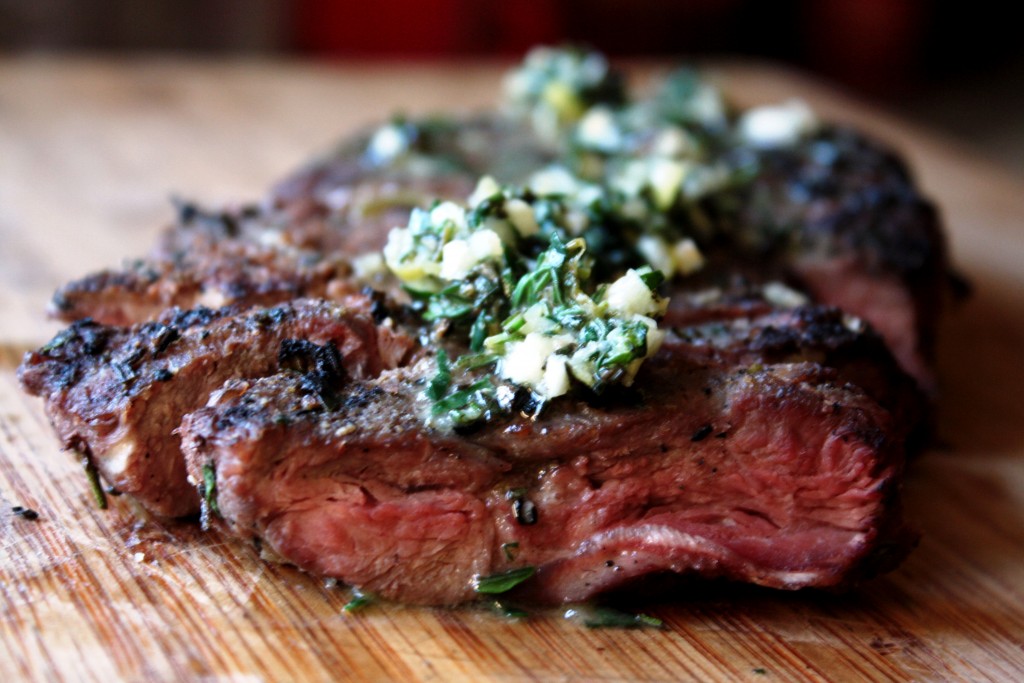
I put all the herbs and butter in a mini food processor and made for quick weekday supper. Serve with smothered garlic fried potatoes
- Carbohydrate 0.13297 g
- Cholesterol 244.24 mg
- Fat 204.14422 g
- Fiber 0.0265 g
- Protein 0.97655 g
- Saturated Fat 67.344148 g
- Serving Size 1 1 recipe (232g)
- Sodium 2338.02 mg
- Sugar 0.10647 g
- Trans Fat 11.293228 g
- Calories 1805 calories
Step-by-step
- Rub steaks generously with salt and pepper and set aside to let rest for at least 30 minutes at room temperature. Combine the butter, parsley, chives, and shallots with a fork in a medium bowl. Season lightly with salt and pepper; cover with plastic wrap and set aside.
- Heat 2 tbsp. oil in a 12" cast-iron skillet over medium-high heat. Add 2 steaks and cook, flipping once, until seared and medium rare, about 8 minutes. Transfer steaks to a plate and let rest for 5 minutes. Repeat with remaining oil and steaks. To serve, smear each steak with 2 tbsp. of the herb butter.
Charred beef proteins meet melting dairy fats in a contrast of high-heat Maillard reactions and cool, fragrant emulsions. When beef hits a smoking 12" cast-iron skillet, amino acids and reducing sugars react at temperatures above 300 degrees Fahrenheit to build complex crust compounds. Flat iron steak, butchered from the chuck shoulder, contains significant marbling that melts during this high-heat phase, yielding robust beefiness without excessive toughness. Resting the meat for 30 minutes at room temperature before cooking prevents the muscle fibers from seizing when exposed to thermal shock. Salt applied during this rest draws out surface moisture via osmosis, dissolving into a concentrated brine that seasons the exterior layers deeply. Cooking two steaks at a time in 2 tablespoons of canola oil ensures the pan temperature does not drop, preserving the hard sear necessary for optimal crust formation. Once transferred to a plate, the steaks must rest for 5 minutes so the internal juices redistribute throughout the muscle matrix rather than pooling on the cutting board. Meanwhile, softened unsalted butter acts as a lipid solvent for the fat-soluble flavor compounds present in parsley, chives, and raw shallots. Combining these aromatics into the dairy traps their volatile essential oils inside a solid fat emulsion. Smearing this compound butter over the hot, resting meat causes the butter to melt instantly. This thermal transition releases the trapped herbal aromatics directly into the rising steam, coating the palate in a rich film that softens the intensity of the charred crust. Historically, compound butters evolved in classical French kitchens as a way to finish grilled meats rapidly using ambient heat from the protein. Canola oil provides a high smoke point near 400 degrees Fahrenheit, preventing bitter burnt flavors while transferring thermal energy efficiently from the iron surface to the meat.



