Fruit Cobbler
Mom's Fruit Cobbler recipe, adaptable to various fruits like wild black raspberries, peaches, or frozen mixed berries.
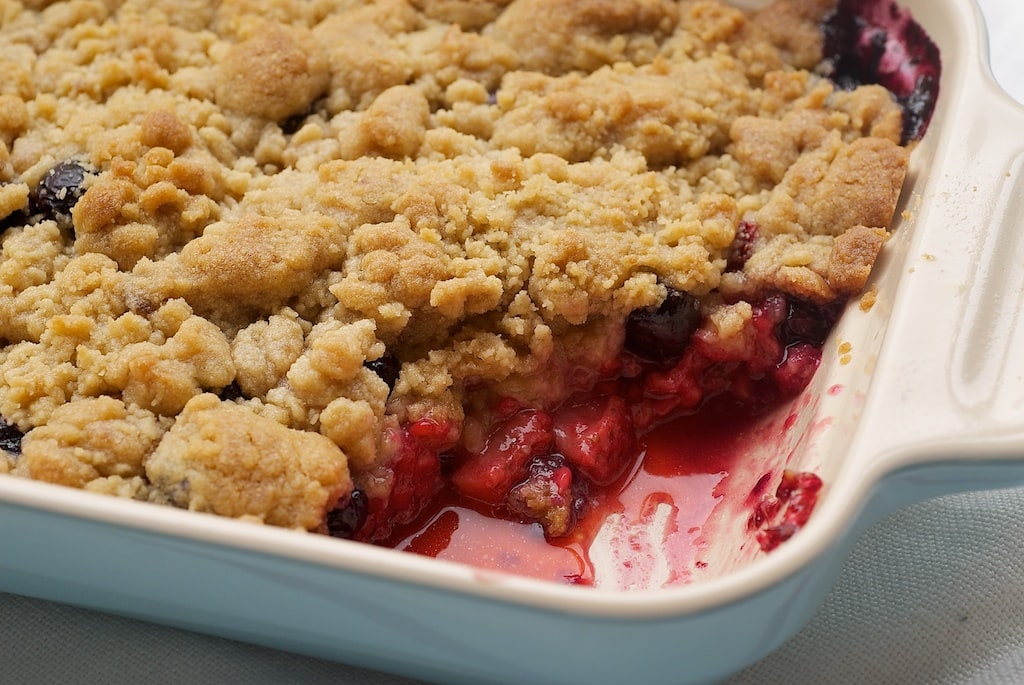
Mom's Fruit Cobbler recipe, adaptable to various fruits like wild black raspberries, peaches, or frozen mixed berries.
- 1/4 teaspoon salt
- 1/2 cup milk
- 1/2 cup butter
- 1/2 cup water
- 1 teaspoon vanilla
- 1 teaspoon baking powder
- 1/2 cup sugar
- 1 cup flour
- 2/3 cup sugar
- -- glaze --
- -- fruit base --
- 1 quart berries or other fruit
- instant tapioca for thickening, if desired
- -- biscut topping --
- -- extras --
- ice cream or whipped cream if desired
- Carbohydrate 136.738691666667 g
- Cholesterol 41.0775 mg
- Fat 15.69702 g
- Fiber 0.742783345277111 g
- Protein 2.93960333333333 g
- Saturated Fat 9.82228083333333 g
- Serving Size 1 1 Serving (178g)
- Sodium 172.526416666667 mg
- Sugar 135.99590832139 g
- Trans Fat 1.160007 g
- Calories 685 calories
Step-by-step
- Preheat oven to 350F.
- Lightly grease 8" square pan. Put berries or fruit in pan, adding tapioca for thickness if desired.
- To create biscut topping: In a small bowl combine flour, salt and baking powder. Stir together. Set aside. In a medium mixing bowl, cream butter and sugar. Stir half of flour mixture into creamed mixture until well combined. Then add half of the milk and mix well. Now add remaining flour mixture to batter and stir well. Finish with remainder of milk and stir well. Stir in vanilla.
- Pour batter on top of fruit.
- Evenly sprinkle the remaining sugar (2/3 cup) on top of batter. Then top with water.
- Bake 1 hour at 350F.
- Serve warm or cold. Top with ice cream or whipped cream as desired.
Why does pouring water directly over the sugar and batter create a syrupy crust instead of turning the pan into a soupy mess? Baking requires understanding how moisture shifts during the hour-long bake at 350F. As the butter and flour in the biscuit layer absorb heat, the fats melt and release steam pockets, expanding the structure before the proteins coagulate. Meanwhile, the fruit releases natural pectin, which interacts with added instant tapioca to gelatinize the juices. Sprinkling that extra two-thirds cup of sugar over the batter before adding water creates a dense surface layer through osmosis, drawing moisture upward while the underlying starches hydrate. Common failures usually stem from rushing the mixing process or failing to grease the eight-inch square pan adequately, which leads to sticking edges and uneven heat distribution. Incorporating the milk and flour mixture in alternating stages prevents gluten overdevelopment, ensuring a tender crumb rather than a tough pastry. Letting the dessert rest after baking allows the starches to finish setting their internal bonds, yielding clean portions whether served warm or cold.


