White Chicken Chili (Thick Soup)
This recipe is a favorite at parties and potlucks and I often cook it the day before camping trips and reheat it for many rave reviews! I never bring any home! The success of the recipe does not hinge upon any single ingredient, except the chicken & chili powder. Feel free to substitute to fit what you have on hand. You may even use plain yogurt instead of Half & Half to lessen fat content. But go all the way if you can!
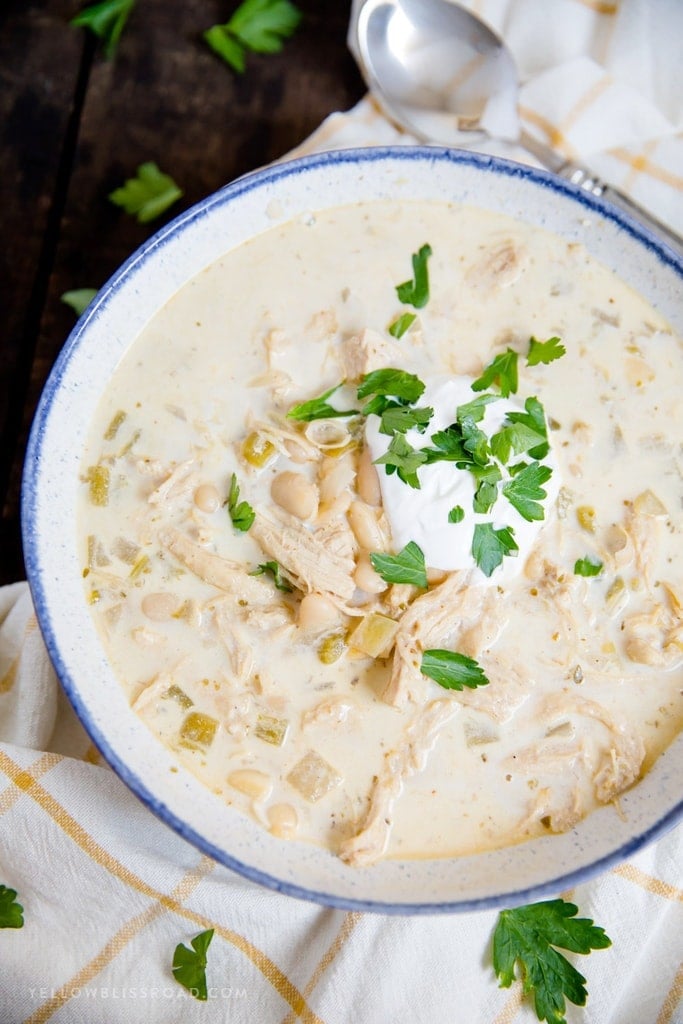
This recipe is a favorite at parties and potlucks and I often cook it the day before camping trips and reheat it for many rave reviews! I never bring any home! The success of the recipe does not hinge upon any single ingredient, except the chicken & chili powder. Feel free to substitute to fit what you have on hand. You may even use plain yogurt instead of Half & Half to lessen fat content. But go all the way if you can!
- 1 teaspoon salt
- 2 teaspoons chili powder
- 1 teaspoon sugar
- 2 teaspoons cumin
- 1 stalk celery diced
- 5 tablespoon butter
- 1 lb. chicken cooked as desired and diced.
- 1 small sweet onion vidalia if possible (diced)
- 2 cloves garlic minced (1 tablespoon)
- 1 jalapeno pepper minced
- 1 medium potato diced
- 1 10 oz can shoepeg corn drained
- 1 15 oz can cannellini beans (white kidney) rinsed and drained
- 1 - 2 cups half & half cream
- 2 cups chicken stock canned or from chicken prep
- 2 tablespoons flour mesa or all purpose
- 1 teaspoon cayenne pepper makes it spicey
- 1/4 teaspoon ground black pepper or white pepper
- 8 ounces white chese dip or mexican cheese
- 1 pkg. flour tortillas for dipping as bread
- Carbohydrate 49.21436 g
- Cholesterol 0 mg
- Fat 5.95335 g
- Fiber 0 g
- Protein 8.6323575 g
- Saturated Fat 0.689596375 g
- Serving Size 1 1 Serving (646g)
- Sodium 484.2058 mg
- Sugar 49.21436 g
- Trans Fat 1.59748225 g
- Calories 285 calories
Step-by-step
- Place Chicken in pot and cover with water. Salt and Pepper to taste. Bring to a boil and continue boiling for 15-20 minutes. Chicken should remain slightly pink in the middle. Do not Overcook! Remove from pot to cool and dice into bite size pieces.
- Wrap Tortillas or other bread of choice in aluminum foil and begin heating in oven or other method.
- While Chicken is cooking, melt butter in large skillet: Sautee Onion, Celery, Potato, Garlic & Jalapeno Pepper until onions are translucent. (7 - 10 minutes)
- Add Beans to mixture and cook for 5 minutes
- Stir in Flour, Chili Powder, Cumin, Salt, Pepper and Sugar. Continue stirring for 2 minutes until well blended. (Not Cayenne at this point to avoid hot bites)
- Add Chicken, Corn, Chicken Stock, Worchester Sauce, Cayenne Pepper, Cheese Dip, and 1 cup of Half & Half. Cook until cheese melts and sauce thickens. (Approximately 10 - 15 minutes)
- Add additional Half & Half to create desired consistency. Thicker for Chili or thinner for Soup
Standard ingredient lists omit how starches behave when introduced to dairy and fats in a single pot. Potatoes release free starches into the simmering chicken stock, which physically thickens the liquid before flour or cheese even enters the mixture. Sautéing the diced onions, celery, potatoes, garlic, and jalapeños in butter for seven to ten minutes softens their cell walls through moisture evaporation, allowing lipid-soluble capsaicin from the pepper to disperse evenly throughout the fat phase.
Flour and spices require a two-minute toast in the butter and vegetable mixture to cook out raw grain flavors and bind with the remaining fats. Adding the half-and-half and cheese dip later prevents scorching; dairy proteins curdle easily when subjected to direct, high heat without sufficient hydration from the stock. Keeping the heat moderate ensures the cheese melts into an emulsion rather than breaking into oil slicks and solids.
Adjusting this formulation for larger or smaller crowds requires proportional scaling of the flour-to-fat ratio to maintain viscosity. Doubling the batch means doubling the butter and flour equally, otherwise the thickening power will fail to support the added weight of the beans and corn. Conversely, reducing the volume demands careful liquid monitoring so the starches do not concentrate too rapidly and burn at the bottom of the pan.
Retaining texture in the chicken relies strictly on thermal control during the initial boil. Pulling the meat out while the center remains slightly pink stops the muscle fibers from contracting completely and squeezing out internal moisture. Dicing that meat after a brief cooling period yields tender bites that absorb the surrounding cumin, chili powder, and stock without turning stringy.


