Banana Pancakes
Adapted from the Williams Sonoma Kids Cookbook. I added extra vanilla and doubled the bananas. We sometimes add chocolate chips, as well.
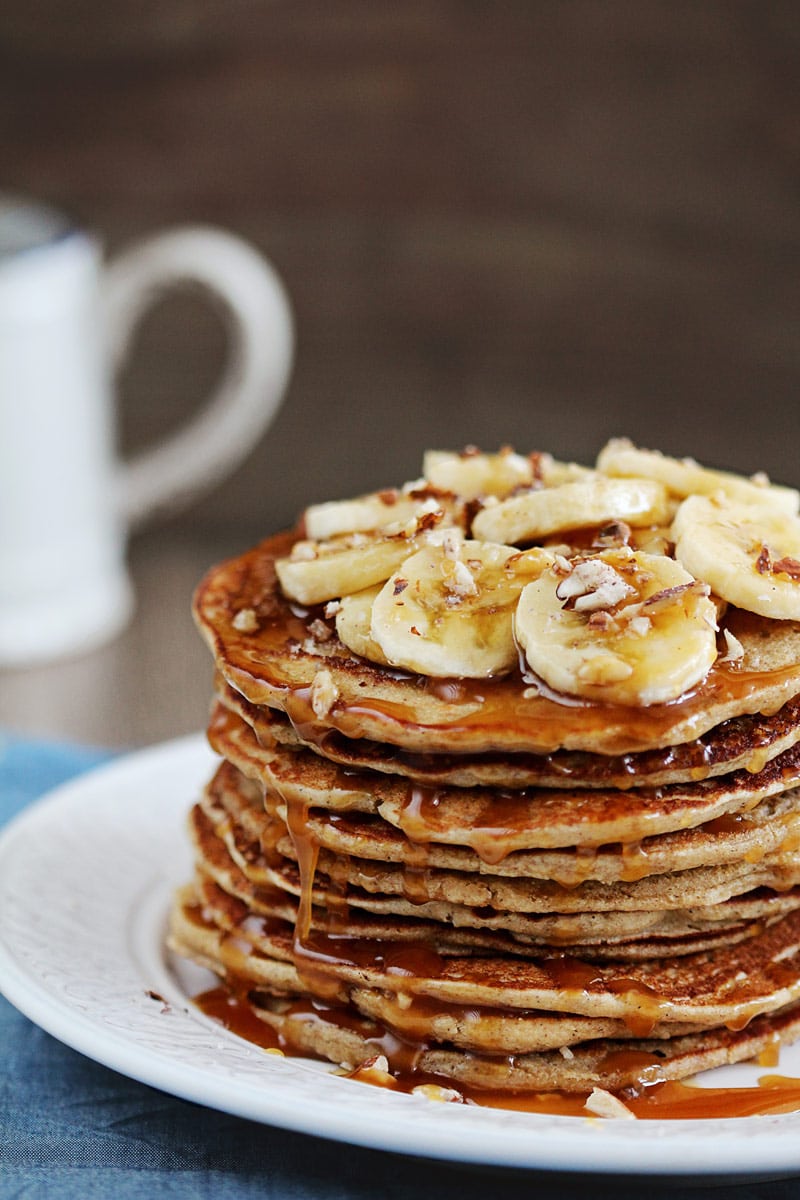
Adapted from the Williams Sonoma Kids Cookbook. I added extra vanilla and doubled the bananas. We sometimes add chocolate chips, as well.
- Carbohydrate 59.1824240718705 g
- Cholesterol 36.5320833322991 mg
- Fat 13.0589000926243 g
- Fiber 2.80616666058308 g
- Protein 8.85977786902487 g
- Saturated Fat 7.86372277772658 g
- Serving Size 1 1 Serving (171g)
- Sodium 141.747629564537 mg
- Sugar 56.3762574112874 g
- Trans Fat 1.1372966296787 g
- Calories 390 calories
Step-by-step
- In a medium bowl mix flour, sugar, baking powder and salt until blended. Set aside.
- In small bowl mash bananas then whisk eggs, milk and vanilla into bananas.
- Stir banana mixture into flour mixture, then stir in melted butter. Stir until blended.
- Heat griddle over medium heat and cook pancakes until golden on each side
The Starch and Sugar Engine
Ripe bananas drive both the moisture and structure in this batter. As bananas ripen, enzymes convert starches into free sugars. These sugars caramelize quickly on a hot surface, producing the deep golden brown exterior before the interior overcooks. Using spotted fruit also introduces pectin breakdown, which softens the overall crumb. Undripe fruit lacks this sugar density, requiring additional granulated sugar to achieve identical browning rates.
Leavening and Carbon Dioxide Production
Baking powder acts as the chemical driver for lift. This double-acting leavening agent releases carbon dioxide twice: once when it contacts the liquid ingredients, and again when exposed to heat on the griddle. Mixing the batter only until just blended preserves these gas pockets. Overmixing develops gluten networks, yielding a rubbery texture rather than a tender cake.
Fat Distribution and Thermal Transfer
Melted butter incorporated directly into the batter coats the flour proteins, inhibiting excessive gluten formation. This fat also assists in thermal transfer on the cooking surface. Maintaining a medium heat setting prevents the exterior from burning before the dense fruit solids in the center set properly. Flip each cake when small bubbles form on the surface and pop, leaving open craters that do not immediately fill back in with batter.


